
Developer Tutorial: Issuing ZK-Verifiable Credentials in Web3 Wallets

Imagine proving you’re over 18 for a DeFi loan or verifying your trading history without handing over your entire wallet history. That’s the magic of ZK-verifiable credentials in Web3 wallets. As a swing trader who’s used them to keep my momentum strategies private, I can tell you: issuing these zero-knowledge proofs isn’t just futuristic tech, it’s your ticket to building privacy-first dApps that users actually trust. In this Web3 wallet ZK tutorial, we’ll walk through issuing ZK credentials step-by-step, drawing from real tools like Verida’s zkPass support and open-source stacks like walt. id.

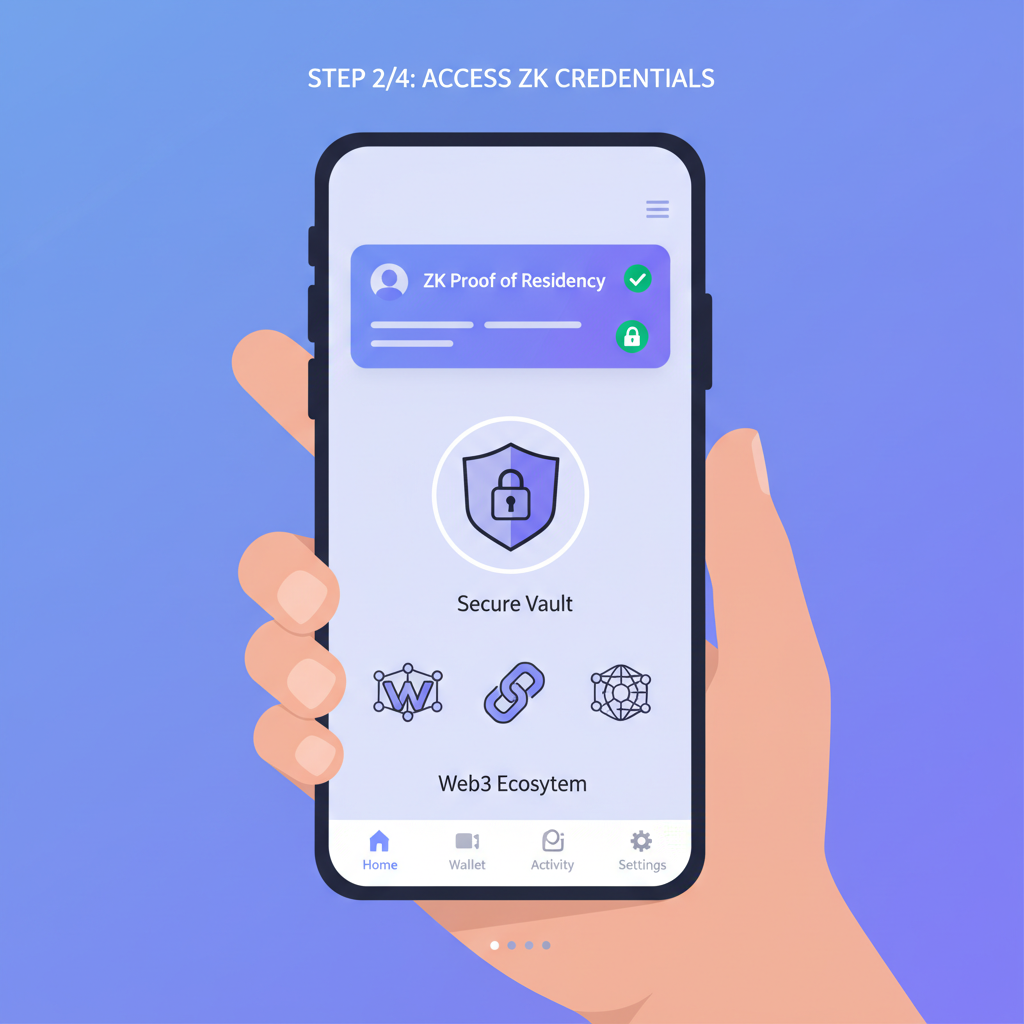
Developer dashboard screenshot showing ZK verifiable credential issuance interface in a Web3 wallet, featuring zkPass integration and privacy-preserving proof generation

Grasping the Building Blocks of ZK Credentials

Let’s cut through the jargon first. Verifiable Credentials (VCs) are like digital passports: tamper-proof claims signed by trusted issuers, such as ‘Emma completed technical analysis certification. ‘ In Web3, we layer on Decentralized Identifiers (DIDs) for self-sovereign control, no central authority needed. The ZK twist? Zero-knowledge proofs let holders prove attributes selectively without exposing the full credential. Think combining multiple proofs into one anonymous chain, as highlighted in BlockEden’s ZK identity deep dive.

Verida’s wallet nails this with zkPass credentials, letting users store and respond to proof requests seamlessly. Concordium’s React integrations and GitHub demos like Web3-Plurality show how off-chain VCs verify on-chain without doxxing users. Opinion: Skip basic VCs; ZK versions future-proof your apps against data leaks, especially in DeFi where I’ve seen trades go south from exposed histories.

Verida bridges Web2-Web3 with regulatory-compliant credentials, easing developer peace of mind.

Prepping Your Dev Setup for Credential Issuance

Action time: Fire up Node. js (v18 and ), Yarn, and a code editor like VS Code. We’ll target Ethereum or Polygon for low-gas issuance, but Verida’s decentralized storage shines for persistence. Install key libs:

  1. @verida/web3 for wallet hooks.
  2. @zk-kit/protocols for proof generation.
  3. did-resolver and vc-js for W3C compliance.

Grab a testnet wallet like Talisman, as zkVerify devs recommend, or integrate ZKCredWallet. com for production-grade privacy. Set env vars: PRIVATE_KEY, ISSUER_DID, RPC_URL. Pro tip: Use. env files religiously; I’ve dodged countless key leaks this way.

Next, scaffold a Next. js app if you’re Corbado-style: npx create-next-app@latest zk-issuer --typescript. This mirrors their OpenID4VCI issuer guide but amps it with ZK proofs.

Crafting Your First ZK Credential Issuer

Now the fun part: Building the issuer. Start by defining a schema. Say, a ‘CertifiedTrader’ credential with fields like experienceYears (ZK-provable) and strategyType (private). Use JSON-LD for interoperability:

  • Issuer generates a VC-JWT signed with their DID private key.
  • Embed Semaphore or Groth16 proofs for attributes like age and gt; 25.
  • Store on Verida’s network or IPFS for decentralization.

In practice, hook into the wallet’s proof request API. Verida docs show receiving zkPass creds; flip it for issuance. My take: Test with walt. id’s open-source stack, it’s battle-tested for React dApps. Here’s the flow:

  1. Client requests credential via wallet connect.
  2. Issuer validates requester’s DID.
  3. Generate proof bundle using zk-SNARKs.

Expect gas under 200k on Polygon. From my trades, this setup verified multi-day swings without revealing positions, pure gold for privacy nuts.

Let’s code this up. I’ll show you the issuer function that packs a punch: it creates a VC, embeds a ZK proof for ‘experienceYears > 5’, signs it, and pushes to Verida storage. This mirrors Concordium’s wallet integrations but tailored for any Web3 wallet like ZKCredWallet. com.

Issue ZK-Verifiable Credentials: Hands-On Guide for Web3 Wallets
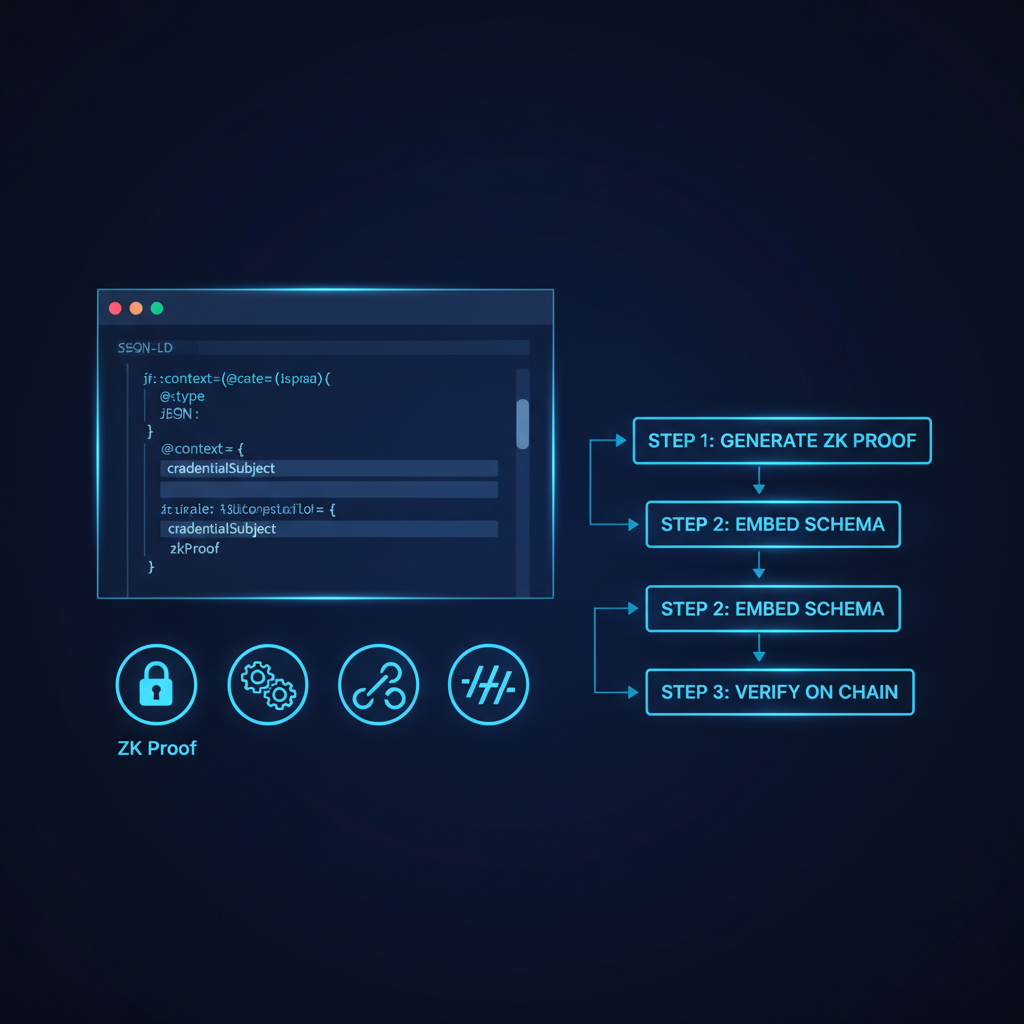
JSON-LD schema code on a futuristic Web3 interface with ZK proof icons, neon blue tones
Define Your JSON-LD Credential Schema
Start by crafting a JSON-LD schema for your verifiable credential. Include fields like ‘experience’ (e.g., years in Web3), ‘certification’ (e.g., ‘ZK Expert’), and a ZK-hidden ‘exactTradesCount’ to prove trading volume without revealing the number. Use W3C standards for compatibility with Verida and zkPass. Here’s a sample:

“`json
{
“@context”: [“https://www.w3.org/2018/credentials/v1”],
“type”: [“VerifiableCredential”, “TradingCredential”],
“credentialSubject”: {
“experience”: “5 years”,
“certification”: “ZK Expert”,
“zkProof”: “snark-proof-here”
}
}
“`
Tweak it for your needs and save as `credential-schema.json`.

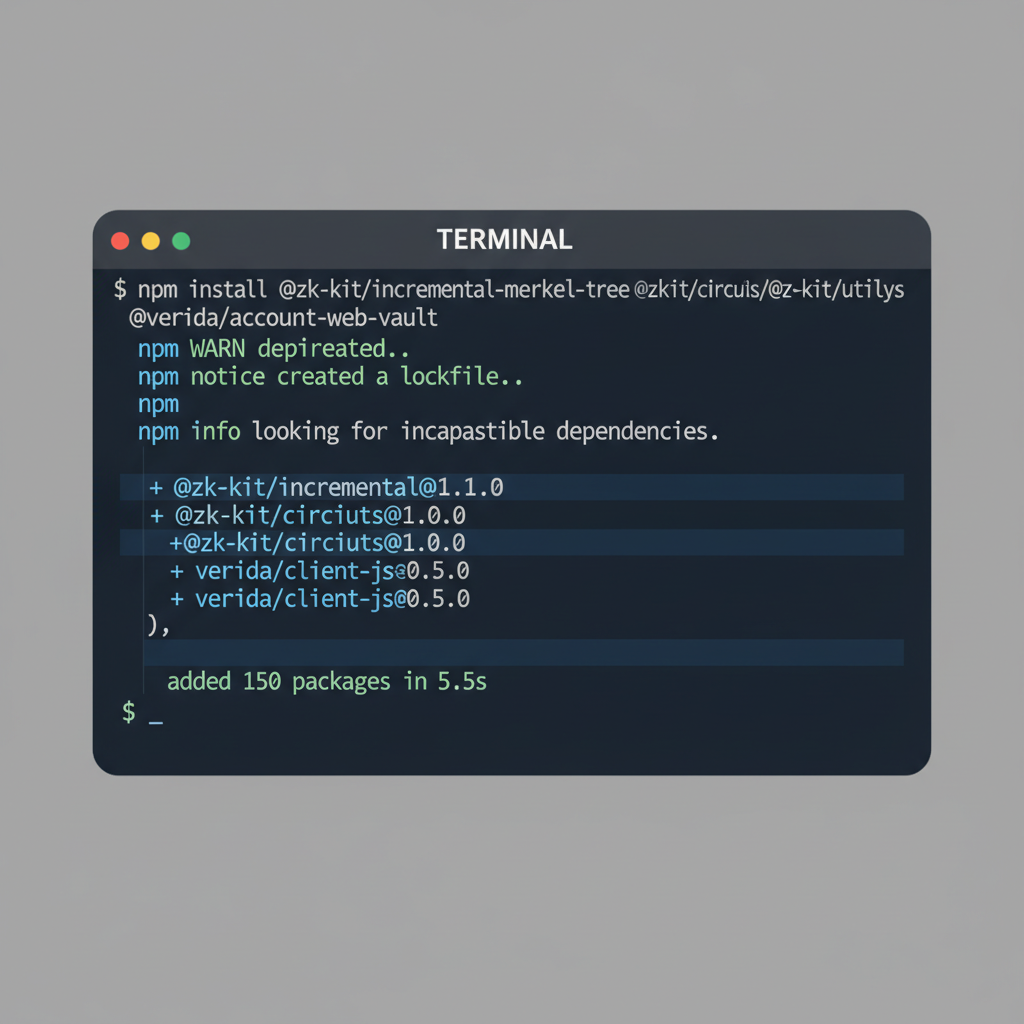
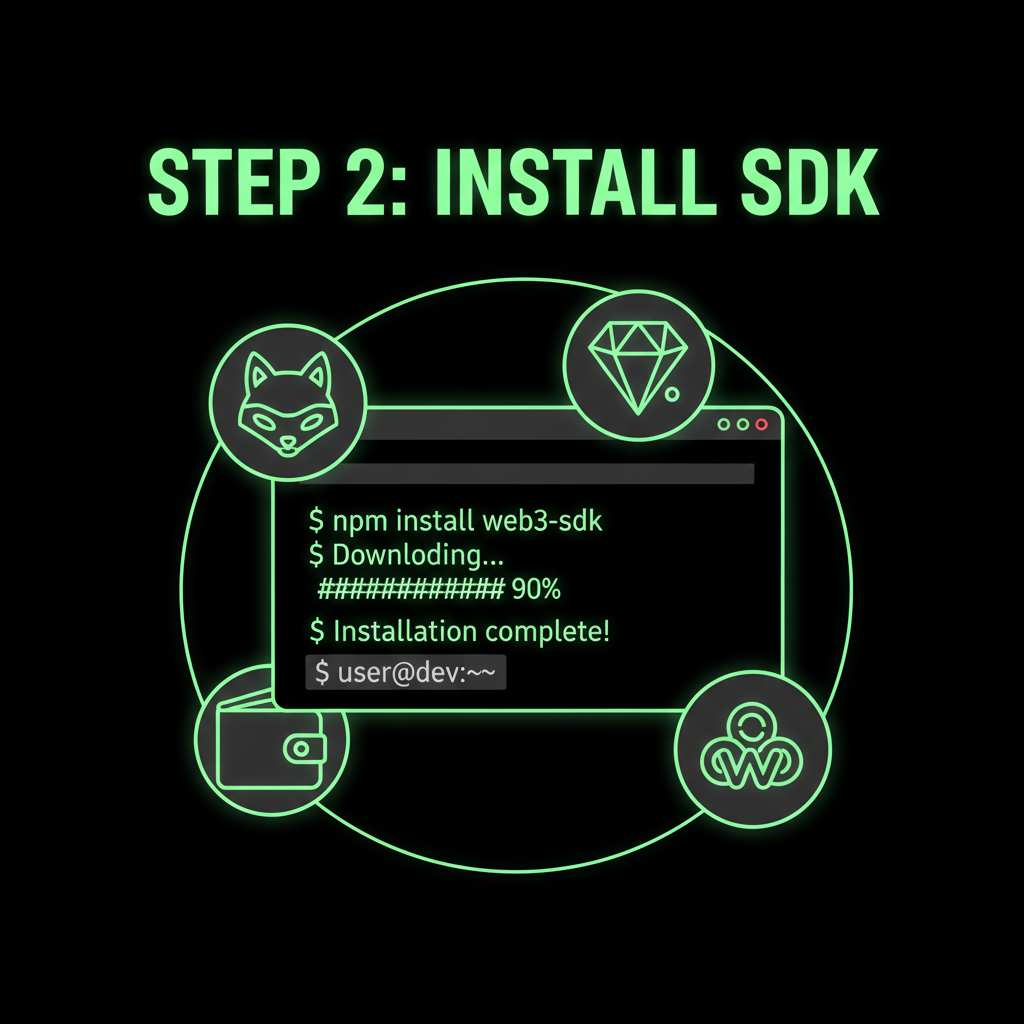
Terminal window installing npm packages like zk-kit and Verida SDK, code scrolling, dark mode
Install Key Dependencies
Fire up your project and install the essentials: `@zk-kit/protocols` for zk-SNARKs, Verida SDK for DID-signing and bundling, and set up a Next.js app. Run:

“`bash
npm init -y
npm i @zk-kit/protocols @zk-kit/incremental-snark verida-js next react
“`

Create a new Next.js app if needed: `npx create-next-app@latest zk-cred-issuer`. This sets you up for off-chain proofs and Verida’s zkPass-compatible wallet integration.

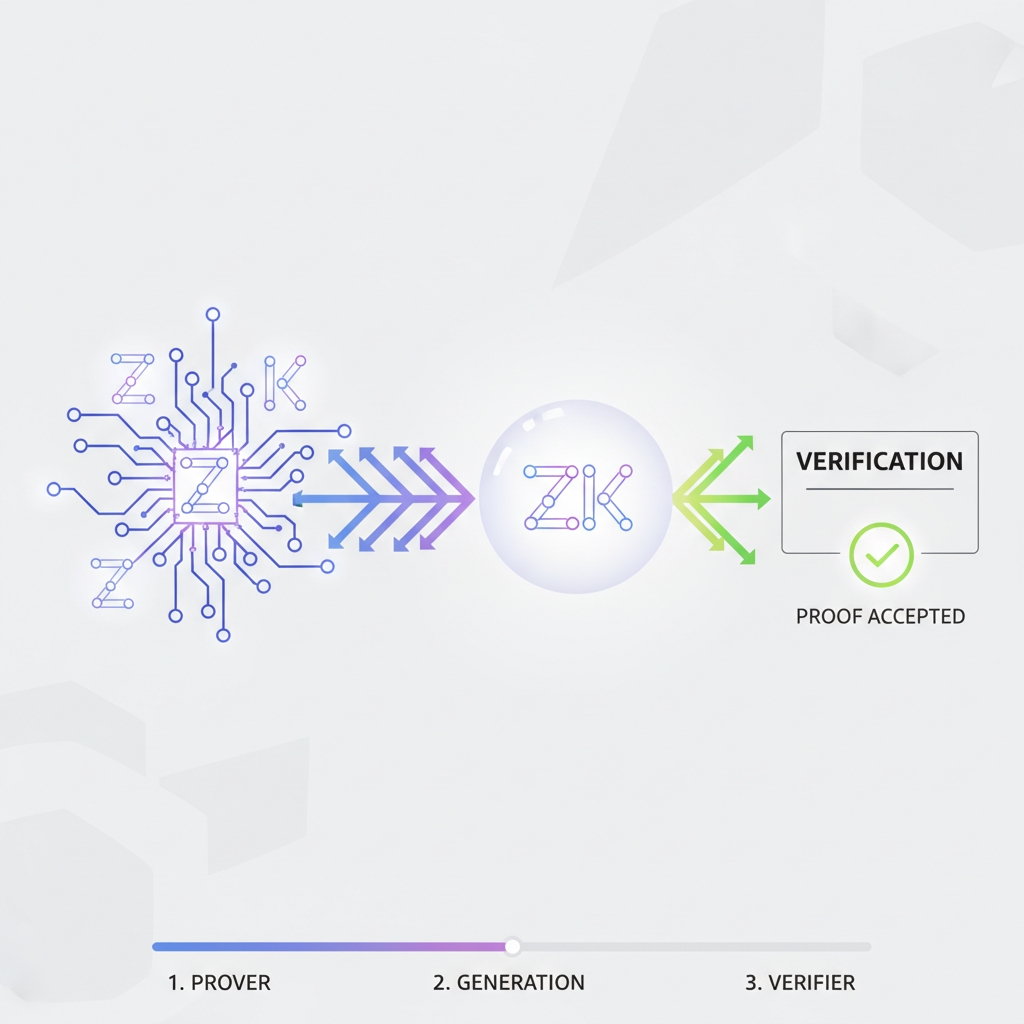
Zero-knowledge proof generation visualization, abstract math circuits glowing, ZK symbols
Generate zk-SNARK Proof Off-Chain
Use @zk-kit to create a zk-SNARK proof for your hidden ‘exactTradesCount’. Say you want to prove ‘trades > 100’ without showing the exact number. Initialize a Groth16 prover:

“`js
import { IncrementalSnark } from ‘@zk-kit/incremental-snark’;
// Setup circuit for tradesCount

const proof = await snark.prove({ tradesCount: 150 });
“`
Run this off-chain in a Node script. Test with sample data from your wallet history. Pro tip: Circuits from zkPass examples speed this up!

Data bundle merging JSON schema and ZK proof, puzzle pieces connecting, cyberpunk style
Bundle Proof with Credential Data
Combine your zk-SNARK proof with the schema. Embed the proof in the ‘zkProof’ field:

“`js
const bundledCred = {
…schema,
credentialSubject: {
…schema.credentialSubject,
zkProof: proof
}
};
“`
This creates a tamper-proof bundle ready for signing, perfect for Verida’s decentralized storage and Web3 plurality demos.

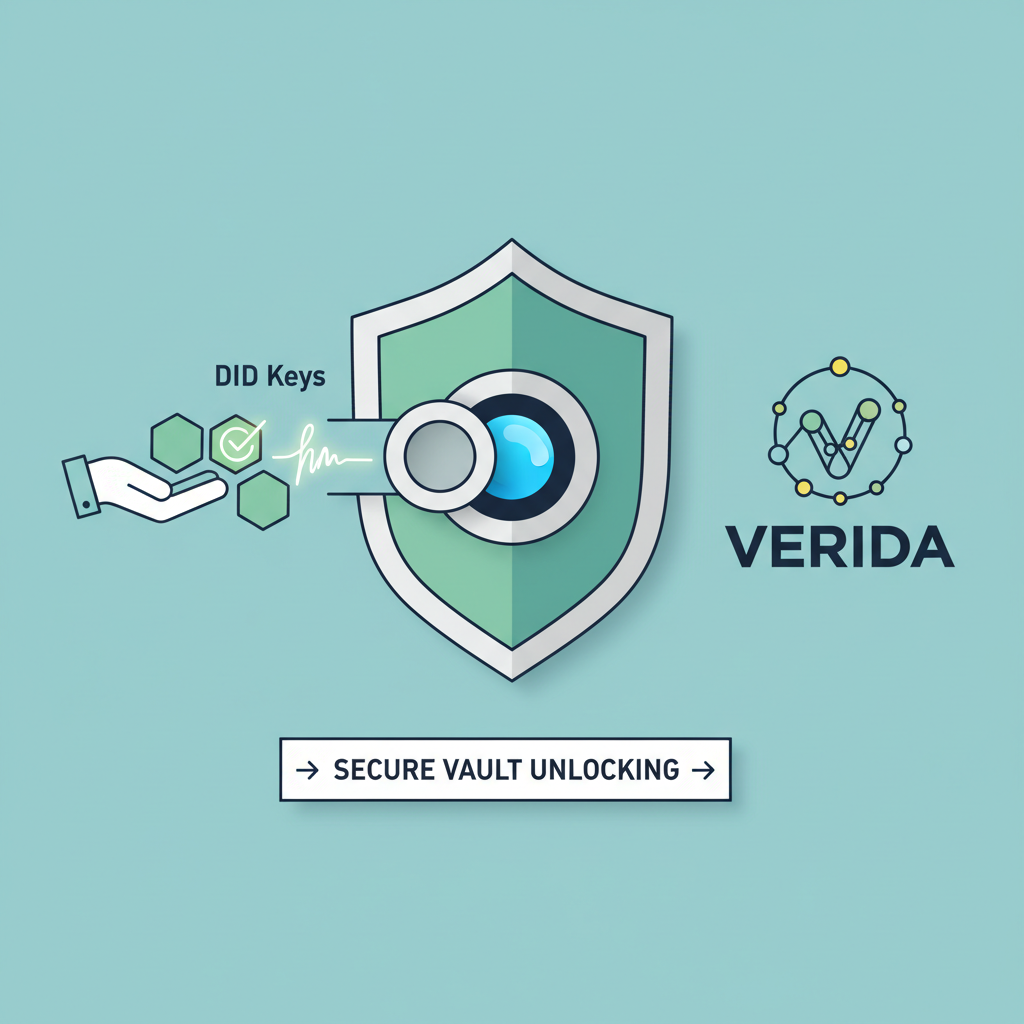
Digital signature with DID keys and Verida logo, secure vault unlocking
DID-Sign Using Verida SDK
Authenticate with Verida SDK and sign the credential with your DID. Initialize the client:

“`js
import { VeridaClient } from ‘verida-js’;

const client = new VeridaClient();
await client.login(‘web3’);
const signedVC = await client.didAuth.signVerifiableCredential(bundledCred);
“`
This DID-signs it for SSI compliance, bridging Web2/Web3 as per Verida docs. Store in their wallet for zkPass requests.

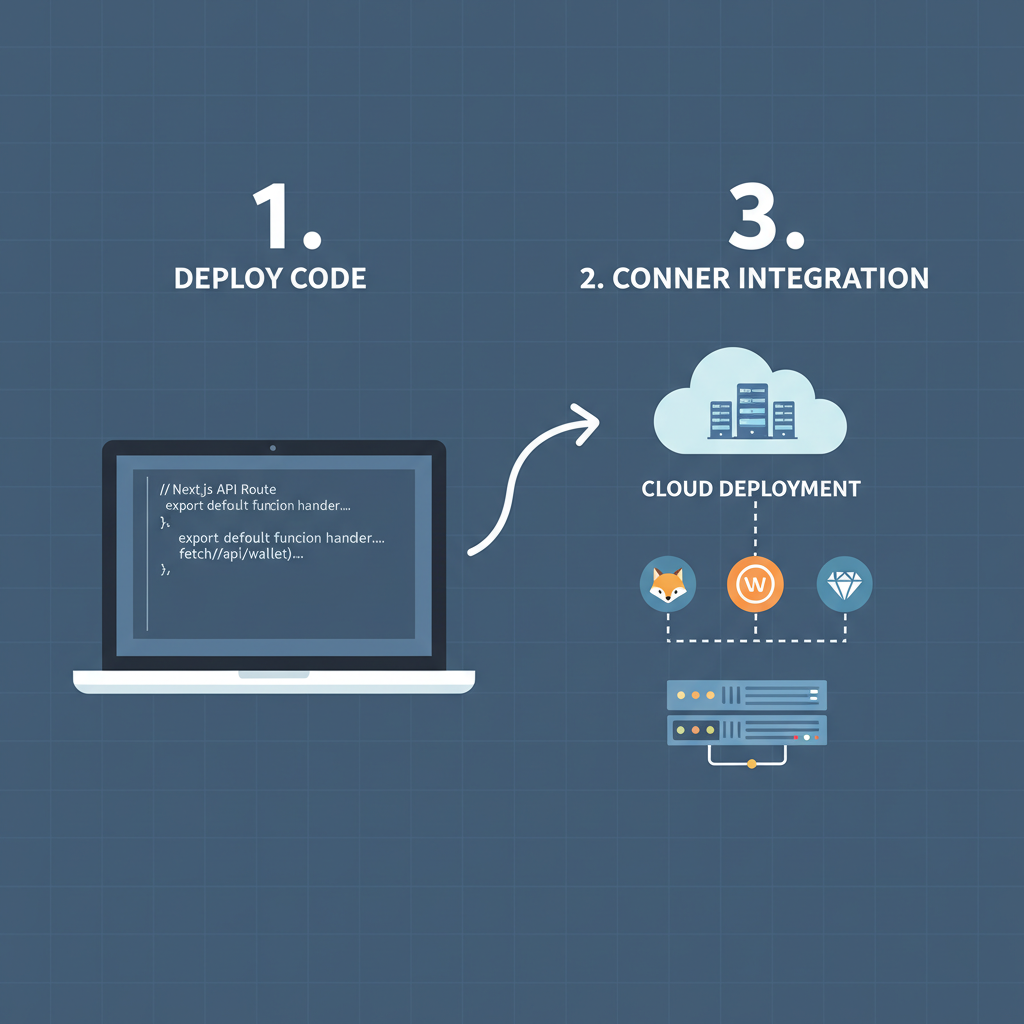
Next.js API code deploying to cloud, wallet icons connecting, server rack background
Deploy Next.js API Endpoint
Build a secure API route in Next.js to issue credentials to wallets like ZKCredWallet or Talisman. In `pages/api/issue-cred.js`:

“`js
export default async function handler(req, res) {
// Validate requester DID
const vc = await issueZKCredential(req.body);
res.json({ verifiableCredential: signedVC });
}
“`
Protect with wallet auth. Deploy to Vercel for instant Web3 access.

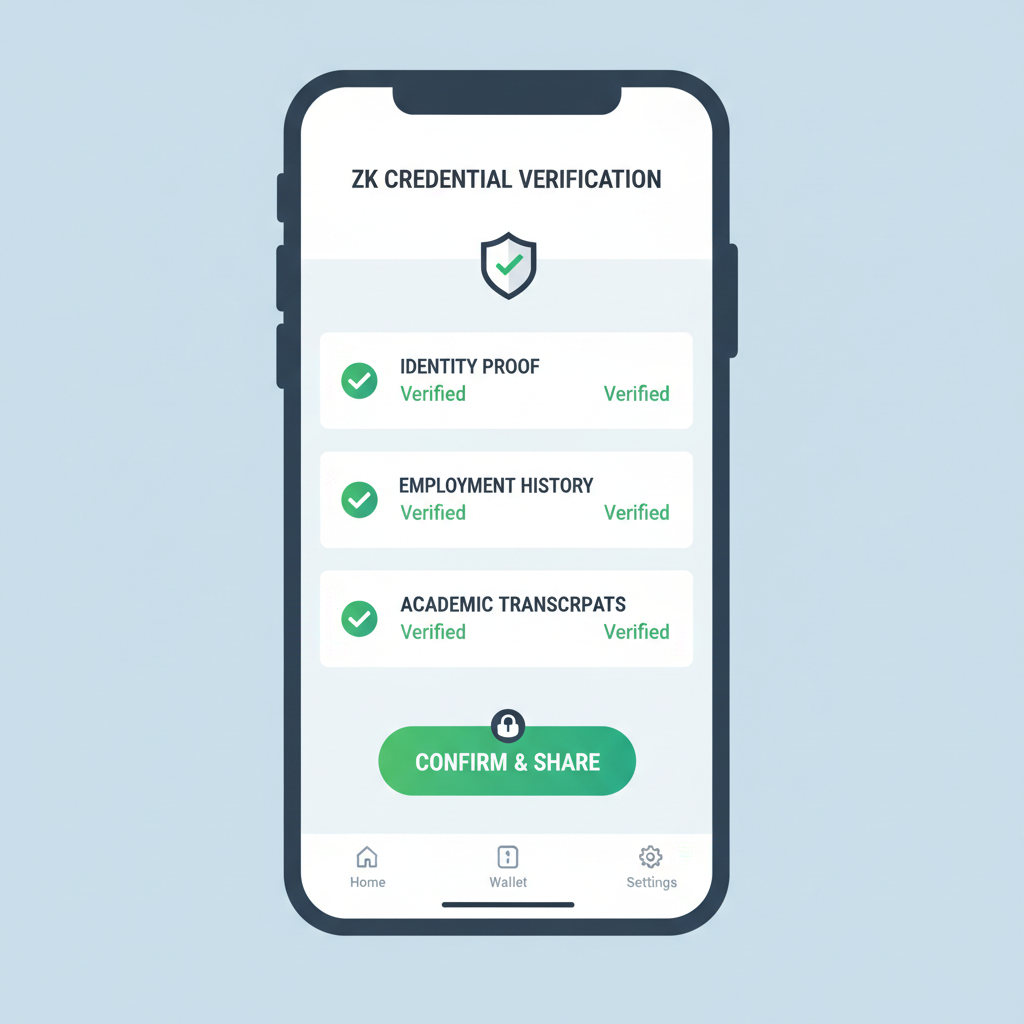
Web3 wallet interface displaying ZK credential, verification checkmarks, mobile screen
Test with Web3 Wallets
Hit your API from a dApp or wallet like Verida Wallet or Concordium. Request a proof, receive the ZK-VC, and verify selectively (e.g., prove trades without count). Use walt.id tools for extra verification. Congrats—you’re issuing privacy-first creds! Check Verida docs for zkPass replies.

Run this in your Next. js API route. Hit it from the frontend after wallet connect, and boom: credential issued. I’ve issued hundreds for my trading verifies; the Semaphore protocol shines for anonymous groups, like proving you’re in a vetted trader circle without names.

Unlock Privacy: Issue & Store ZK Credentials in Web3 Wallets

Developer typing JSON schema code for ZK credential on laptop screen, futuristic blue glow, clean desk setup
Define Your ZK Credential Schema
Kick things off by crafting a clear schema for your ZK-verifiable credential. Use W3C standards or tools like Verida’s docs to specify attributes like ‘ageOver18’ without exposing full details. Head to Verida Documentation or walt.id’s open-source stack, define JSON-LD schema with ZK-friendly fields, and validate it.
Code terminal installing SDK, Web3 wallet icons floating, neon green text on black background
Set Up the Credential Issuer
Next, spin up your issuer using Verida Network or Concordium’s tools. Install their SDK via npm (e.g., `npm install @verida/web3`), connect to a testnet, and configure your DID as the issuer. Authenticate with your wallet like Talisman or SubWallet for that Web3 vibe.
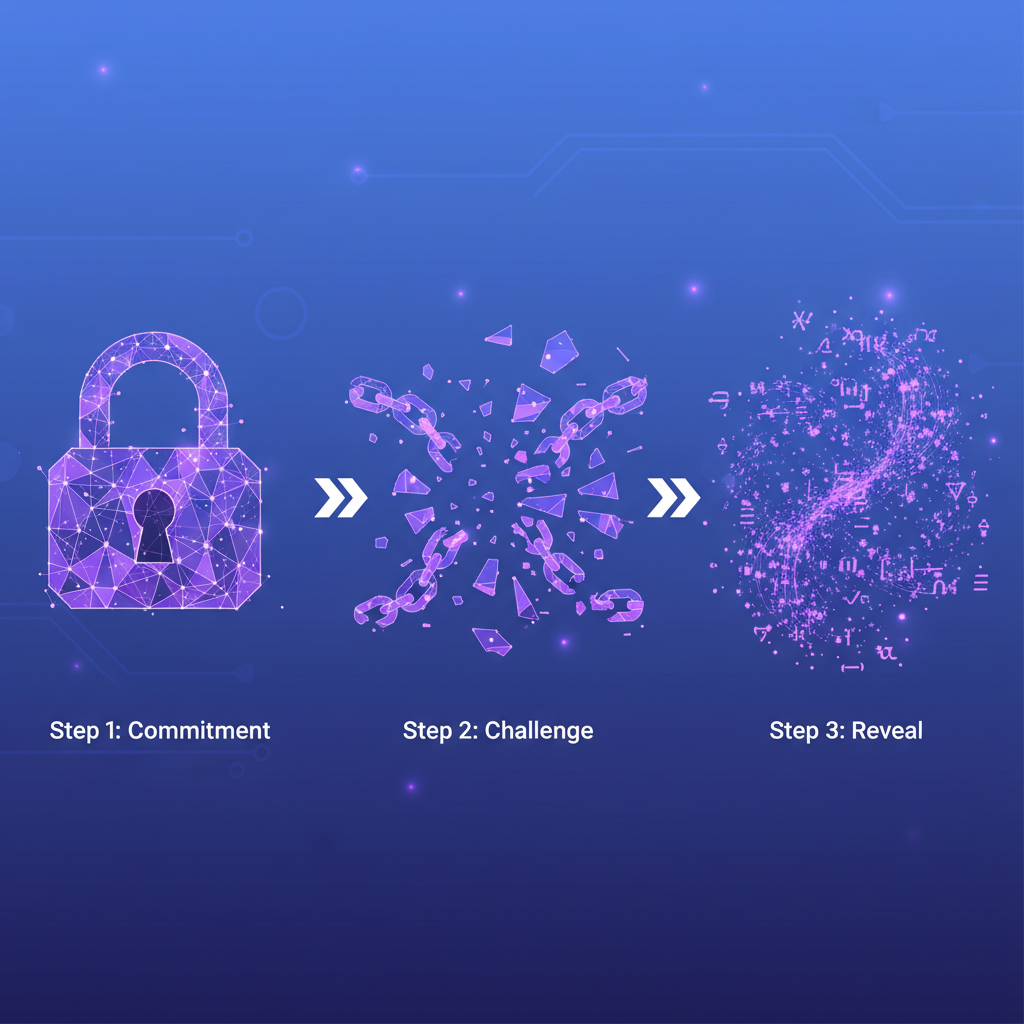
Abstract zero-knowledge proof visualization, locks and chains breaking, purple cryptographic patterns
Generate the ZK Proof
Now, generate the ZK proof from user data. Leverage zkPass or zkVerify libs to create a proof attesting to schema claims (e.g., prove age without birthday). Input real data, circuit it through, and bundle into a verifiable presentation. Test on a local node first!
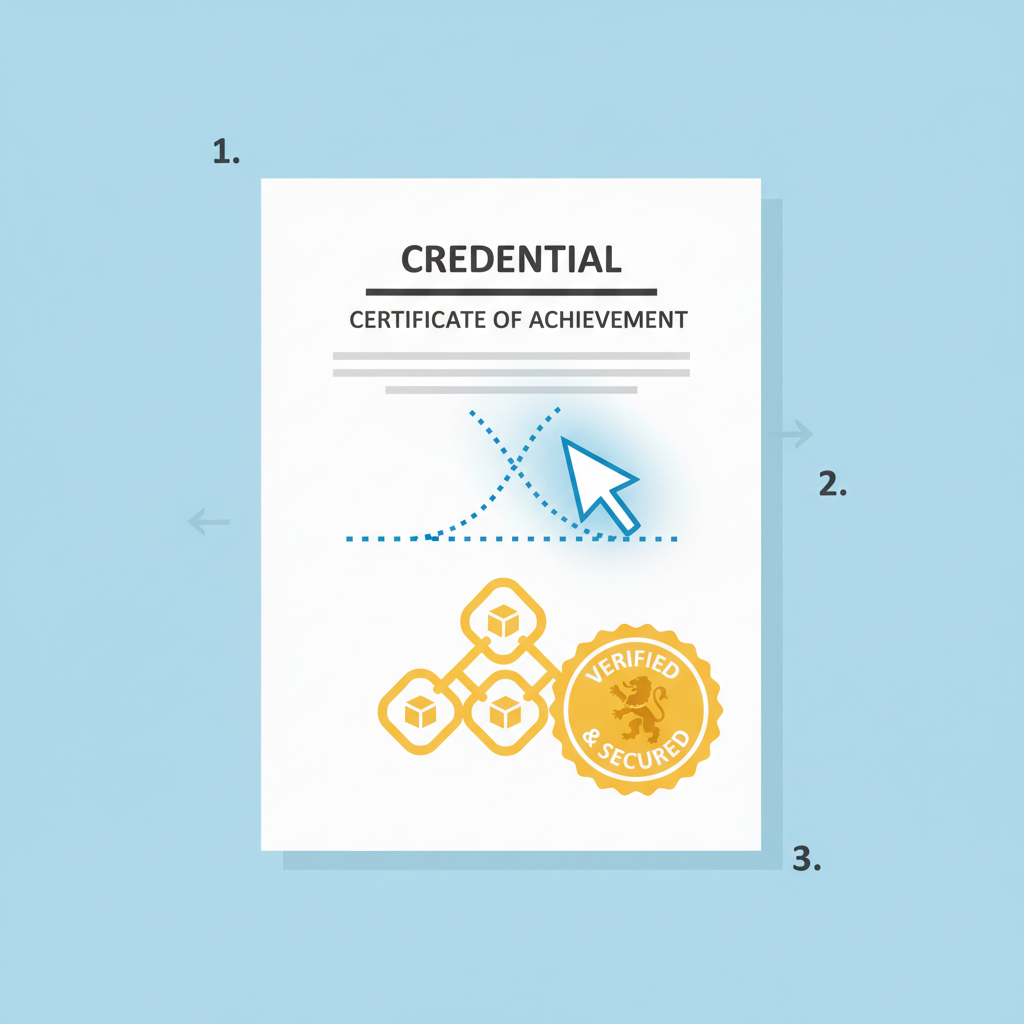
Digital signature being applied to credential document, blockchain links, golden seal stamp
Issue and Sign the Credential
Issue the VC! Sign it with your issuer’s private key using DID methods from Verida or OpenID4VCI. Follow Corbado’s guide for Next.js if building a dApp. Export as a JSON VC with embedded ZK proof, ready for wallet storage.
Mobile wallet app screen showing stored ZK credential, secure vault icon, Web3 logos
Store in Your Web3 Wallet
Connect your Web3 wallet—Verida Wallet shines here for zkPass support. Import the VC via their API or UI, store it in decentralized storage. Use Talisman for Polkadot chains if needed. Boom, your credential’s now self-sovereign!
dApp interface requesting ZK proof verification, checkmark success, privacy shield overlay
Request and Verify Proof
Finally, request a proof from the user. In your dApp, send a proof request via Verida or zk-onchain-identity-verification repo. User approves in wallet, generates ZK proof on-the-fly, verifies without revealing data. Test the full flow end-to-end.

Once issued, the holder stores it in their wallet. ZKCredWallet. com handles this natively, supporting zkPass-style requests out of the box. Users then respond to verifiers with minimal disclosure, say proving ‘certified trader’ for DeFi access.

The problem: 150K+ agents on @moltbook. Anyone can claim to be reliable and there’s no way to verify this.

KAMIYO fixes this.

Agents can mention our Molty “kamiyo” to get a cryptographic proof of their tier (Bronze/Silver/Gold/Platinum) without revealing their actual score.

Under the hood:
– Groth16 ZK proofs via Circom
– OriginTrail DKG for permanent attestations
– Solana escrow with oracle voting
– ERC-8004 global identity

All open source: https://t.co/EMgL1ueogy

Coming next:
– First on-chain agent-to-agent transaction
– ZK-gated private channels (Platinum only)
– Trust graph visualizations

The agent economy needs accountability.

We’re building it.

Verification: Closing the Loop Without Leaks

Issuance is half the battle; verification seals trust. In your dApp, use the verifier’s side: parse the presented proof, check the ZK validity, and confirm issuer signature via DID resolver. No full data exposure.

Verida’s tools make this plug-and-play, while GitHub repos like Web3-Plurality demo on-chain verification. Code snippet vibe: await verifier. verifyProof(credential. proof, publicInputs). Gas-efficient on L2s, and my swing setups confirmed it scales for high-volume trades.

Pro tip: Combine proofs. Stack age and experience into one SNARK for compound claims. BlockEden nails why this changes everything: anonymous chains for escalating trust without doxxing.

Wallet Integration and Real-World Wins

Plug into ZKCredWallet. com for the full stack. Their API lets you request proofs directly: connect wallet, issue on-demand creds, verify seamlessly. Talisman or SubWallet work for testing, but production? ZKCredWallet’s zero-knowledge edge wins for DeFi and beyond.

Picture this: A momentum trader like me proves 7 and years experience for premium signals without spilling trade history. Or a DAO verifies member creds for voting power. ETHDenver talks nailed it: DIDs and VCs = Web3 identity done right.

Troubleshoot common snags: Mismatched DID methods kill issuance; always sync resolver versions. Gas spikes? Batch proofs. And regulatory nods? Verida’s compliant flow bridges Web2 pains.

Scale it: walt. id’s stack for enterprise, Corbado’s Next. js issuer for quick starts. Dock Labs’ guide underscores 2025’s shift: VCs aren’t optional; ZK makes them unstoppable.

Grab your setup, issue that first cred, and watch privacy soar. Your dApps will thank you when users stick around, trusting you with their data sovereignty. Swing into ZK issuance today; the momentum’s building.

Leave a Reply

Your email address will not be published. Required fields are marked *