

In the high-stakes arena of decentralized finance, where trust hinges on verifiable claims yet privacy remains paramount, selective disclosure verifiable credentials emerge as a game-changer. Imagine proving your accreditation for a high-yield lending protocol without exposing your full financial history or identity details. ZKCredWallet, the premier wallet for zero-knowledge credentials, makes this reality seamless, leveraging cutting-edge cryptography to empower users in DeFi ecosystems.

Selective disclosure in verifiable credentials DeFi contexts allows holders to share precise attributes from a credential while concealing the rest. This mechanism, rooted in standards like those from the W3C and advanced by projects such as IOTA's zero-knowledge selective disclosure credentials, ensures verifiers receive proof without unnecessary data exposure. Papers from arXiv and ResearchGate highlight innovations like CSD-JWT, which achieve compact representations ideal for blockchain constraints.
Core Mechanics of Zero-Knowledge Selective Disclosure
At its heart, selective disclosure ZK relies on zero-knowledge proofs (ZKPs), cryptographic primitives where a prover convinces a verifier of a statement's truth without revealing underlying data. In ZKCredWallet, this manifests through ZK-SD-VCs, enabling users to attest to attributes like 'over-21' or 'accredited investor' status minus personal identifiers. ETSI analyses underscore batch issuance with unique salts for unlinkability, vital against correlation attacks in multi-verifier scenarios.
Key Advantages of SD-VCs in DeFi
- Enhanced Privacy: SD-VCs enable sharing only specific attributes of credentials without revealing unnecessary personal data, integrated with ZKPs for proof without exposure.(identity.org)

- Cross-Chain Portability: Users prove eligibility once with ZK credentials and reuse across networks, facilitating seamless DeFi interoperability.(TokenMinds)
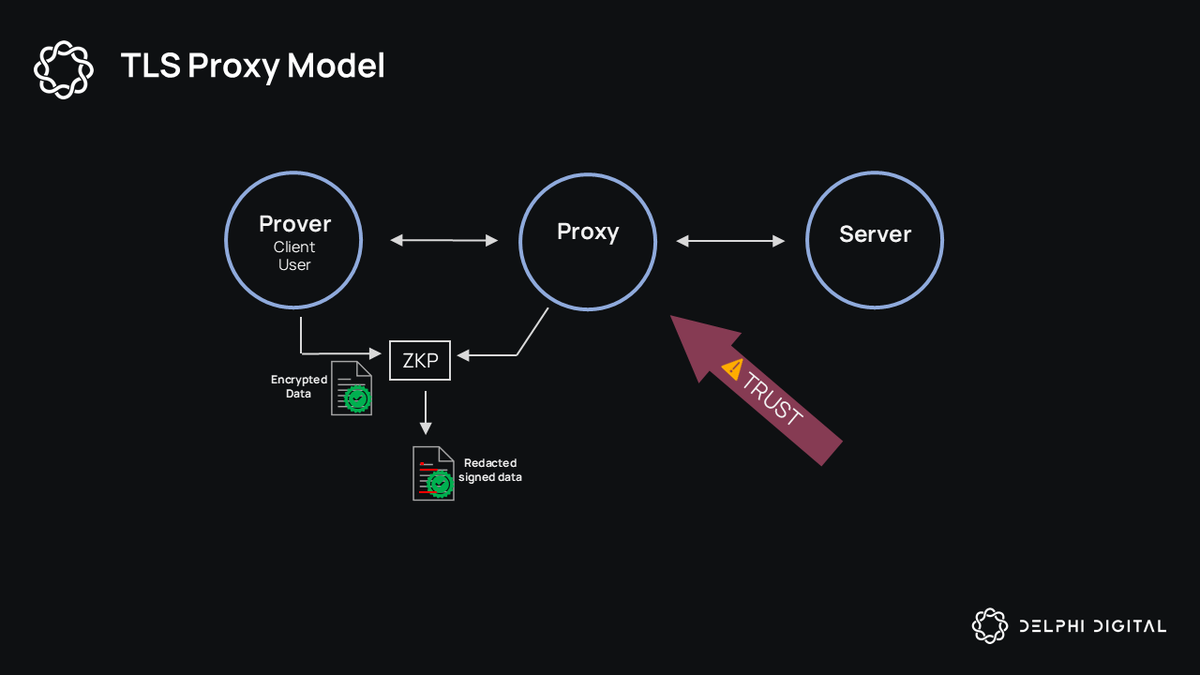
- Reduced KYC Friction: Prove attributes like creditworthiness or accreditation in DeFi without full personal details, streamlining access to services.
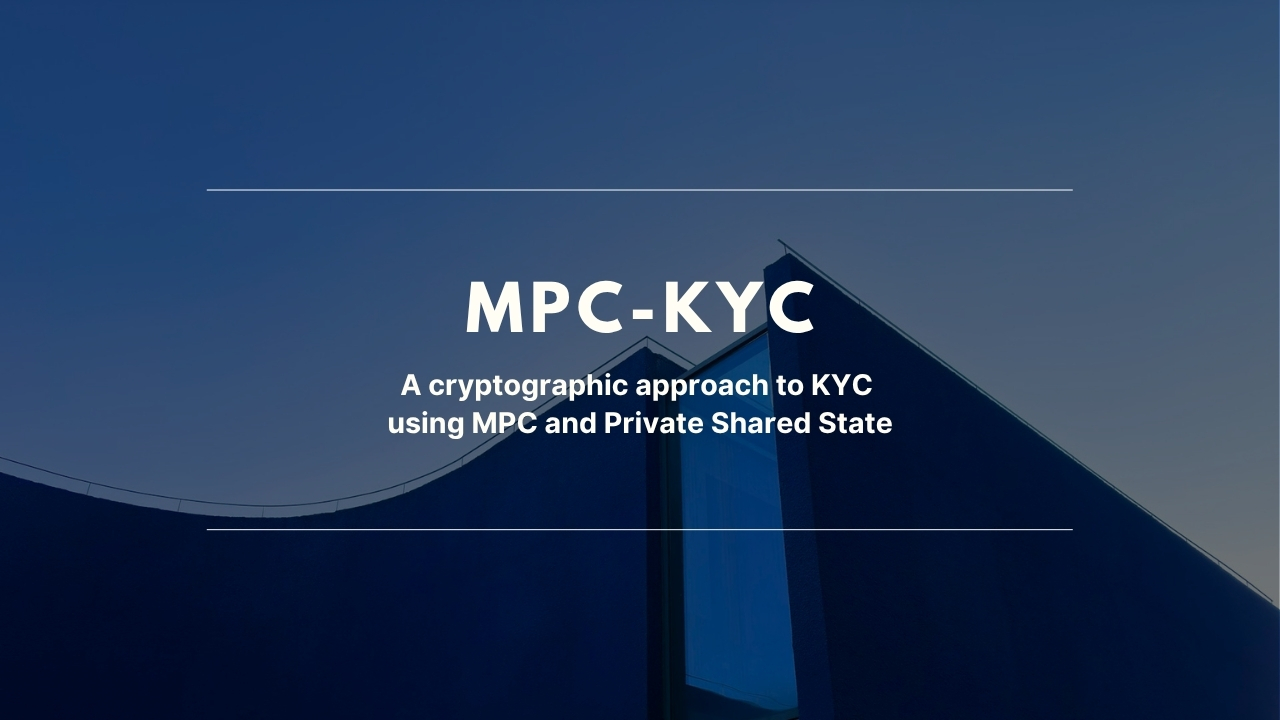
- SSI Principles Compliance: Aligns with self-sovereign identity by granting users full control over data disclosure in wallets like ZKCredWallet.(IOTA)
- Minimized Data Breach Risks: Limits shared data exposure, reducing breach impacts in DeFi platforms using SD-VCs and ZKPs.

The OpenWallet Foundation's SD-JWT VC Data Model further refines this, integrating schemas with JSON-LD for interoperability. ZKCredWallet adopts these rigorously, storing credentials in a user-controlled vault. When accessing a DeFi dApp, say for leveraged trading, the wallet generates a ZKP on-the-fly, proving eligibility per protocol rules without on-chain data leaks.
ZKCredWallet's Architecture for DeFi Integration
Designed for privacy-conscious developers and users, ZKCredWallet stands out with its native support for ZK wallet privacy. Unlike traditional wallets exposing full signatures, it employs zkSNARKs-inspired zk-creds from Cryptology ePrint constructs, offering flexible anonymous credentials. Users issue, manage, and present attestations across chains, mirroring TokenMinds' vision of prove-once, use-everywhere efficiency.
Dock Labs' guide emphasizes selective disclosure as a Verifiable Credentials hallmark, and ZKCredWallet operationalizes it via intuitive interfaces. Select a credential, choose attributes, generate proof; the verifier integrates via standard APIs. This bypasses cumbersome DeFi KYC alternatives, where platforms often demand invasive scans. Instead, zero knowledge finance proof delivers trustless verification, aligning with self-sovereign identity ethos.
Navigating DeFi Gatekeepers with Precision Privacy
DeFi protocols grapple with regulatory pressures, yet full disclosure erodes user adoption. Enter SD-VCs in ZKCredWallet: a user seeking yield farms proves minimum collateral history without balance specifics. Medium analyses by Julian Voelkel note ZKP-based credentials constructing minimal disclosures, precisely what ZKCredWallet delivers out-of-the-box.
European Digital Identity initiatives via GitHub prototypes preview wallet units presenting attribute subsets, a blueprint ZKCredWallet exceeds with cross-chain ZKPs. ScienceDirect reviews frame credentials as attestations of achievements; in DeFi, these unlock tiered access, from basic swaps to sophisticated options trading, all sans identity compromise.
Consider a high-net-worth trader eyeing exclusive DeFi vaults. Traditional KYC demands passports and bank statements, ripe for hacks. With ZKCredWallet's DeFi KYC alternative, they prove 'net worth exceeds $1 million' via a ZK proof derived from audited attestations, nothing more. This precision slashes compliance costs for protocols while shielding users from doxxing risks prevalent in centralized exchanges.
Practical Implementation: Unlocking DeFi with ZKCredWallet
ZKCredWallet streamlines this through an intuitive dashboard where credentials populate automatically from trusted issuers. Select a DeFi protocol's requirements, like age verification for gambling dApps or residency for geo-fenced yields, and the wallet crafts tailored disclosures. IOTA's ZK-SD-VCs integration, echoed in ZKCredWallet, lets holders verify claims sans full claim sets, a staple for fluid cross-chain DeFi flows.
Master Selective Disclosure ZK Proofs: Secure DeFi Access with ZKCredWallet
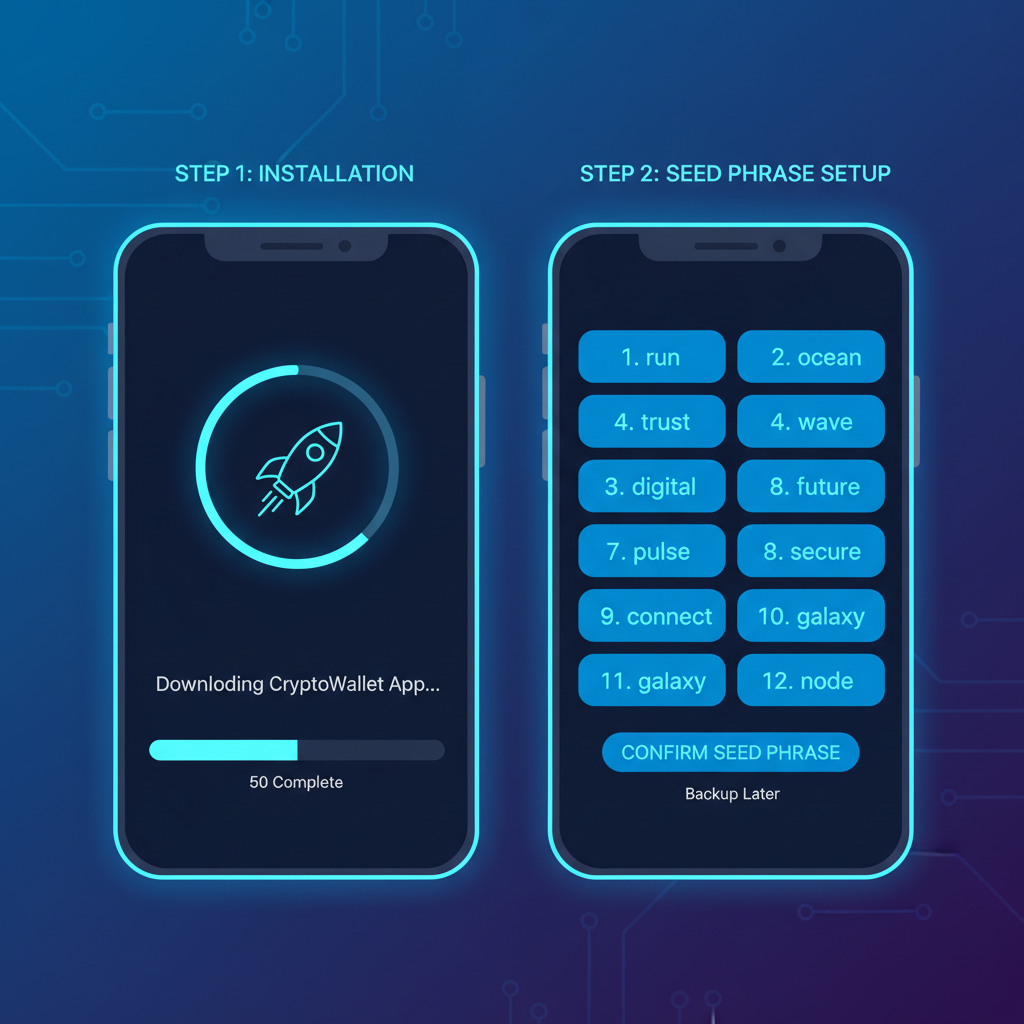
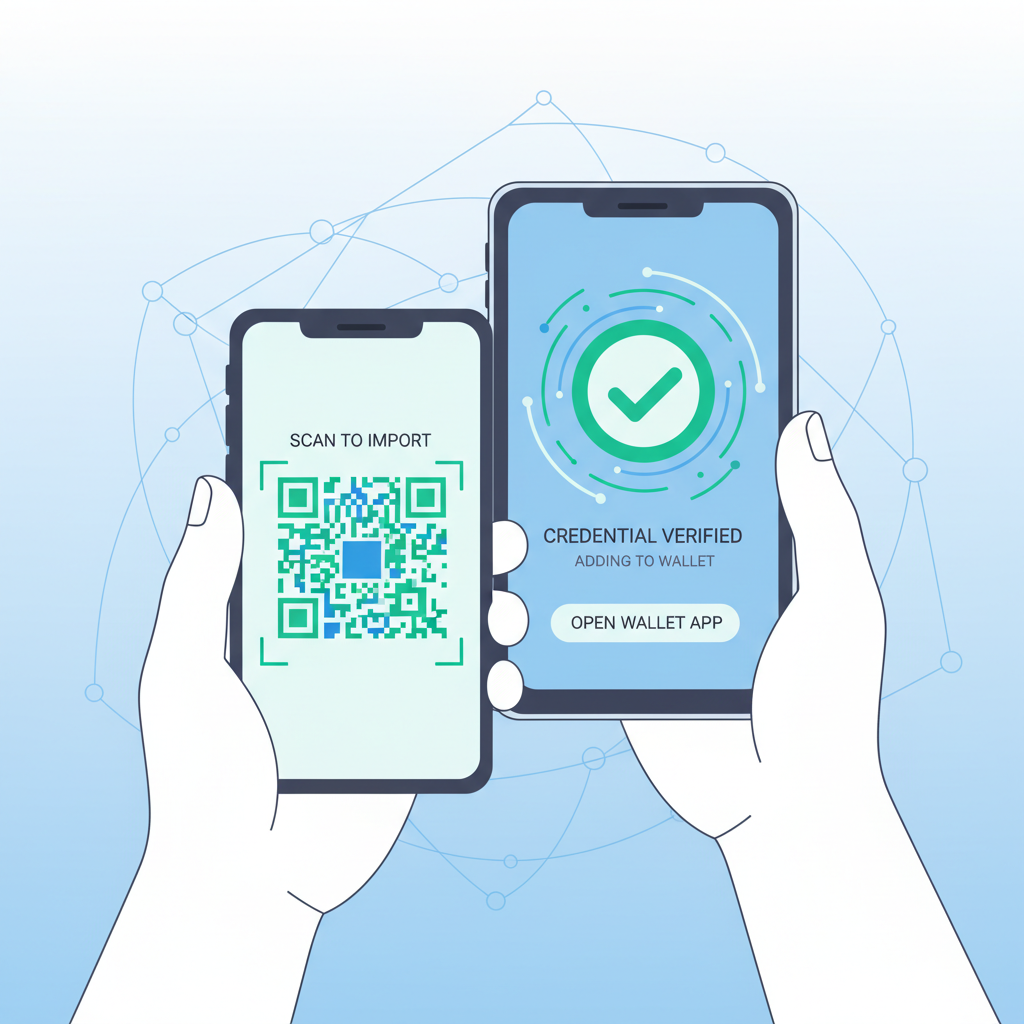
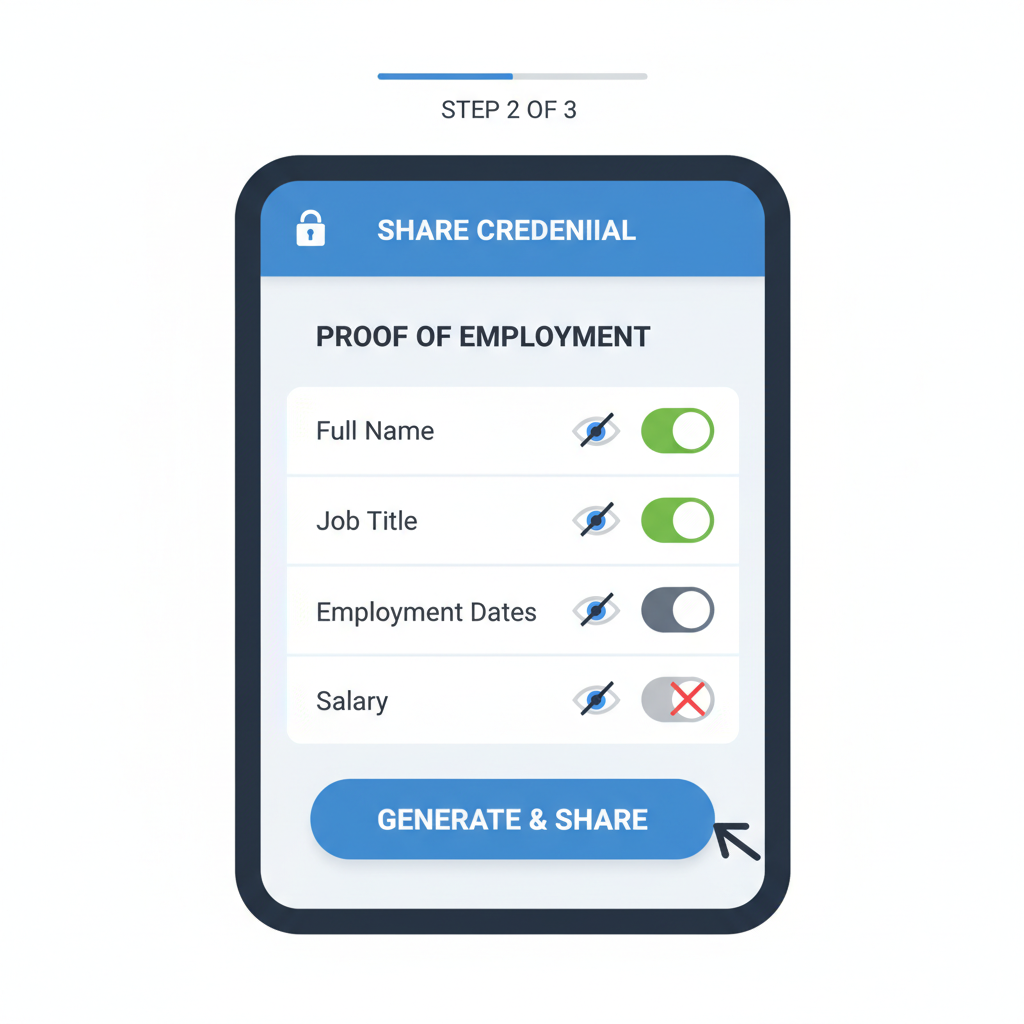
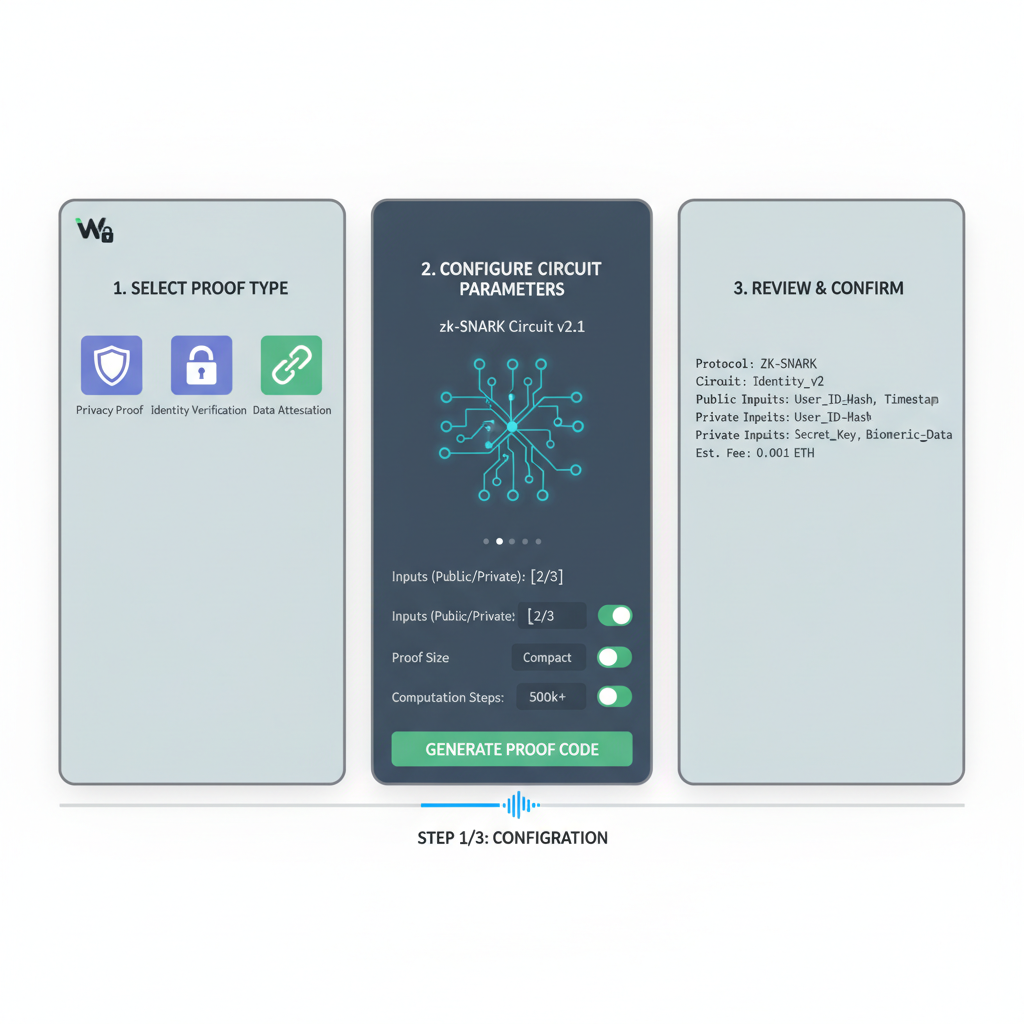
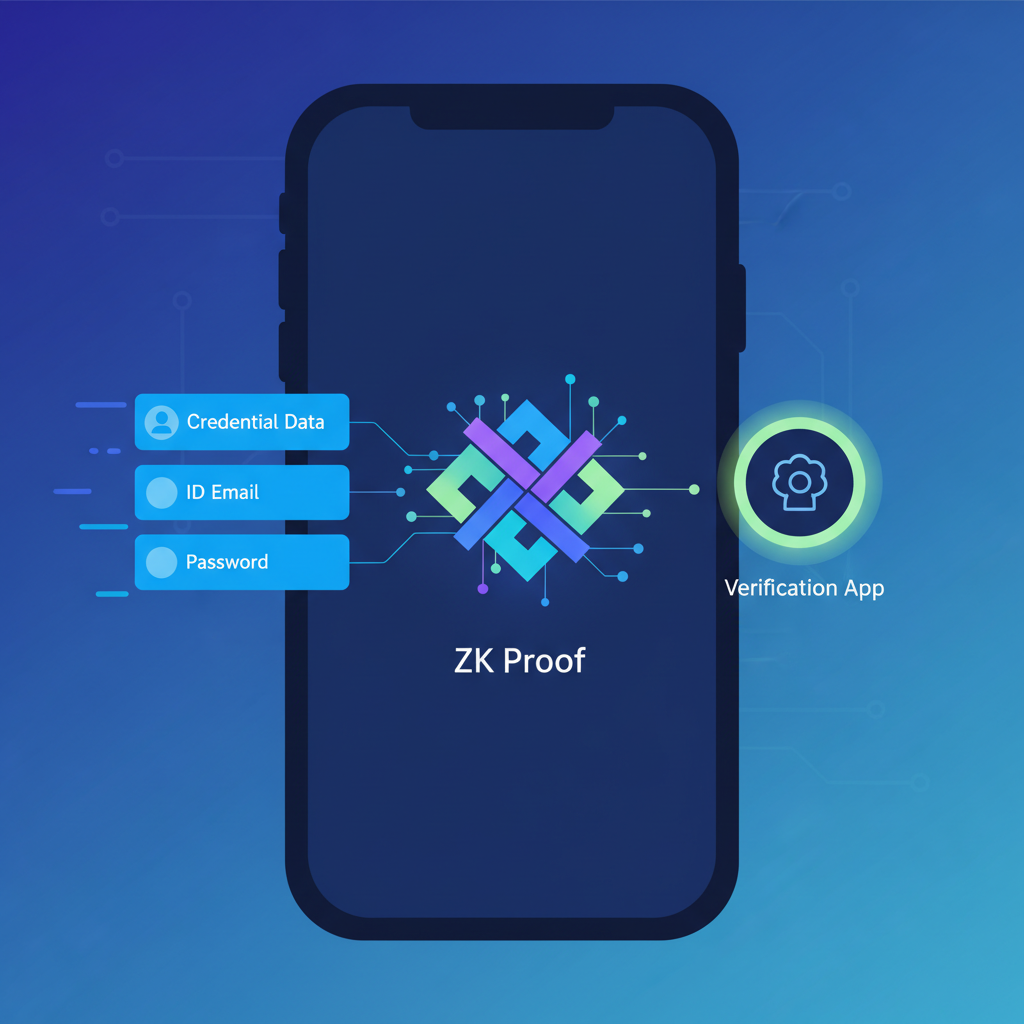
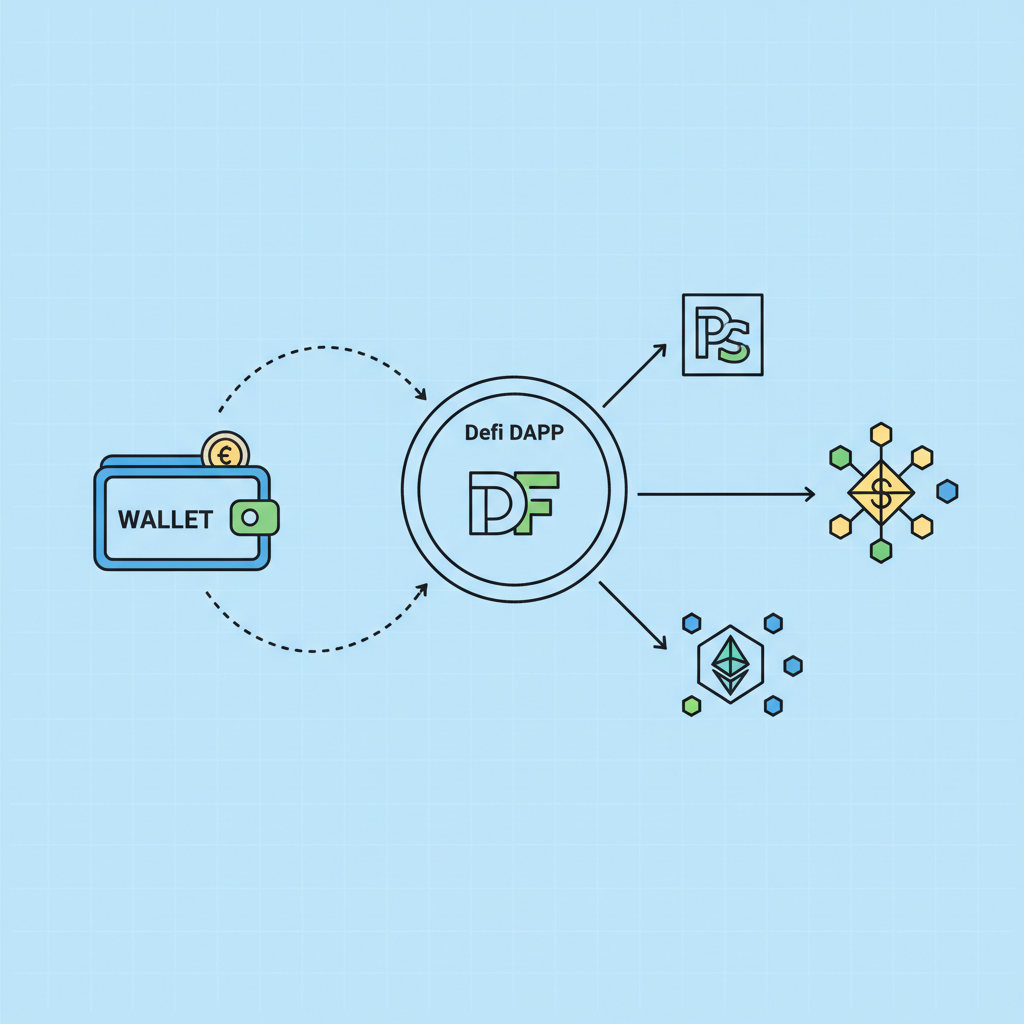
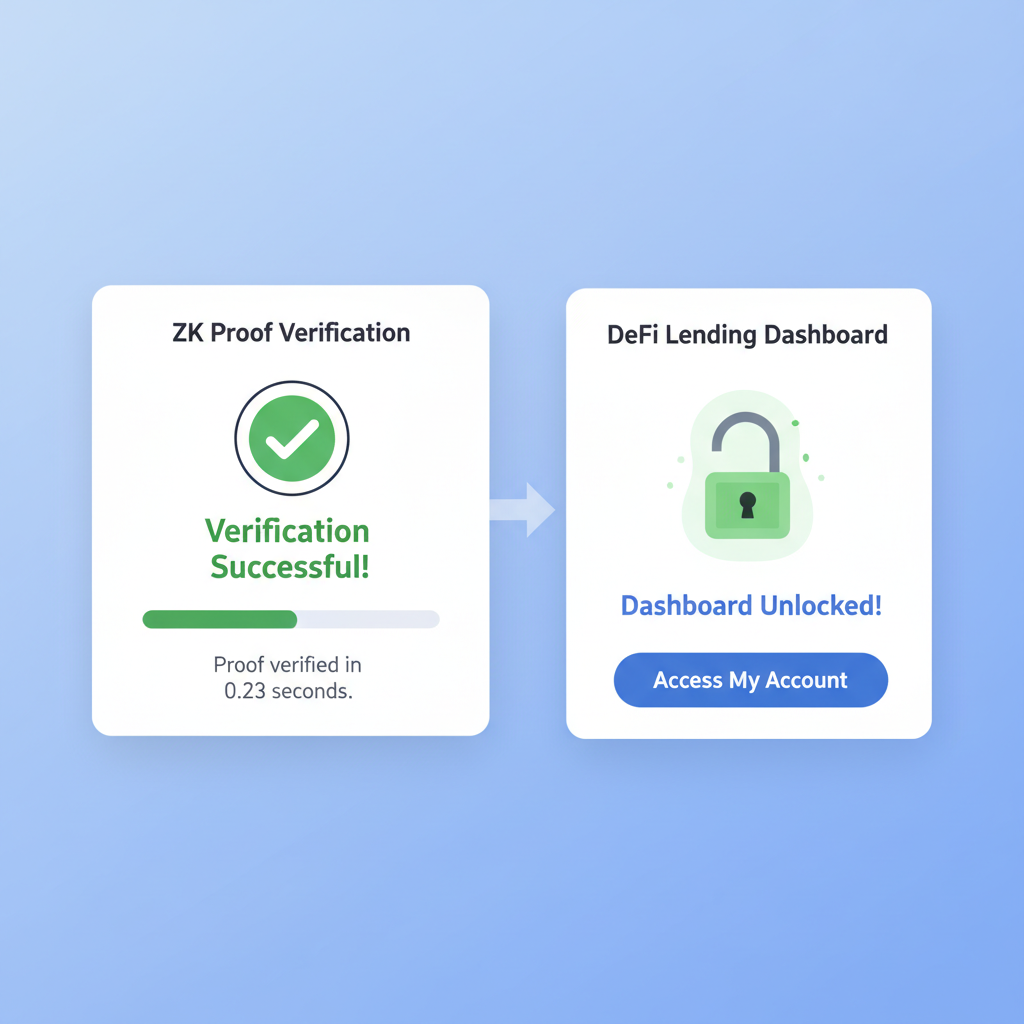
Deeper integration shines in smart contract oracles. Verifiers query ZKCredWallet via standardized APIs, receiving succinct proofs verifiable on-chain with minimal gas. This zero knowledge finance proof paradigm, drawn from zk-creds frameworks, ensures scalability; proofs compress gigabytes of history into kilobytes, outperforming naive selective disclosure sans ZK.
Technical Edge: zkSNARKs and SD-JWT in Action
Under the hood, ZKCredWallet fuses SD-JWT from OpenWallet specs with zkSNARK circuits. ETSI's selective disclosure analyses for EUDI wallets inform salt-based unlinkability, preventing verifiers from linking proofs across sessions. Dock Labs principles guide attribute selection, while arXiv's CSD-JWT innovations keep payloads compact for EVM compatibility.
Simplified Solidity Verifier for Accredited Investor ZK Proof from ZKCredWallet SD-VC
The following Solidity contract snippet implements a simplified verifier for a zero-knowledge proof attesting to 'accredited investor' status. This proof is generated client-side by ZKCredWallet from a Selective Disclosure Verifiable Credential (SD-VC), allowing users to prove compliance (e.g., net worth > $1M or income > $200K) without disclosing exact figures or full credential details.
```solidity
// SPDX-License-Identifier: MIT
pragma solidity ^0.8.19;

contract AccreditedInvestorVerifier {

    /// @notice Groth16 proof elements
    struct G1Point {
        uint256 X;
        uint256 Y;
    }

    struct G2Point {
        uint256[2] X;
        uint256[2] Y;
    }

    /// @notice Verifies a ZK proof for accredited investor status
    /// @dev Simplified placeholder; production uses full pairing verifier from Circom/SnarkJS
    /// @param a First proof element (G1)
    /// @param b Second proof element (G2)
    /// @param c Third proof element (G1)
    /// @param input Public inputs: input[0] = 1 if accredited
    /// @return true if proof verifies
    function verifyProof(
        G1Point memory a,
        G2Point memory b,
        G1Point memory c,
        uint256[1] memory input
    ) public pure returns (bool) {
        // Production: Implement bn128 pairing check
        // Demo: Basic check (INSECURE - for illustration only)
        return input[0] == 1;
    }

    /// @notice Checks accredited investor status from SD-VC ZK proof
    /// @dev Call this from your DeFi contract to gate access
    function checkAccreditedInvestor(
        G1Point memory a,
        G2Point memory b,
        G1Point memory c,
        uint256[1] memory input
    ) external pure returns (bool) {
        require(input[0] == 1, "Must be accredited investor");
        return verifyProof(a, b, c, input);
    }
}
```
**Important Notes:** * This is a *simplified* example with placeholder verification logic for tutorial purposes. In production, generate and deploy a complete Groth16 verifier using Circom for the ZK circuit, SnarkJS for proof generation, and Solidity verifier contracts. * The ZK circuit (off-chain) takes the SD-VC Merkle root/claims and proves the selective attribute meets the accredited threshold. * Integrate into DeFi protocols by requiring users to submit proof via ZKCredWallet; on success, grant access to high-yield pools, leverage, or exclusive features. * Libraries: Use `@openzeppelin/contracts` for security and `circomlib` for circuits.
Developers appreciate the SDK: issue credentials off-chain, store encrypted, prove on-demand. A lender dApp calls wallet. verify({attributes: ['age_gt_18', 'kyc_passed']}), receiving a boolean with cryptographic assurance. No databases, no honeypots; pure math enforces rules.
Critics decry ZK complexity, yet ZKCredWallet abstracts it masterfully. Fiat on-ramps? Prove banking history without account numbers. NFT drops? Attest whitelist status minus wallet history. TokenMinds nails it: one proof, endless reuse across chains like Ethereum, Solana, even Cosmos. This portability crushes siloed KYC, fostering true composability.
- Privacy: Zero metadata leakage via blind proofs.
- Efficiency: Sub-second generation, chain-agnostic.
- Compliance: Auditable by design, meets MiCA and future regs.
- Adoption: Plugs into Aave, Compound, Uniswap governance seamlessly.
Challenges persist; issuer trust remains key, though decentralized attestors like Gitcoin Passport mitigate. Quantum threats loom, but lattice-based upgrades in pipeline fortify. Still, for today's DeFi, ZKCredWallet delivers unmatched ZK wallet privacy, turning regulatory hurdles into competitive moats.
Why ZKCredWallet Leads the Selective Disclosure Charge
Medium deep-dives like Voelkel's affirm ZKP credentials as the selective disclosure gold standard, constructing lean VCs on-the-fly. ZKCredWallet operationalizes this fully, vaulting ahead of fragmented alternatives. Users control revocation lists, unlink proofs via fresh keys, and audit trails stay private.
Picture 2026 DeFi: billions in TVL gated by verifiable credentials DeFi flows. Protocols thrive on verified cohorts without Big Brother oversight. Accredited pools swell, retail accesses fair yields, all powered by selective disclosure ZK mastery. ZKCredWallet isn't just a wallet; it's the privacy layer DeFi craves, rewarding patient builders who bet on zero-knowledge sovereignty.
Credentials as attestations unlock not just protocols, but a freer financial web, where proof trumps disclosure every time.




No comments yet. Be the first to share your thoughts!