

In the fast-evolving world of decentralized finance, or DeFi, unlocking credit lines without surrendering your financial secrets feels like a distant dream. Traditional lenders demand full disclosure of your credit history, income, and assets, often feeding data into centralized black boxes rife with breach risks. DeFi promised liberation through code, yet many protocols still grapple with compliance hurdles, forcing users into invasive KYC processes or on-chain exposure of wallet balances. Enter zero-knowledge verifiable credentials, or zk verifiable credentials, powered by ZKCredWallet - the premier DeFi privacy wallet that lets you prove your creditworthiness selectively, preserving utmost privacy.
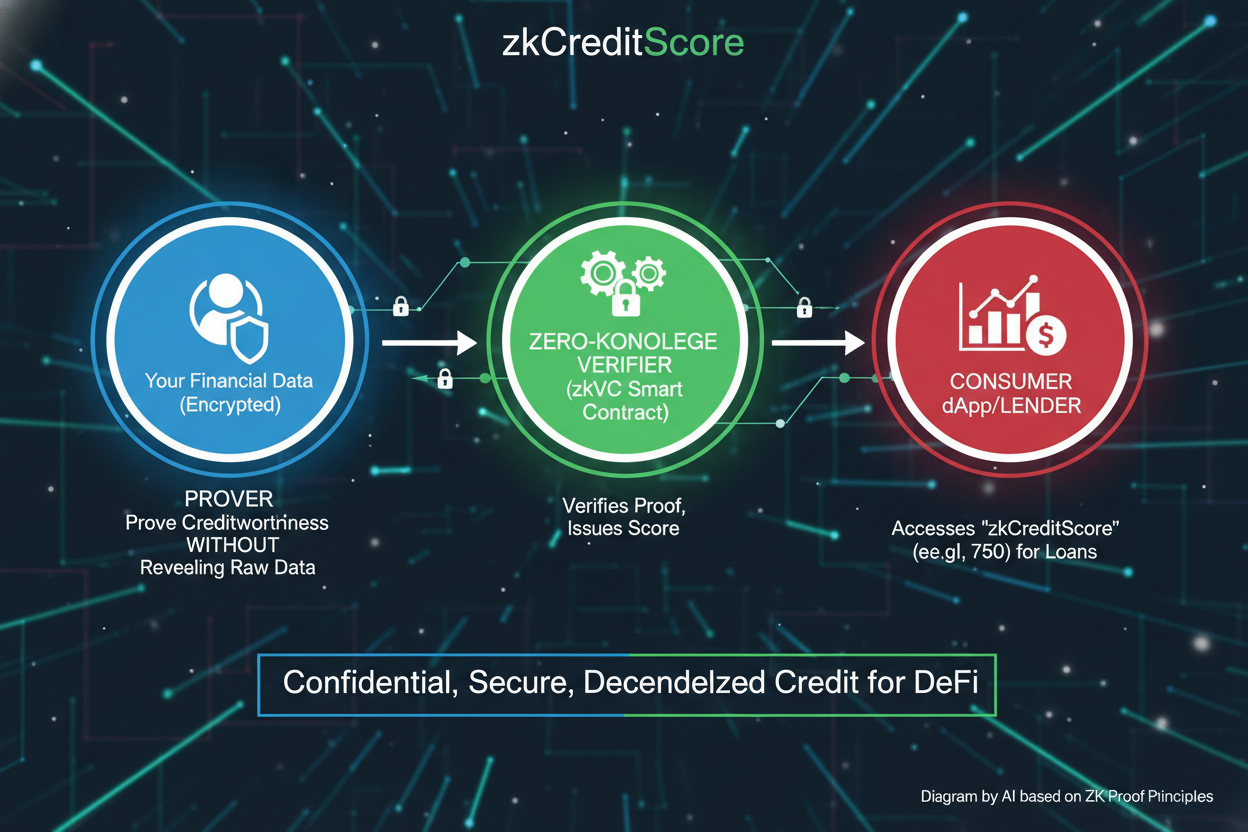
This approach aligns perfectly with self-sovereign identity principles, where you control what gets revealed. Platforms like zkMe's zkCreditScore now bridge off-chain FICO scores onto blockchains anonymously, while VeilScore fuses zero-knowledge machine learning to craft on-chain credit assessments without data leaks. ZKPass takes it further, enabling proofs of asset balances or transaction histories sans account details. As Deutsche Bank notes, zero-knowledge proofs verify data truth without excess info leakage, a boon for blockchain finance.
Navigating DeFi's Privacy Pitfalls
DeFi lending volumes have exploded, but credit assessment lags. Under-collateralized loans remain rare because protocols can't trust unverified claims. Borrowers must over-collateralize with crypto assets, tying up capital inefficiently - a far cry from traditional finance's nuanced credit scoring. Privacy suffers too; public blockchains expose transaction graphs, inviting front-running or doxxing. Research from ScienceDirect highlights how zero knowledge credit proofs enhance identity sharing securely on blockchains.
Consider a typical scenario: You want a stablecoin loan from a DeFi protocol. Without ZK tech, you'd flash your entire wallet or submit KYC docs to a third party, risking hacks like those plaguing centralized credit bureaus. Chainlink explains ZKPs as cryptographic methods proving knowledge sans revelation, ideal for this. Dock Labs echoes that they verify info without exposure. In my analytical view, honed from years dissecting financial fundamentals, this tech shifts power back to users, much like disciplined value investing favors intrinsic worth over hype.

Core Mechanics of Zero-Knowledge Proofs
At heart, a zero-knowledge proof involves a prover convincing a verifier of a statement's truth without disclosing underlying data. Cryptonary simplifies it: The prover demonstrates ownership of info to the verifier covertly. Wilson Center positions ZKPs as verification tools for essential info in trustless settings. TokenMinds points to zero-knowledge state proofs fostering portable identity across chains, reducing silos.
Practically, zk-SNARKs or zk-STARKs crunch computations off-chain, generating compact proofs verifiable on-chain cheaply - under two seconds on standard hardware, per Lance Davis on LinkedIn, with costs akin to token transfers. ResearchGate's zk-BHC example uses ZK in rollups for biometric logins, extensible to credit checks. For ZKCredWallet DeFi integration, this means attesting to a credit score above 700 without showing the exact figure or source.
ArXiv's framework underscores scalable, privacy-preserving decentralized identity via ZKPs, enabling verifiable data sharing. Patience here pays off; just as long-term holding builds wealth, mastering ZK tech fortifies your digital sovereignty.
ZKCredWallet: Pioneering Self-Sovereign Credit Verification
ZKCredWallet stands out by storing, managing, and verifying attestations via zero-knowledge proofs. Issuers like credit bureaus or oracles sign verifiable credentials (VCs) off-chain. You hold them in the wallet, generating self sovereign credit verification proofs on demand. No data leaves your device; verifiers check proofs instantly.
Updated innovations amplify this: zkCreditScore anonymizes FICO ports to chain, boosting credibility for real-world asset tokenization. VeilScore's ZK-ML yields tamper-proof scores privately. zkPass proves solvency or income stealthily, streamlining loan apps. These address DeFi's compliance woes, automating checks while honoring privacy regs like GDPR.
Imagine approaching a DeFi lender with a proof that your credit score exceeds 700, backed by a verifiable credential from a trusted issuer, yet revealing nothing more. ZKCredWallet makes this routine, transforming credential issuance into a seamless process. Bureaus or DeFi oracles issue signed VCs detailing your score range or payment history aggregates. Stored locally, these become fodder for on-demand proofs tailored to lender criteria - say, proving income stability over 24 months without wallet addresses.
Step-by-Step: Issuing and Verifying Credit Proofs
Master ZKCredWallet: Prove Credit Score Privately in DeFi

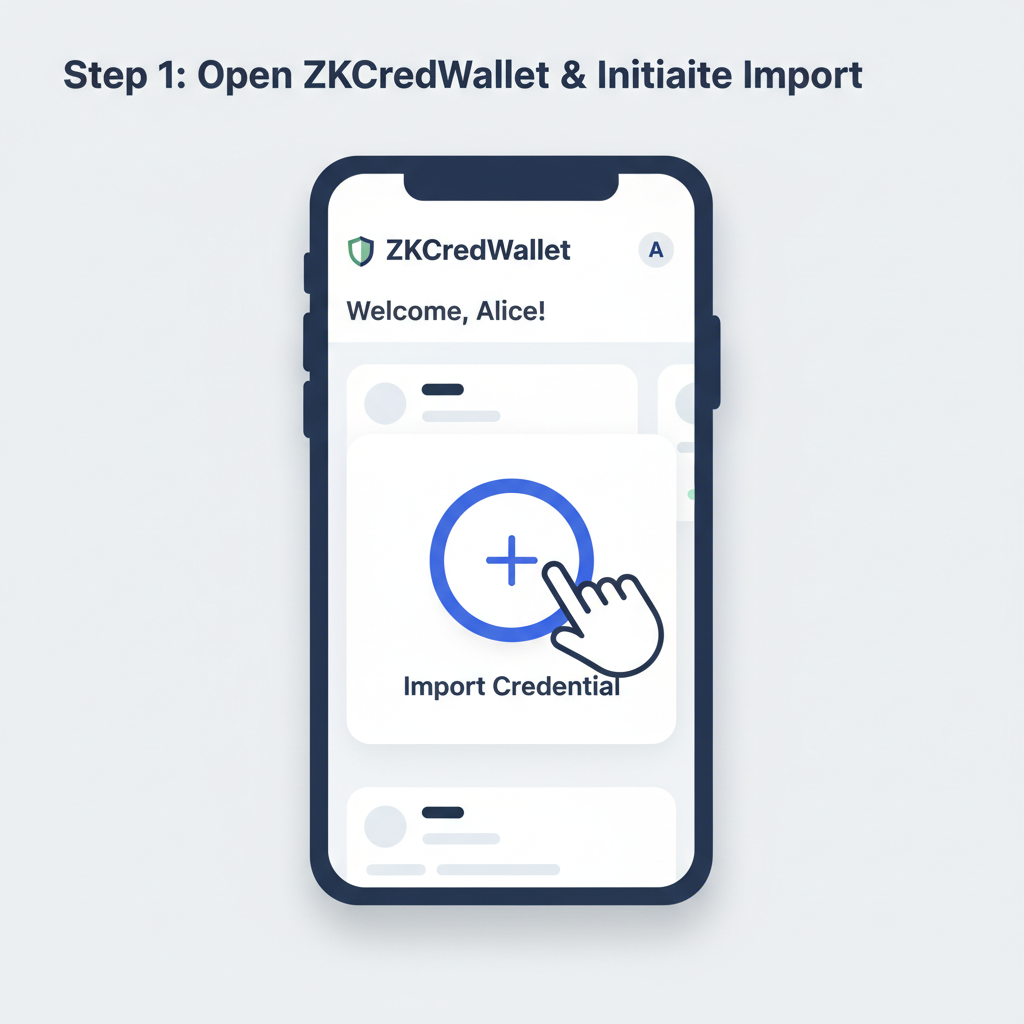
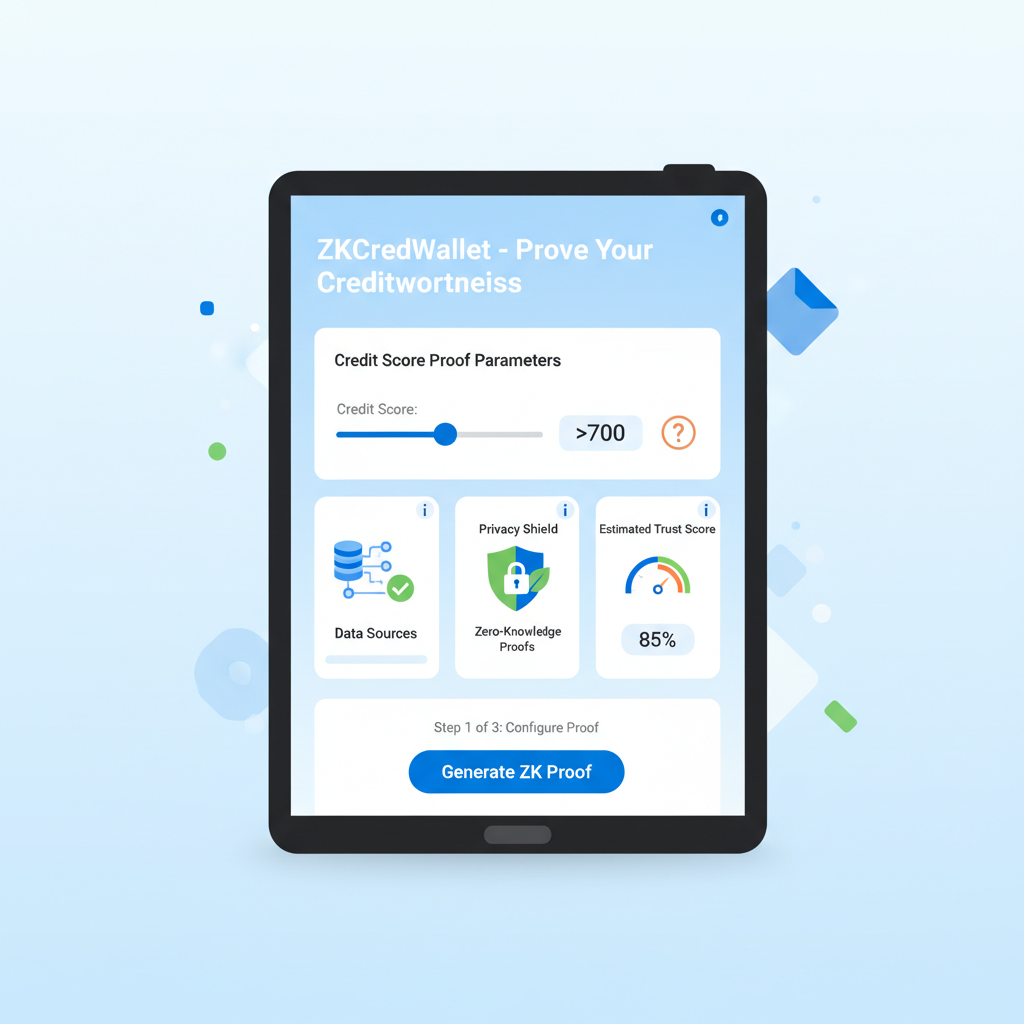
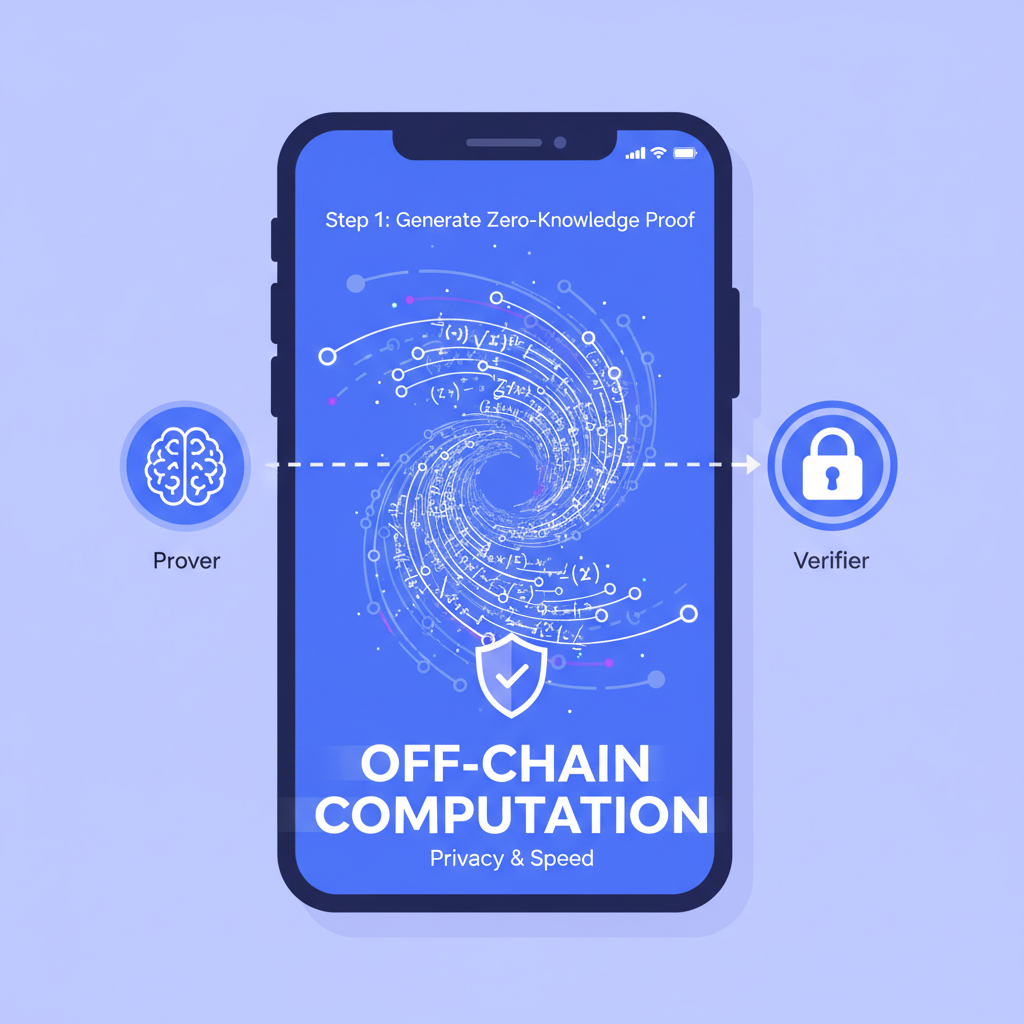
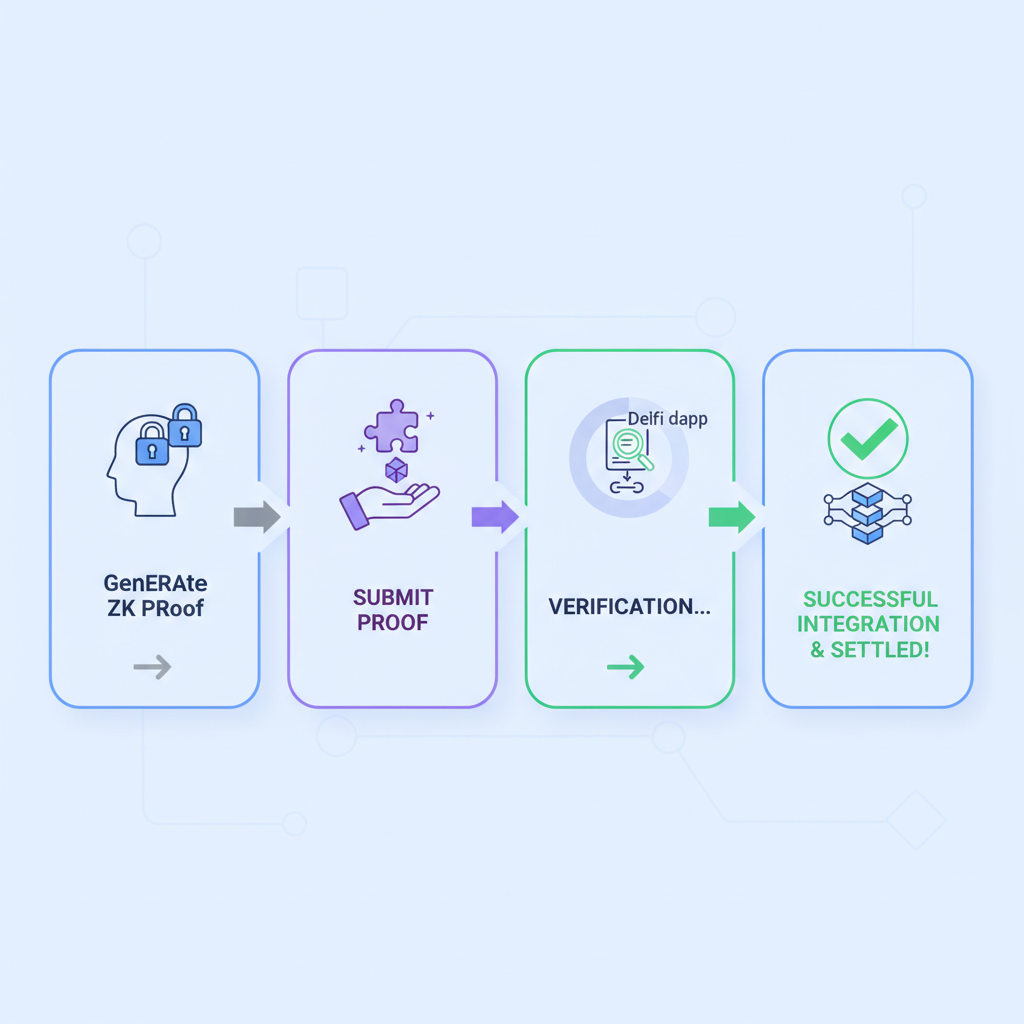
Once generated, the proof deploys to any compatible chain with minimal gas. Lenders verify in seconds, unlocking under-collateralized loans or favorable rates. This mirrors fundamental analysis in investing: surface-level metrics mislead, but verified intrinsics endure. Platforms like Aave or Compound could integrate via ZK oracles, slashing default risks while users retain data sovereignty.
Privacy amplification comes through selective disclosure. Need to prove low debt-to-income? Disclose just that ratio's bracket. High net worth without specifics? Aggregate proofs suffice. As arXiv research affirms, such frameworks scale for verifiable sharing, dodging blockchain transparency pitfalls. TokenMinds' insights on cross-chain identity portability mean your credit proof travels seamlessly, from Ethereum to Solana lending pools.
DeFi Lending Revolutionized
Under-collateralized lending tantalizes DeFi enthusiasts, yet trust barriers persist. ZK verifiable credentials dismantle them. Borrowers access capital efficiently; lenders mitigate risks with cryptographic certainty. VeilScore's zk-ML scores, for instance, evolve dynamically from on-chain behavior, anonymized via proofs. zkPass extends to solvency proofs, confirming you hold $10,000 and without addresses - perfect for flash loans or margin trading.
Compliance elevates too. Regulators demand AML checks; ZKPs satisfy via minimal proofs of non-sanctioned status or age verification. Lance Davis highlights regulatory feasibility, with proofs cheaper than transfers. In my view, this conservative tech stack - verifiable yet veiled - echoes dividend aristocrats: reliable yields from proven foundations, not speculative froth.
Real-world adoption accelerates. Tokenized real-world assets (RWAs) demand credible borrowers; zkCreditScore bridges TradFi scores on-chain anonymously, fueling $100 billion and markets. DeFi protocols gain edges in yield farming or perpetuals, where credit limits hinge on proven stability. Users sidestep over-collateralization's opportunity costs, deploying capital elsewhere for compounded returns.
Challenges linger, chiefly proof generation complexity and issuer trust. Yet ZKCredWallet abstracts this, with intuitive interfaces rivaling mobile banking. As circuits optimize - zk-STARKs slashing sizes 10x - ubiquity nears. Patience rewards; early adopters today pioneer tomorrow's standards, building wealth through privacy-fortified strategies.
ZKCredWallet positions you at this nexus, a DeFi privacy wallet fusing self-sovereign principles with practical utility. By wielding zero knowledge credit proofs, you navigate lending landscapes astutely, proving worth without vulnerability. Discipline in credential management yields lasting financial autonomy, much like holding quality assets through volatility.




No comments yet. Be the first to share your thoughts!