
What the ZK Cred Wallet Actually Does
The ZK Cred Wallet functions as a cryptographic filter between your financial history and the institutions that evaluate it. Instead of uploading raw transaction logs or bank statements to a credit bureau, the wallet generates a zero-knowledge proof (ZKP). This mathematical protocol allows you to convince a verifier that a specific statement is true without exposing the raw data that proves it.
In traditional credit scoring, privacy is sacrificed for transparency. To get approved for a loan, you must expose your entire transaction history, revealing your spending habits, income sources, and personal identity. A ZK Cred Wallet inverts this model. It acts as a secure enclave that processes your financial data locally on your device. The output is not a spreadsheet, but a cryptographic signature that attests to your creditworthiness.
Think of this mechanism like a bouncer checking a ID at a club. The bouncer needs to know only one thing: you are over 21. They do not need to know your name, your address, or the details on your driver's license. The ZK Cred Wallet performs this verification for financial data. You can prove you have a credit score above 700, or that your debt-to-income ratio is below 30%, while keeping the underlying transaction history private.
This approach aligns with recent advancements in anonymous credential systems, such as those being integrated into mainstream platforms like Google Wallet. By leveraging zero-knowledge protocols for ECDSA signatures, these systems demonstrate that high-stakes financial verification does not require centralizing sensitive data. The ZK Cred Wallet extends this concept to DeFi and broader credit markets, offering a verifiable, private alternative to traditional credit reporting.
The result is a system where creditworthiness is a property you carry, not a record you surrender. Lenders receive a proof that can be mathematically verified as authentic, while your financial privacy remains intact. This shift reduces the attack surface for data breaches and gives users control over their financial reputation.
How ZK Proofs Secure Credit Reputation
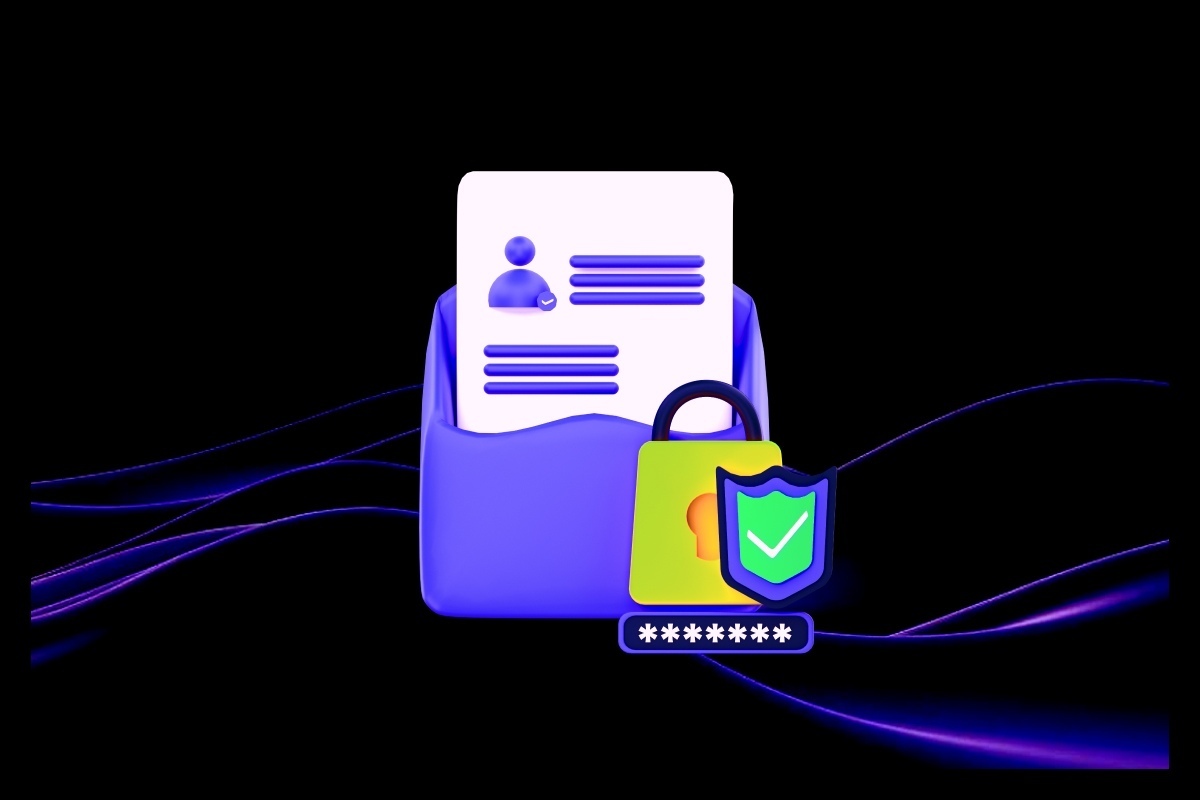
Traditional credit reporting relies on centralized databases that aggregate your financial history into a single, vulnerable profile. Zero-knowledge (ZK) cred wallets invert this model by shifting control back to the individual. Instead of submitting your entire transaction history to a lender, you use cryptographic proofs to demonstrate specific attributes—such as a minimum credit score, income threshold, or repayment history—without exposing the raw data.
This mechanism relies on anonymous credential systems like AnonCreds or Google’s implementation for mobile driver’s licenses (MDL). In these systems, a trusted issuer (such as a bank or government agency) signs a credential attesting to your financial standing. The wallet stores this signed credential locally. When a verifier (a lender) requests proof, the wallet generates a ZK proof that validates the claim without exposing the raw data.
To understand the flow of data and privacy, consider the following steps:

The technical architecture behind this process, such as the zk-creds protocol, removes the need for issuers to hold signing keys after issuance, enhancing security and scalability. By leveraging these ZK capabilities, credit scoring becomes a privacy-first utility, aligning financial verification with the strictest standards of data protection and regulatory compliance.
ZK Cred Wallets vs. Traditional Credit Bureaus
The shift from centralized credit bureaus to zero-knowledge (ZK) cred wallets represents a structural change in how financial reputation is verified. Traditional credit scoring relies on centralized data aggregation, where bureaus collect, store, and sell personal financial history. This model creates single points of failure for data privacy and exposes users to systemic risks associated with data breaches and unauthorized profiling.
ZK cred wallets operate on a non-custodial reputation model. Instead of storing raw data on a central server, these wallets generate cryptographic proofs that verify specific attributes without exposing the underlying information. For example, a user can prove they meet a minimum credit score threshold or are over a certain age without disclosing their full credit report or date of birth. This aligns with the principles of zero-knowledge proofs, where a prover convinces a verifier of a statement's truth without conveying any additional information [Wikipedia].
Real-world implementations are beginning to bridge this gap. Google Wallet has introduced features that use cryptography to verify age and identity, offering a superior alternative to third-party redaction services [HN]. Similarly, platforms like Nym utilize ZK-nyms to allow users to prove their right to access digital services while maintaining anonymity [Nym]. These examples demonstrate the practical application of ZK technology in maintaining privacy while satisfying regulatory and institutional requirements.
The following comparison outlines the fundamental differences in data handling, ownership, and integration capabilities.
| Feature | Traditional Credit Bureau | ZK Cred Wallet | DeFi Integration |
|---|---|---|---|
| Data Storage | Centralized, third-party servers | User-controlled, local device | N/A |
| Data Visibility | Full financial history shared with lenders | Only proof of compliance revealed | N/A |
| Ownership | Bureau-owned and sold as asset | User-owned, non-custodial | N/A |
| Verification Method | Manual or API-based data sharing | Cryptographic zero-knowledge proofs | Smart contract validation |
| Privacy Risk | High (single point of failure) | Low (minimal data exposure) | N/A |
Implementing ZK Cred Wallets in DeFi Protocols
Implementing ZK Cred Wallets in DeFi protocols requires a structured approach to constraint definition, option comparison, and tradeoff analysis. The goal is to identify paths with the fewest hidden costs while ensuring the recommendation fits the reader's actual situation.
First, define the specific regulatory and technical constraints. For example, if a DeFi protocol requires KYC for certain liquidity pools, the constraint is not just "verify identity" but "verify identity without revealing PII to the smart contract." Next, compare realistic options: using a centralized identity provider versus a decentralized zero-knowledge identity (DID) system. The latter often incurs higher gas costs for proof verification but offers superior privacy guarantees.
Test the tradeoffs by simulating the proof generation and verification process. Consider the latency introduced by generating zkSNARKs or STARKs on the user's device versus off-chain proving services. If the user experience is degraded by long wait times, adoption will suffer. A simpler fallback might involve a hybrid model where light proofs are used for initial screening, with full verification reserved for high-value transactions.
Finally, choose the path that works outside ideal conditions. This means accounting for network congestion, varying device capabilities, and potential changes in regulatory standards. The implementation should be robust enough to handle edge cases, such as expired credentials or revoked issuers, without compromising the core privacy guarantees.
Common Mistakes in ZK Proof Implementation
Developers building privacy-first credit scoring systems often prioritize cryptographic complexity over practical security and usability. The most frequent error is over-disclosure of data during the proof generation phase. When a ZK circuit reveals more attributes than necessary to verify creditworthiness, it defeats the core purpose of zero-knowledge proofs. For instance, disclosing a user's exact birthdate instead of just confirming they are over 18 creates unnecessary identity linkage risks.
Another critical pitfall is reliance on weak or centralized issuers. If the credential issuer is compromised or acts maliciously, the integrity of the entire ZK-based credit score collapses. Systems must ensure that issuers do not hold signing keys that can be coerced, as noted in academic protocols like zk-creds, which aim to remove issuer-held keys to prevent single points of failure. Users must also verify that the issuer's reputation aligns with regulatory standards for financial data.
Finally, complex user experiences (UX) hinder adoption. If generating a ZK proof requires multiple steps, long wait times, or opaque error messages, users will abandon the process. Unlike Google Wallet, which offers seamless, one-tap authentication, or Nym, which focuses on privacy-preserving metadata protection, credit scoring apps must balance rigorous verification with intuitive design. A clunky interface undermines trust in the underlying technology, regardless of its cryptographic strength.
Frequently Asked Questions About ZK Cred Wallets
How do zero-knowledge proofs protect credit data?
A zero-knowledge proof (ZK proof) allows a prover to convince a verifier that a statement is true without exposing the raw data. In credit scoring, this means a wallet can prove a user meets a minimum income threshold or has no delinquencies without exposing bank statements or transaction histories. This mechanism shifts the paradigm from data collection to data verification, ensuring that only the boolean result of a credit check is shared with lenders.
Can ZK wallets replace traditional credit bureaus?
Zero-knowledge wallets do not replace bureaus; they decentralize the verification process. While traditional bureaus aggregate and sell raw data, ZK systems allow users to hold their own credentials. For example, Google Wallet’s implementation of anonymous credentials demonstrates how large-scale platforms can issue verifiable attestations. A ZK Cred Wallet acts as a secure vault for these attestations, allowing users to present proofs directly to financial institutions, thereby reducing reliance on centralized data brokers.
What is the difference between ZK proofs and privacy coins?
Privacy coins like Monero obscure transaction details on the blockchain level, making it difficult to trace asset movement. ZK proofs, used in credit wallets, focus on selective disclosure of specific attributes. A user might reveal their credit score category (e.g., "Prime") without revealing their exact score or identity. This distinction is critical for regulatory compliance, as ZK systems can be designed to include audit trails for anti-money laundering (AML) checks while maintaining user privacy for other data points.
No comments yet. Be the first to share your thoughts!