
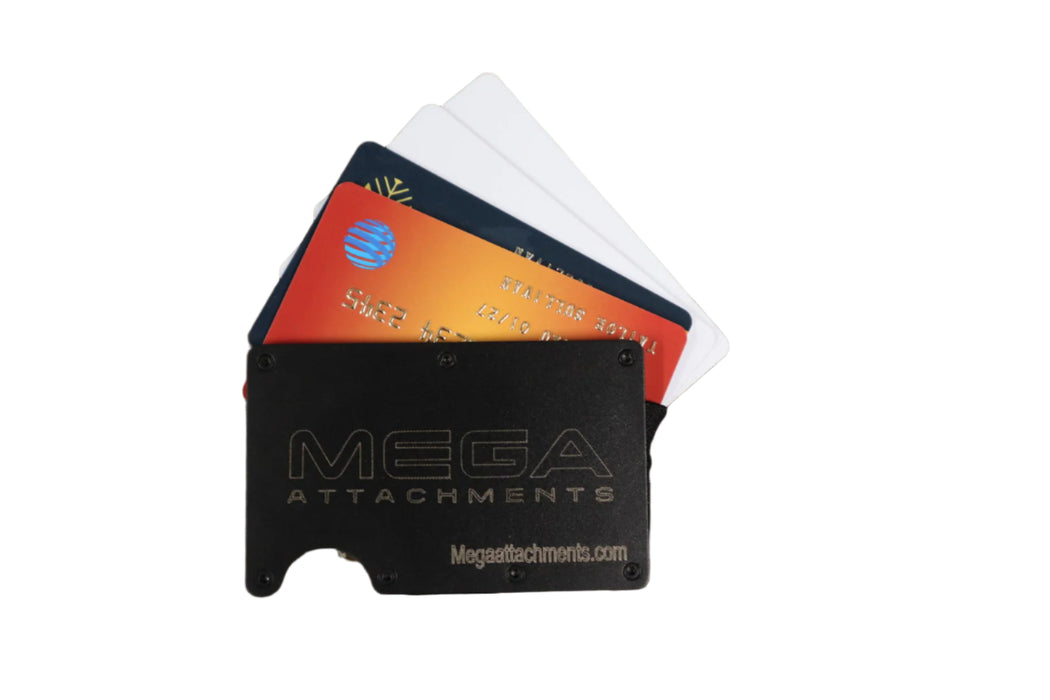
What a ZK Cred Wallet Actually Does
A ZK Cred Wallet is a digital identity container that uses zero-knowledge proofs to verify specific attributes without exposing the underlying data. Unlike traditional KYC workflows, which require uploading full documents like passports or utility bills to a central server, a ZK Cred Wallet allows you to prove you meet a criterion—such as being over 21 or holding a valid driver’s license—without revealing your name, address, or exact date of birth.
To understand how this works, consider the difference between showing a document and showing a result. In a standard KYC flow, a bank receives a copy of your ID, creating a permanent record of your sensitive personal information that could be leaked in a data breach. In a ZK Cred Wallet, the verification happens through cryptographic mathematics. You possess a "credential" issued by a trusted authority (like a government or university). When a service asks for verification, your wallet generates a proof that confirms the credential is valid and meets the required conditions, but it does not transmit the credential’s raw data.
This mechanism relies on the principle that you can prove knowledge of a fact without revealing the fact itself. For example, if a website requires users to be over 18, a ZK Cred Wallet can generate a proof that says "True: Age > 18" without revealing that your actual age is 32. This selective disclosure minimizes the attack surface for identity theft and reduces the amount of personal data held by third parties.
Major tech implementations are already moving in this direction. Google Wallet has introduced features that utilize zero-knowledge proofs for age verification, allowing users to prove they are of a certain age without sharing their birth date. This shift represents a move from data collection to data minimization, aligning with privacy-by-design principles. By keeping the raw data on the user’s device, the ZK Cred Wallet ensures that the user retains control over their digital identity, rather than surrendering it to centralized databases.
Comparing ZK Cred Wallets to Standard KYC
The difference between traditional Know Your Customer (KYC) processes and Zero-Knowledge (ZK) credential wallets comes down to how data is handled. Traditional KYC requires you to surrender personal information to a central authority. ZK credential wallets allow you to prove you meet specific criteria without revealing the underlying data. This shift moves compliance from a model of data collection to one of data minimization.
Data Privacy and Control
In a standard KYC flow, you submit documents like passports or driver’s licenses to a service provider. That provider stores this data in their database, creating a target for breaches and a record of your identity across multiple platforms. You have no control over how long that data is kept or who accesses it.
With a ZK credential wallet, you hold a verifiable credential issued by a trusted authority. When a service asks for verification, the wallet generates a zero-knowledge proof. This proof confirms a fact—such as "the user is over 18"—without disclosing your birthdate or identity. As noted by NTT Data, this technology brings trustworthiness to privacy by allowing verification without exposure. You retain custody of your data, and the service provider receives only the necessary proof.
Regulatory Compliance Overhead
Traditional KYC creates significant compliance overhead for businesses. They must implement secure storage solutions, undergo regular audits, and manage the risk of holding sensitive personal identifiable information (PII). Under regulations like GDPR and CCPA, the burden of data protection falls heavily on the entity collecting the information. Any breach results in legal liability and reputational damage.
ZK credential wallets reduce this overhead by shifting the liability. Since the service provider never receives the raw PII, the attack surface for data breaches is eliminated. The compliance burden shifts to the credential issuer, who has already verified the user. This aligns with the principle of privacy by design, where compliance is embedded in the protocol rather than added as a layer of security.
The Trade-off: Verification Speed and Cost
The primary trade-off lies in complexity and cost. Traditional KYC is straightforward but expensive in terms of data management. ZK credential wallets require more sophisticated cryptographic infrastructure. However, as implementations like Google’s Longfellow-zk demonstrate, these systems are becoming more integrated with standard document formats, reducing friction.
| Feature | Traditional KYC | ZK Cred Wallet |
|---|---|---|
| Data Storage | Centralized by provider | Decentralized by user |
| Data Exposure | Full PII revealed | Only proof revealed |
| Compliance Risk | High (breach liability) | Low (no raw data held) |
| User Control | Minimal | Full custody |
| Verification Cost | Low per transaction | Higher initial setup |
This comparison highlights why ZK credential wallets are gaining traction in high-stakes regulatory environments. They offer a path to compliance that protects user privacy while satisfying legal requirements. For more on how these protocols work in practice, see the research on zk-nyms from Nym.
Top ZK Cred Wallet Solutions for 2026
The market for Zero-Knowledge Credential (ZK Cred) wallets has shifted from experimental prototypes to compliance-ready infrastructure. In 2026, the leading solutions prioritize interoperability with existing regulatory frameworks, specifically targeting the European Union's eIDAS 2.0 standards and W3C Decentralized Identity specifications. These platforms allow users to present verifiable credentials—such as age verification or professional licenses—without exposing the underlying data to the verifier.
The following wallets represent the current standard for technical robustness and issuer support. They differ primarily in their underlying cryptographic protocols and their integration with government-issued identity frameworks.
Cheqd: The AnonCreds Standard
Cheqd has established itself as a primary infrastructure provider for Zero-Knowledge Credentials (ZKCreds), also known as AnonCreds. Unlike traditional wallets that rely on a single issuer, Cheqd operates as a decentralized identity network, enabling cross-platform compatibility between various identity providers and verifiers. This approach is critical for financial institutions that need to integrate KYC data from multiple sources without creating silos.
The platform’s technical strength lies in its flexible credential issuance model. It removes the need for issuers to hold permanent signing keys, reducing the attack surface for credential forgery. For organizations requiring high-stakes compliance, Cheqd offers a proven track record of supporting enterprise-grade identity verification while maintaining user privacy.
Google Wallet: The Anonymous Credentials Integration
Google’s entry into the ZK space, often referred to as "Anonymous Credentials for ECDSA," represents a significant shift toward mainstream adoption. By integrating zero-knowledge proofs directly into Google Wallet, the tech giant allows users to prove specific attributes (such as being over 21) without revealing their birth date or full identity. This solution leverages Google’s existing ecosystem, making it the most accessible option for general consumers.
The technical architecture focuses on seamless user experience. Users do not need to manage separate cryptographic keys or understand the underlying zkSNARK protocols. However, this convenience comes with a centralized dependency on Google’s infrastructure, which may not satisfy users requiring full self-sovereign identity (SSI) control. Despite this, its integration with major US and EU verification services makes it a dominant player in the consumer wallet space.
SSI-Wallet: EUDI Compliance and Hardware Security
For users prioritizing strict regulatory compliance and hardware-level security, the SSI-Wallet offers a specialized solution. This platform is designed to enable the use of European Digital Identity Wallet (EUDI) credentials through zero-knowledge proofs. It employs a ZK SGX attestation prover, which utilizes Intel’s root of trust certificate to verify the integrity of the hardware environment before issuing or presenting credentials.
This hardware-backed approach is essential for high-security use cases, such as banking or government services, where the risk of software-based manipulation is unacceptable. The SSI-Wallet ensures that credentials are generated and stored in a trusted execution environment, providing a layer of security that software-only wallets cannot match. It is particularly relevant for organizations operating within the EU’s stringent data protection regulations.
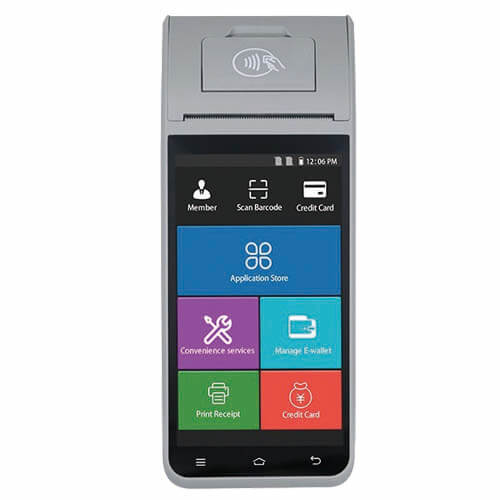
Comparison of Leading ZK Cred Wallets
The table below summarizes the key technical and regulatory distinctions between the primary ZK Cred wallet solutions available in 2026.

As an Amazon Associate, we may earn from qualifying purchases.
GDPR Compliance and Legal Risks
The intersection of zero-knowledge (ZK) technology and European privacy law creates a distinct advantage for decentralized identity wallets. Unlike traditional KYC providers that store personal data in centralized databases, ZK Cred Wallets operate on a principle of data minimization. This architectural difference directly addresses two core tenets of the General Data Protection Regulation (GDPR): the right to erasure and the limitation of data processing.
The Right to Be Forgotten
Under GDPR Article 17, individuals have the right to have their personal data erased when it is no longer necessary for the purpose it was collected. In a centralized KYC system, deleting data from a single database is straightforward but risky; backups, logs, and third-party copies often retain fragments of that data indefinitely.
ZK Cred Wallets simplify this compliance burden. Since the wallet holder retains private keys and the underlying credentials are not stored on a central server, "erasure" is effectively achieved by destroying the local private key or revoking the specific credential. There is no centralized honeypot of personal data to breach or accidentally retain. This eliminates the operational nightmare of ensuring complete data deletion across distributed legacy systems.
Data Minimization and Purpose Limitation
GDPR Article 5 mandates that personal data be adequate, relevant, and limited to what is necessary (data minimization). Traditional KYC processes typically require users to upload full government-issued IDs, capturing excessive information (name, address, birth date, ID number) for a single verification event.
ZK proofs allow for selective disclosure. A user can prove they are over 18 without revealing their exact birth date, or prove they are a resident of the EU without disclosing their specific city or address. This aligns perfectly with GDPR's purpose limitation principle. The verifier receives only the specific attribute required for the transaction, reducing the legal liability associated with holding sensitive personal information.
Compliance Comparison
The following table contrasts how each model handles key GDPR requirements:
| Feature | Traditional KYC | ZK Cred Wallet |
|---|---|---|
| Data Storage | Centralized database | User-held (local) |
| Right to Erasure | Complex (requires deletion from all copies/logs) | Simple (key destruction/revocation) |
| Data Minimization | Low (collects full ID details) | High (selective disclosure only) |
Legal Risks and Auditing
While ZK wallets reduce data storage risks, they introduce new compliance questions regarding audit trails. Regulators often require proof of identity for anti-money laundering (AML) purposes. The challenge lies in providing sufficient evidence to regulators without compromising user privacy. Current implementations, such as those referenced in W3C standards for Verifiable Credentials, are developing methods for privacy-preserving audits. These allow authorized entities to verify the validity of a credential without accessing the underlying personal data, balancing regulatory oversight with individual privacy rights.
Choosing the Right Identity Solution
Selecting between a ZK Cred Wallet and traditional KYC requires matching the technology to the specific compliance requirement. There is no universal replacement; the decision hinges on whether the use case demands selective disclosure or full identity proofing.
For narrow verification tasks, such as age checks, ZK Cred Wallets offer a distinct advantage. As demonstrated by Google Wallet’s implementation of anonymous credentials, users can prove they meet a threshold (e.g., over 21) without revealing their actual date of birth or full name. This selective disclosure aligns with privacy-by-design principles while satisfying legal obligations.
However, ZK proofs are not a panacea for high-stakes identity verification. For complex regulatory requirements like anti-money laundering (AML) checks or Know Your Customer (KYC) onboarding, traditional KYC remains the standard. These processes require the verifier to hold a complete, verified identity record, which ZK’s privacy-preserving nature intentionally obscures. In these scenarios, the ZK Cred Wallet serves as a secure storage layer for credentials, but the verification itself often still relies on established KYC infrastructures to ensure full regulatory compliance.
No comments yet. Be the first to share your thoughts!