
The shift to private credit scoring
Traditional credit reporting systems operate like open books: to prove you are a reliable borrower, you must hand over your entire financial history. This model forces a trade-off between access and privacy. Lenders need granular data to assess risk, but that requirement exposes sensitive details—spending habits, income fluctuations, and debt loads—to every intermediary in the chain. The result is a fragile system where a single data breach or identity theft can derail a user’s financial future.
The ZK Cred Wallet addresses this structural flaw by shifting the verification process from disclosure to proof. Instead of uploading raw transaction records or social security numbers, the wallet uses zero-knowledge proofs (ZKPs) to generate a cryptographic signature. This signature confirms that the user meets specific lending criteria—such as having a credit score above 700 or maintaining positive cash flow for six months—while keeping the raw financial details private.
This architectural shift transforms credit scoring from a data-harvesting exercise into a privacy-preserving verification step. A ZK Cred Wallet acts as a secure vault: it holds the sensitive credentials, performs the complex calculations locally, and shares only the final "yes" or "no" result with the lender. This ensures that your financial identity remains yours, reducing the attack surface for fraud while maintaining the rigor lenders require.
By decoupling verification from disclosure, the ZK Cred Wallet enables a new standard for Web3 identity. It allows users to build a portable, private credit reputation that can be used across different platforms and lenders without re-submitting the same sensitive documents repeatedly. This is not just a technological upgrade; it is a fundamental rethinking of how trust is established in digital finance.
How zero-knowledge proofs secure identity
The ZK Cred Wallet relies on zero-knowledge proofs (ZKPs) to separate verification from disclosure. In this system, a user acts as the prover, demonstrating that specific criteria are met without exposing the raw information to the verifier. This mechanism allows a wallet to prove a credit score threshold is met without exposing income, debt, or social security numbers.
The technical foundation often uses zk-SNARKs (Zero-Knowledge Succinct Non-Interactive Argument of Knowledge). This protocol enables a prover to generate a proof that is both short and quick to verify. For context, Zcash is a prominent cryptocurrency that integrates ZK-SNARKs to ensure transactions are confirmed and secure while keeping the sender, receiver, and transaction amount private. The ZK Cred Wallet applies this same logic to identity attributes.
The process begins with a trusted issuer, such as a bank or credit bureau, signing a credential. This credential is stored in the user’s ZK Cred Wallet. When a lender needs to verify eligibility, the wallet generates a ZKP. This proof confirms that the signed credential meets the lender’s requirements—such as a credit score above 700—without transmitting the actual score or personal details.
As noted in the European Digital Identity Wallet architecture, a Wallet Unit generates a ZKP which proves that the unit knows a witness (the attestation). The verifier checks the proof against public parameters. If the proof is valid, the lender knows the user is qualified, but learns nothing else. This preserves privacy while maintaining trust.
The underlying infrastructure supporting these cryptographic operations often involves established blockchain networks. Below is a technical chart for Ethereum (ETH), which serves as a primary settlement layer for many ZK-proof verification contracts.
ZK Cred Wallet vs traditional credit models
The ZK Cred Wallet represents a fundamental shift from the legacy credit infrastructure that dominates the current financial system. Traditional models, led by entities like Equifax and FICO, rely on centralized data aggregation. They collect your entire financial history to generate a single score, often exposing sensitive transaction details to third parties in the process. In contrast, the ZK Cred Wallet utilizes zero-knowledge proofs to verify creditworthiness while keeping the source data confidential. This approach prioritizes data sovereignty, allowing users to prove they meet specific criteria—such as income thresholds or debt-to-income ratios—without handing over their full financial ledger.
Standard Web3 identity solutions, such as Decentralized Identifiers (DIDs) and Verifiable Credentials (VCs), offer more privacy than traditional banks but still fall short of the ZK Cred Wallet’s capabilities. While DIDs allow users to hold credentials on-chain, they often require disclosing the credential itself to verify it. The ZK Cred Wallet improves upon this by generating cryptographic proofs that confirm the validity of a credential without exposing the credential’s contents. This distinction is critical for private credit scoring, where the goal is to minimize data exposure while maintaining trust.
The following comparison highlights the operational differences between these three approaches across key dimensions of privacy and control.
| Feature | Traditional Credit (FICO/Equifax) | Standard Web3 ID (DIDs/VCs) | ZK Cred Wallet |
|---|---|---|---|
| Data Exposure | Full financial history shared with lenders | Credential contents visible to verifier | Only proof of validity revealed |
| User Control | Minimal; data brokers own the profile | High; user holds the credentials | High; user controls the proof generation |
| Verification Speed | Days to weeks for manual underwriting | Near-instant on-chain verification | Near-instant with zero data leakage |
| Data Minimization | None; all data collected | Partial; some metadata exposed | Complete; only necessary facts proven |
The transition to ZK Cred Wallet technology aligns with broader industry moves toward privacy-preserving identity, as seen in recent integrations with major digital wallets. By decoupling verification from data exposure, the ZK Cred Wallet offers a more robust framework for private credit scoring, addressing the privacy deficits inherent in both legacy banking and early Web3 identity standards.
Adoption in decentralized finance
The primary friction in decentralized finance (DeFi) lending has always been the tension between privacy and trust. Traditional lending requires Know Your Customer (KYC) checks, which expose sensitive personal data to centralized authorities. DeFi protocols, by contrast, rely on on-chain collateral, which limits borrowing power to the value of assets locked in smart contracts. The ZK Cred Wallet bridges this gap by allowing borrowers to prove their creditworthiness without revealing their identity or full transaction history.
Lenders in DeFi are beginning to integrate ZK Cred Wallets to assess risk using zero-knowledge proofs. Instead of demanding a full credit report, a protocol can request a proof that verifies specific conditions: for example, that the user’s debt-to-income ratio is below 50% or that they have no history of defaults in regulated finance. This allows lenders to offer higher loan-to-value (LTV) ratios and lower interest rates to trustworthy users, while keeping those users’ data private. The ZK Cred Wallet acts as a selective disclosure mechanism, sharing only the minimum necessary information to satisfy the lender’s risk parameters.
This shift enables permissionless but compliant lending. Users can access capital based on their financial behavior rather than their social identity or location. For lenders, this expands the addressable market to include unbanked or underbanked individuals who have a strong financial history but lack traditional credit scores. The technology effectively decouples credit reputation from centralized identity databases, creating a more open and efficient credit market.
To understand the market context for these protocols, we can look at the performance of major DeFi tokens that are integrating similar privacy-preserving technologies.
Choosing a ZK Cred Wallet solution
Selecting a ZK Cred Wallet requires balancing three technical pillars: interoperability, issuer support, and security. A wallet is only as useful as the credentials it can hold and the verifiers it can reach. Without broad standards, your private credit score remains trapped in a single ecosystem.
Interoperability starts with W3C standards. Look for wallets that support W3C Verifiable Credentials (VCs) and Decentralized Identifiers (DIDs). This ensures your identity data isn't locked into one provider's proprietary format. Cheqd, for example, has integrated Zero Knowledge Credentials (ZKCreds) to bridge decentralized identity networks, showing how open protocols enable cross-platform utility.
Issuer support is equally critical. Before committing to a wallet, verify that your primary credential issuers—banks, government agencies, or credit bureaus—accept wallets from that provider. A wallet that doesn't support the specific credential schemas you need is just a digital vault for unused data. Prioritize wallets that actively partner with major issuers to ensure seamless credential ingestion.
Security audits are non-negotiable for high-stakes identity. Since a ZK Cred Wallet holds the keys to your financial reputation, it must undergo rigorous third-party security reviews. Check for published audit reports from reputable firms. Additionally, consider hardware integration. Using a hardware wallet like Ledger or Trezor adds a physical layer of security, ensuring that even if your device is compromised, your private keys remain safe.
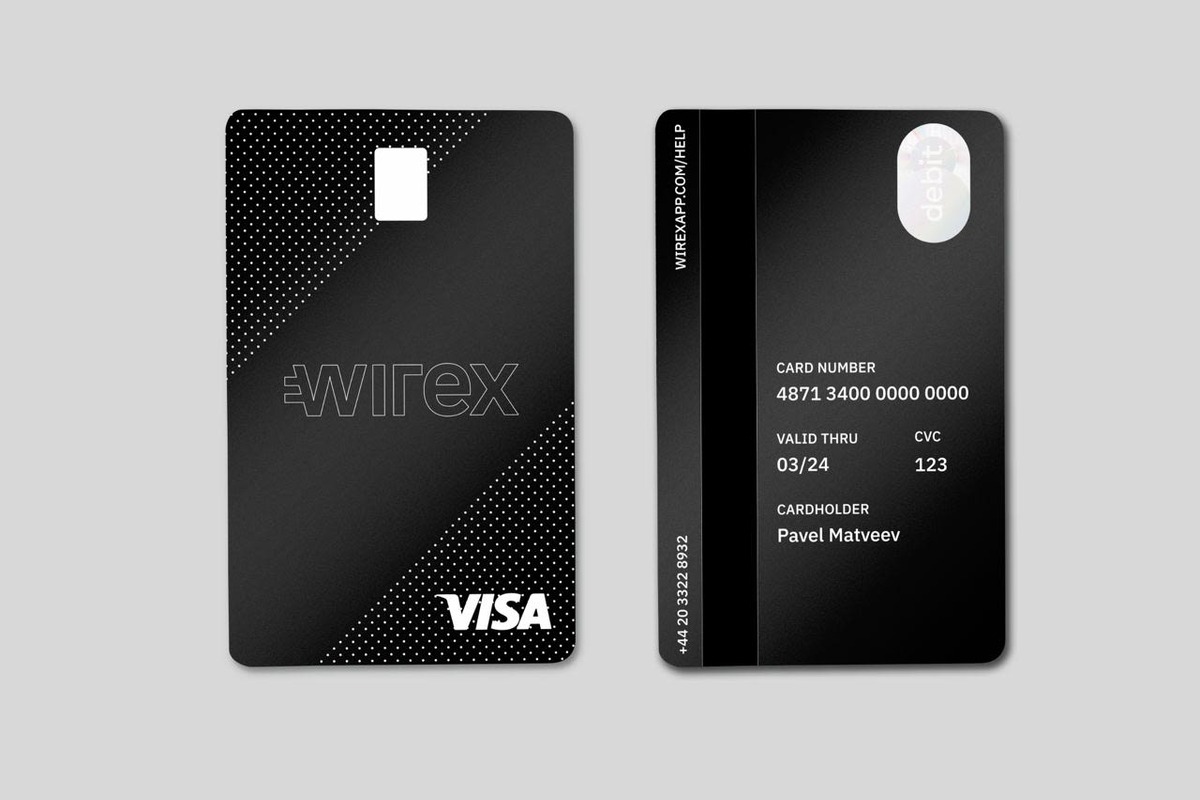


As an Amazon Associate, we may earn from qualifying purchases.
Frequently asked: what to check next
How does a ZK Cred Wallet differ from a standard DeFi wallet?
Standard DeFi wallets manage assets but do not inherently verify off-chain identity or creditworthiness. A ZK Cred Wallet integrates zero-knowledge proof generation, allowing users to prove they meet specific financial criteria (like a credit score threshold) without revealing the raw data to the blockchain or lenders.
Can I use a ZK Cred Wallet for traditional bank loans?
Currently, most traditional banks do not accept ZK proofs directly. However, the technology is being piloted by fintech lenders and credit unions that bridge Web3 identity with traditional underwriting. As regulatory frameworks evolve, broader adoption in legacy banking is expected.
What are the risks of using a ZK Cred Wallet?
The primary risks involve smart contract vulnerabilities in the proof-generation logic and the security of the underlying private keys. Users must ensure the wallet provider has undergone rigorous third-party security audits and consider using hardware wallets to protect private keys from digital theft.
No comments yet. Be the first to share your thoughts!