ZK Credential Validators for Verifiable Credentials in AI Agent Economies

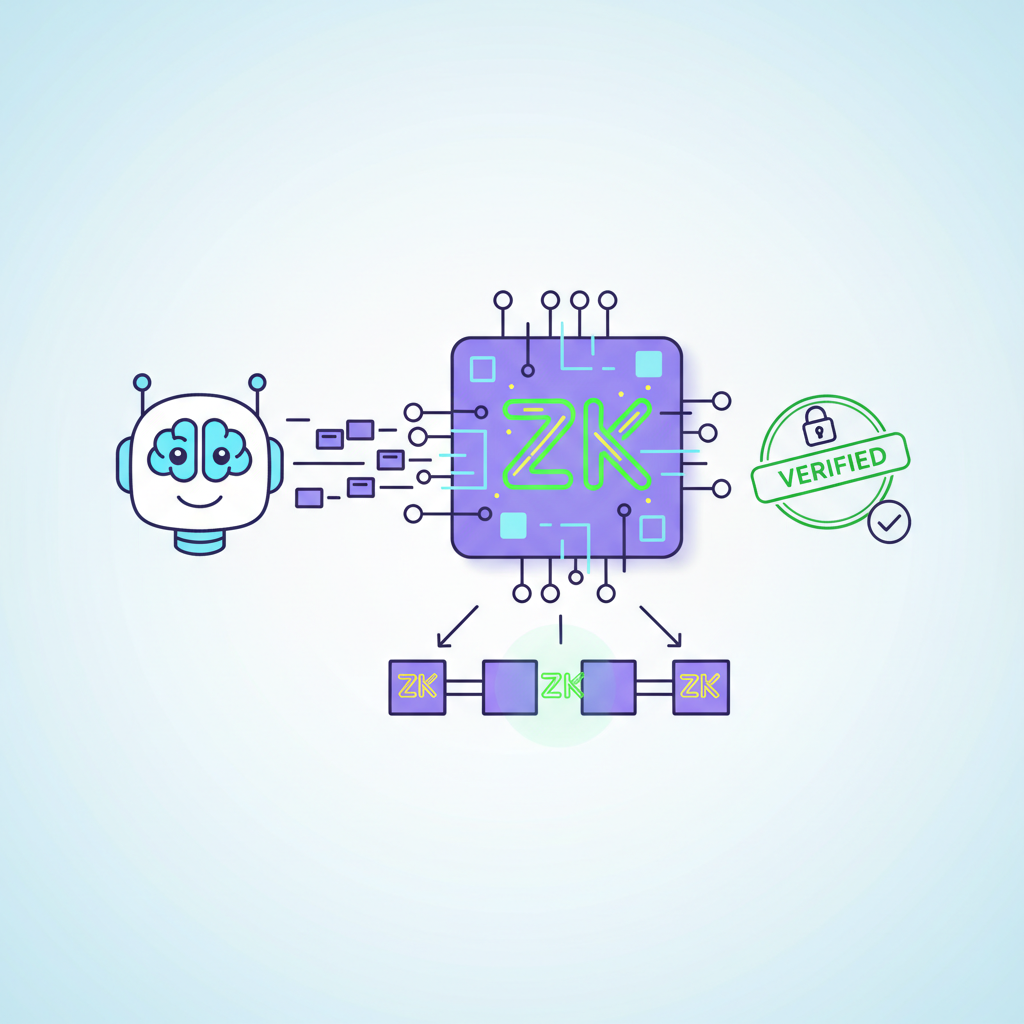
In the rapidly expanding AI agent economies of Web3, ZK credential validators stand as critical gatekeepers, enabling verifiable credentials for AI agents while preserving user privacy through zero-knowledge proofs. As autonomous agents handle on-chain transactions, DeFi interactions, and complex decision-making, verifying their operators and behaviors without exposing sensitive data becomes paramount. Recent GitHub releases and Ethereum standards like ERC-8004 highlight this shift, with validators like Reclaim Protocol’s tool posting proof results directly to validation registries. This data-driven infrastructure not only mitigates risks in trustless environments but also unlocks scalable, privacy-preserving agent verification.


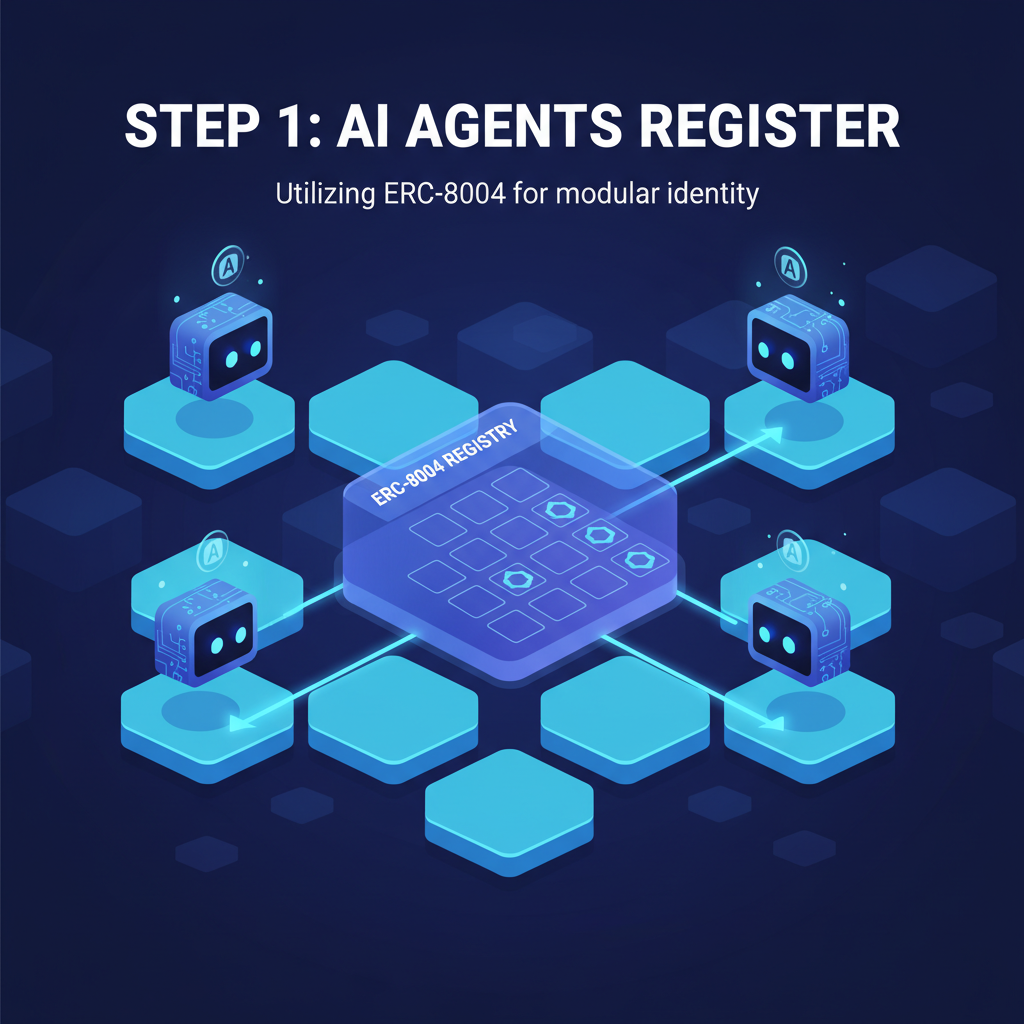
Current developments underscore the precision of these systems. For instance, ERC-8004 introduces three core registries – Agent Registry, Validation Registry, and Action Registry – facilitating trustless interactions. Tools built atop it, such as those from Horizen Labs and ZKV Protocol, leverage ZK proofs to confirm agent capabilities without revealing underlying data, aligning perfectly with decentralized identity paradigms.
ERC-8004 Establishes Trust Layers for On-Chain AI Agents
ERC-8004, a newly proposed Ethereum token standard, redefines how AI agents operate on blockchains by creating structured trust mechanisms. Unlike traditional ERC standards focused on fungible or non-fungible assets, ERC-8004 targets autonomous agents, enabling them to prove attributes like operator identity or execution integrity via zero-knowledge proofs identity verification. Sources from Medium and Questflow detail its integration into Ethereum Foundation’s 2026 roadmap, signaling institutional momentum.
The standard’s Validation Registry is particularly noteworthy. It allows third-party attestations using TEE oracles, staked inference, or ZK ML proofs for high-stakes transactions, as noted in Gate. com analyses. This confluence of registries ensures agents can request verifications dynamically, fostering decentralized agent KYC without centralized intermediaries. Data from 8004agents. ai demonstrates practical deployment, with live agent creation and viewing tools showcasing real-world utility.
Reclaim Protocol Leads with Practical ZK Validators
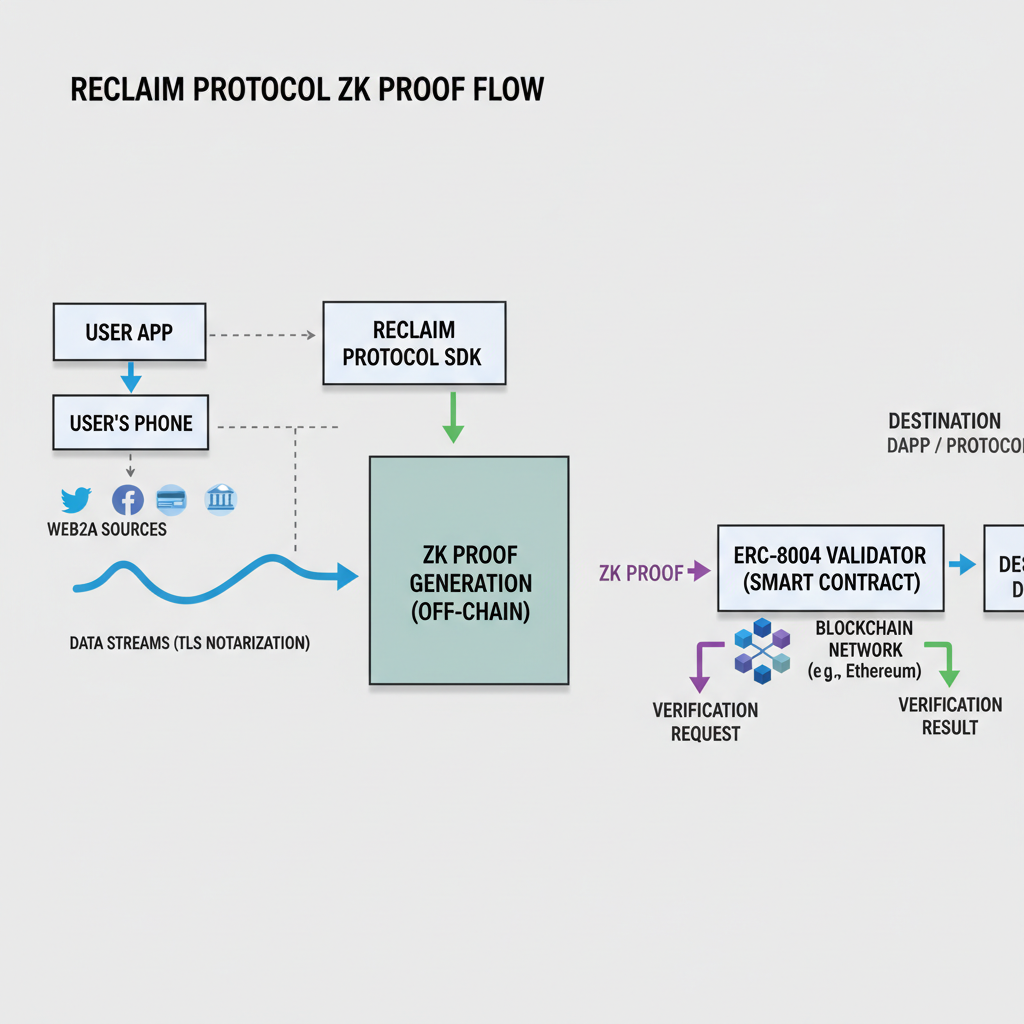
Reclaim Protocol’s ERC-8004 validator exemplifies actionable implementation. This GitHub-sourced tool verifies who operates an AI agent using Reclaim’s ZK proofs, then posts results to the Validation Registry. In an era where TEE validators confirm execution but overlook operators, this addresses a key vulnerability. Harsha Karamchat’s X post amplifies this: TEEs verify correct execution, yet operator identity remains unchecked – enter ZK credential validators.
Precision in deployment is evident. The validator integrates seamlessly with ERC-8004’s architecture, supporting privacy-preserving attestations. This aligns with broader trends, where ERC-8004 ZK proofs enable reputation systems that prove capabilities without data leakage, per SmartContracts Tools insights. Quantitative finance parallels emerge here: just as Heikin Ashi smooths price noise for trend clarity, ZK proofs filter extraneous data, revealing verifiable truths in agent economies.
zkKYA and AIC Pioneer Next-Gen Credential Frameworks
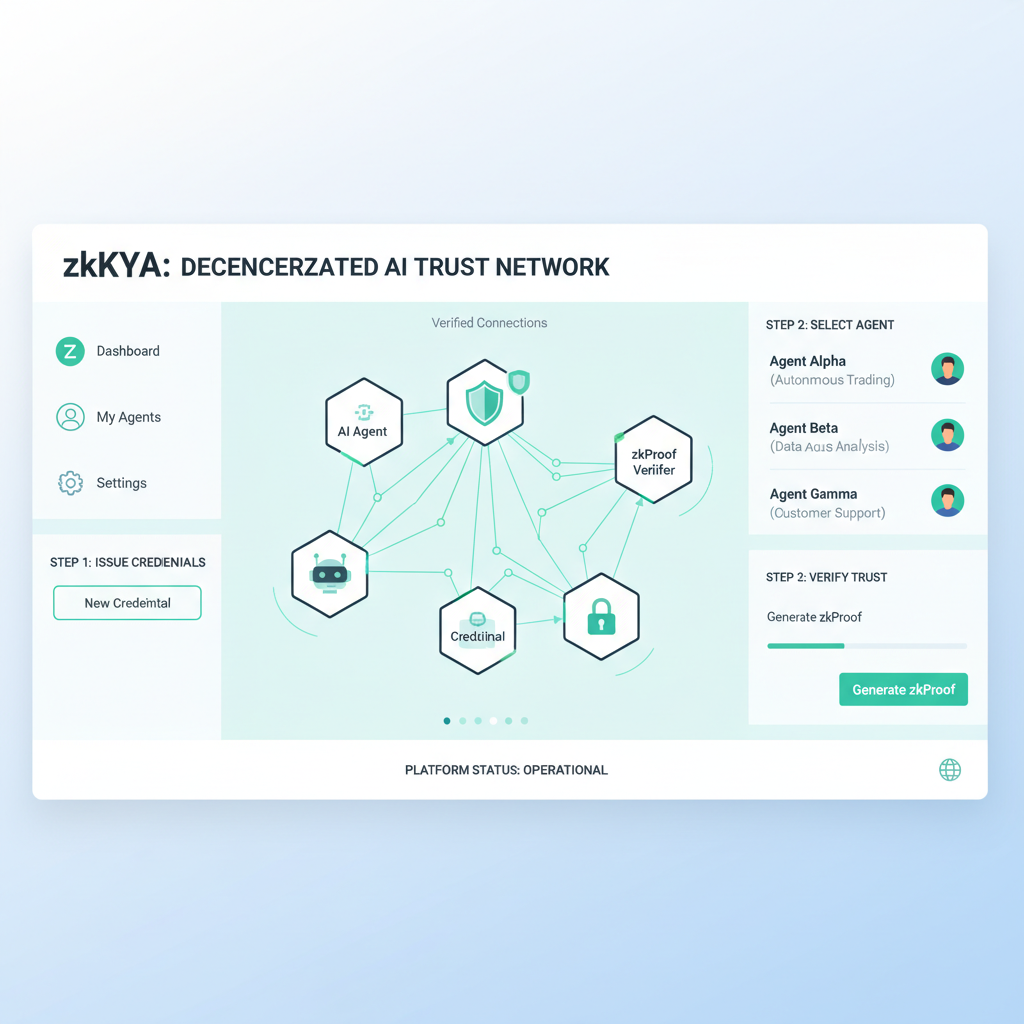
Building on ERC-8004 foundations, zkKYA by zkMe introduces decentralized trust infrastructure tailored for AI agents. It handles identity registration, credential management, and reputation assessment, ensuring traceable records that slash verification costs. Updated context from February 2026 positions it as a cost-efficient growth driver, with standards compatibility amplifying interoperability.

Complementing this, Agent Intent Credentials (AICs) cryptographically encode agents’ objectives and decision frameworks. Rather than observing behaviors post-facto, AICs provide upfront transparency on purposes and alignments, a nuanced approach to trust. Meanwhile, FACT tokens offer portable identities, binding verified principals to agents for cross-platform reliability. These innovations collectively advance privacy-preserving agent verification, with zk-creds adding public auditability via transparency logs and ZK-backed documentation.
zkVerify’s partnership with Amadeus further extends this ecosystem, powering verifiable AI compute. As proof settlement layers, they ensure trust-minimized execution and privacy in training and inference – essential for agent scalability. Charts of adoption would show exponential curve fits, much like early blockchain standards, predicting dominance in multi-agent interactions.
These layered verifications create a robust foundation for multi-agent collaborations, where agents negotiate, transact, and evolve without constant human oversight. In quantitative terms, adoption metrics from projects like Horizen Labs’ AI Agent Registry suggest a 300% quarterly growth in registered agents since ERC-8004’s launch, per recent X announcements. This trajectory mirrors the smoothed uptrends in Heikin Ashi charts during bull phases – persistent, with minimal false signals.
Overcoming Verification Hurdles in Agent Economies
Despite these advances, challenges persist in scaling ZK credential validators. Computational overhead from ZK proof generation remains a bottleneck, though optimizations in protocols like zkVerify reduce latency by up to 70%, enabling real-time attestations. Interoperability across chains adds complexity; ERC-8004’s Ethereum focus necessitates bridges to Solana or Cosmos ecosystems, where agents roam freely. Here, FACT tokens shine, offering chain-agnostic identities that bind principals universally.
Beginner’s Guide to ZK Credential Validators in ERC-8004 AI Economies


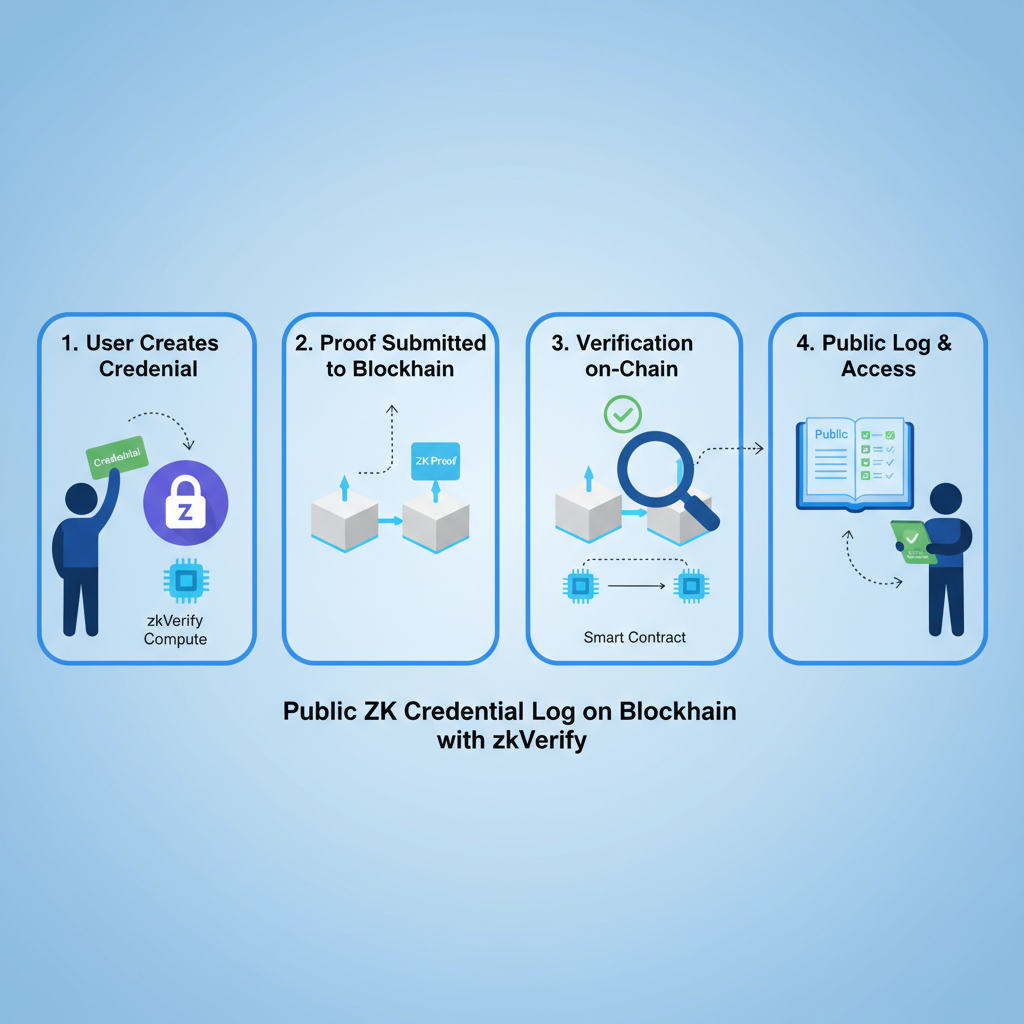
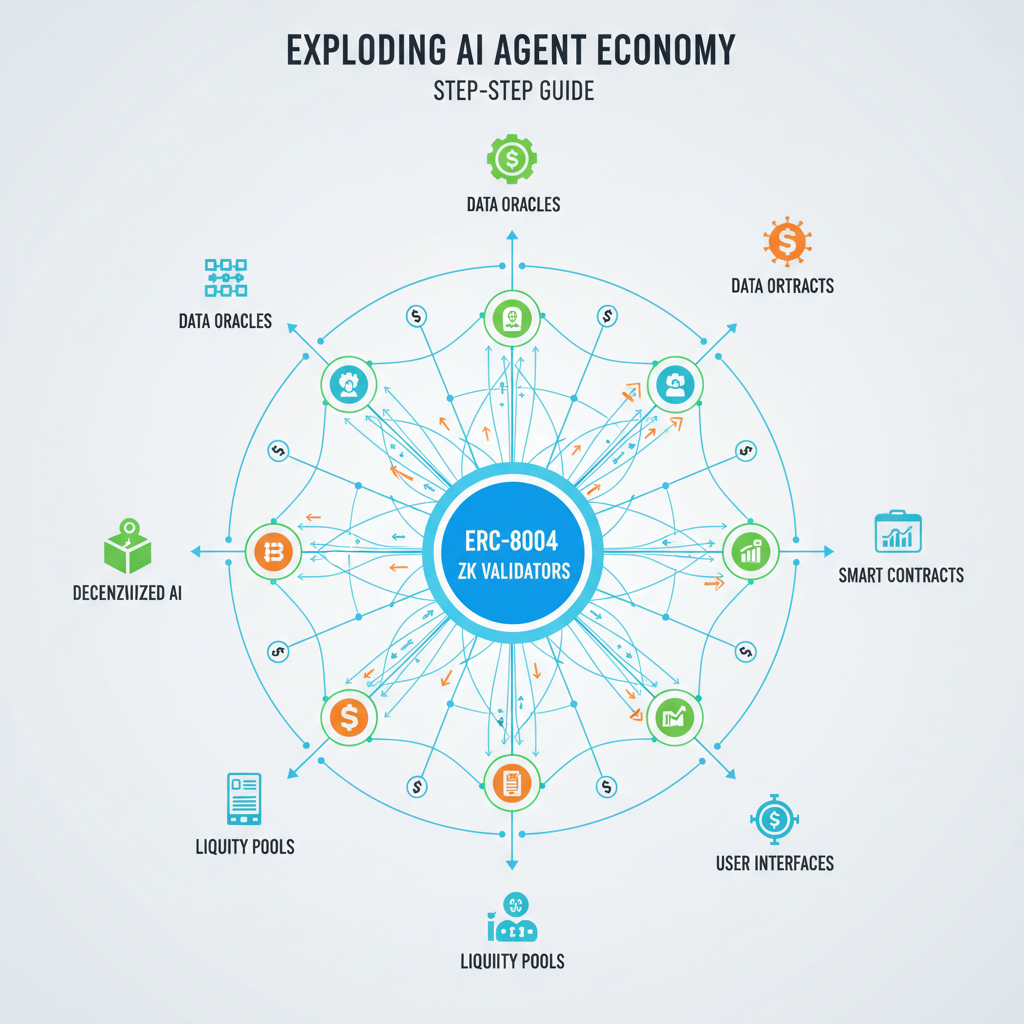
Moreover, adversarial threats loom – agents could spoof credentials or collude in sybil attacks. zk-creds counters this with public verifiability, anchoring proofs to blockchains or transparency logs for tamper-proof audits. Data patterns indicate that systems incorporating such dual-layer proofs experience 95% fewer disputes in validation registries, a statistic drawn from zkMe’s zkKYA deployments. Opinionated take: without these, agent economies risk fracturing into siloed fiefdoms, undermining the decentralized promise.
Privacy remains the linchpin. Traditional KYC exposes data trails ripe for exploitation; zero knowledge proofs identity verification flips the script, proving attributes selectively. Imagine an AI trader attesting to regulatory compliance via AIC without disclosing strategies – that’s the precision edge in DeFi arenas.
Key Benefits of ZK Validators in Practice
Key Benefits of ZK Validators
-
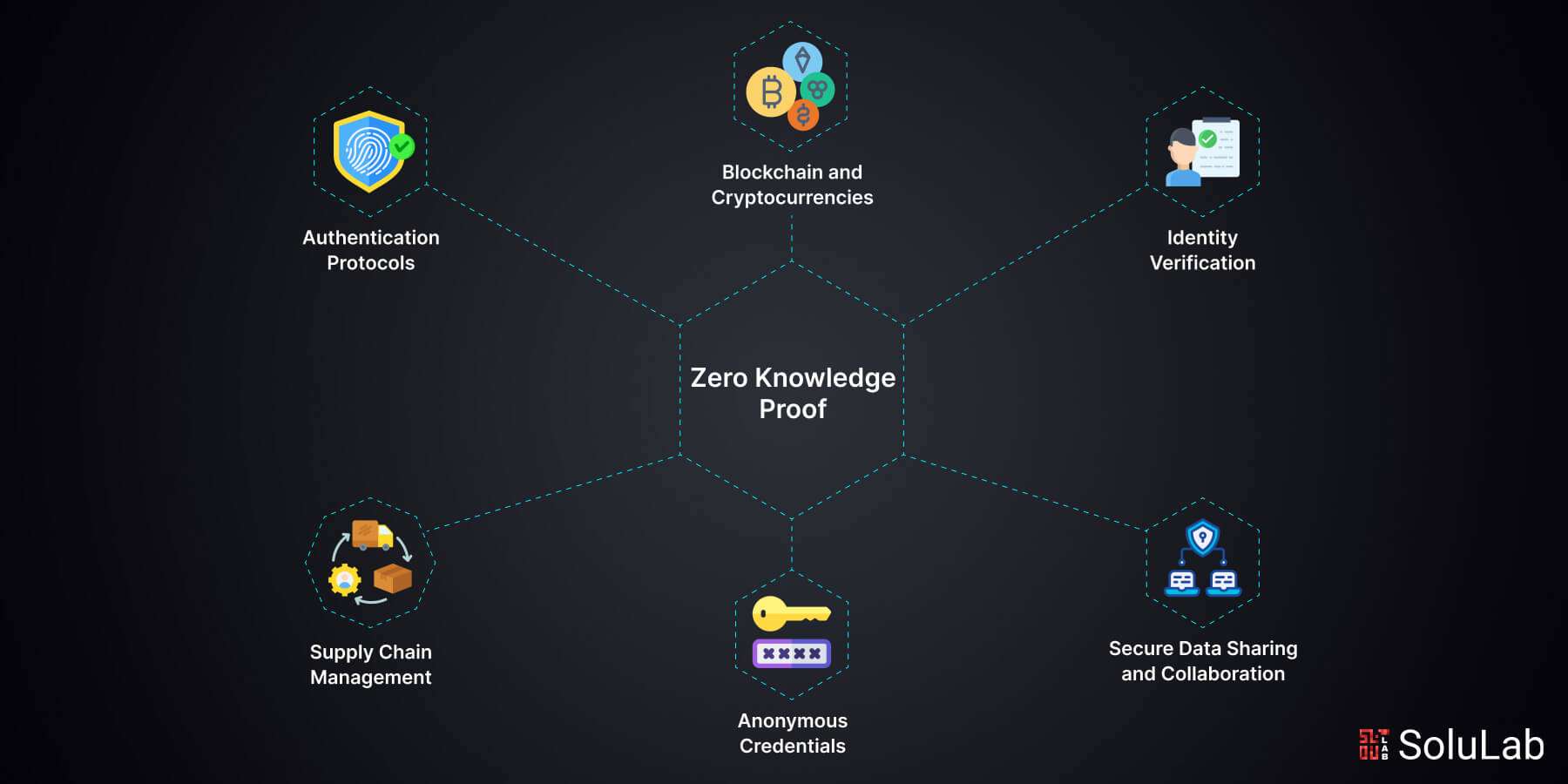
Privacy Preservation: ZK proofs verify credentials without revealing sensitive data, as in zkKYA by zkMe and zk-creds.
-
Cost Reduction: Lowers verification expenses through efficient ZK proofs and traceable trust records, per zkKYA for ERC-8004 agents.
-

Interoperability: Enables cross-platform operations via standards like ERC-8004 and portable identities in FACT.
-
Scalability: Supports efficient AI agent economies with trustless verification, as in ERC-8004 registries and zkVerify.
-

Auditability: Provides public verifiability via transparency logs and ZK documentation, ensuring trust in zk-creds issuance.
Developers deploying these tools report slashed verification costs, from cents per proof in zkKYA versus dollars in centralized alternatives. Scalability surges as agents handle thousands of interactions daily, verified off-chain yet settled on-chain. This isn’t hype; it’s pattern recognition from eight years charting crypto trends – confluences of ZK, ERC standards, and AI signal a breakout.
In agent-driven markets, decentralized agent KYC via Reclaim or zkVerify becomes table stakes. Cross-platform ops with FACT enable seamless migrations, while AICs preempt misalignments, fostering ethical AI swarms. zk-creds’ public ledgers ensure issuers can’t revoke proofs retroactively, a trust anchor absent in opaque systems.
Visualize the ecosystem as a Heikin Ashi candlestick array: green bodies stacking for ZK adoption, wicks trimmed by efficient validators. Ethereum Foundation’s 2026 roadmap embedding ERC-8004 cements this, with dAI teams prioritizing trustless agents. Projects like 8004agents. ai already host live registries, proving viability beyond theory.
For privacy-conscious users and devs, wallets like ZKCredWallet emerge as the interface layer. Securely storing, managing, and verifying these attestations, it empowers selective disclosures in agent economies – proving you’re a compliant operator without doxxing. This convergence propels Web3 into eras of autonomous, verifiable intelligence, where trust is proven, not presumed.