
What makes a zk cred wallet different
A zk cred wallet shifts identity management from public ledger transparency to cryptographic privacy. Traditional self-sovereign identity (SSI) wallets rely on verifiable credentials stored on-chain or in public registries. This approach ensures data is tamper-proof but exposes the user’s digital footprint to anyone who can read the blockchain. Every transaction and credential verification becomes a permanent, searchable record.
Zero-knowledge cred wallets solve this by using zero-knowledge proofs (ZKPs). A ZKP allows a user to prove they possess a valid credential without revealing the underlying data. For example, a protocol can verify that a wallet belongs to a unique human without knowing the person’s real-world identity or revealing their transaction history. This creates a system where privacy is not an afterthought but a fundamental feature of the verification process.
The technical foundation for this shift comes from protocols like zk-creds, which use zkSNARKs to remove the need for credential issuers to hold signing keys. This reduces the attack surface and prevents central points of failure. Instead of trusting a single issuer to keep secrets, the cryptographic proof itself guarantees validity. As noted by Chainlink, this allows protocols to verify "unique humanity" without requiring users to reveal personal information.
This distinction matters for DeFi users who want to interact with compliant protocols without sacrificing anonymity. While traditional wallets force a choice between compliance and privacy, zk cred wallets offer a way to satisfy regulatory requirements—such as proving you are not on a sanctions list—while keeping your broader financial activity hidden from public view.
How ZK proofs verify identity in DeFi
Zero-knowledge proofs (ZKPs) allow a user to prove they meet specific criteria without revealing the underlying data. In the context of a ZK Cred Wallet, this mechanism replaces traditional Know Your Customer (KYC) data dumps with cryptographic assertions. A DeFi protocol can verify that a wallet belongs to a unique human or meets an age threshold without ever seeing a passport, address, or birth date.
This approach directly addresses Sybil resistance, a persistent issue in decentralized governance and airdrops. Instead of relying on centralized databases that are prone to leaks or manipulation, ZK identities use private credentials issued by trusted authorities. The wallet holds the credential, and when interacting with a DeFi application, it generates a proof that the credential is valid and unspent. The protocol verifies the proof mathematically, ensuring one person, one vote, or one claim per unique identity.
Age verification is another critical use case. A user can prove they are over 18 or over 21 to access specific financial products or jurisdictions without exposing their exact date of birth. This minimizes privacy risks while maintaining regulatory compliance. As noted in recent implementations like Google Wallet's anonymous credentials, the goal is to provide only the necessary range or boolean result, not the raw personal information.
The technology relies on a "prover" and a "verifier." The prover (your wallet) generates the proof using the secret credential. The verifier (the DeFi smart contract) checks the proof against a public key or state root. If the math holds, access is granted. This process is fast and cheap on modern ZK-rollups, making it viable for everyday DeFi interactions.
Top ZK identity wallets for 2026
The landscape for ZK cred wallets has shifted from experimental code to regulated infrastructure. Google’s recent integration of ZK proofs into its wallet for age verification signals a broader industry move toward privacy-preserving identity. For DeFi users, this means the choice of wallet now dictates how much on-chain data you expose by default.
We evaluated wallets based on their ability to issue verifiable credentials, their support for major ZK protocols (like Polygon ID and Altme), and their seamless integration with DeFi protocols. The goal is to find tools that let you prove eligibility without revealing your entire transaction history.
Polygon ID Wallet
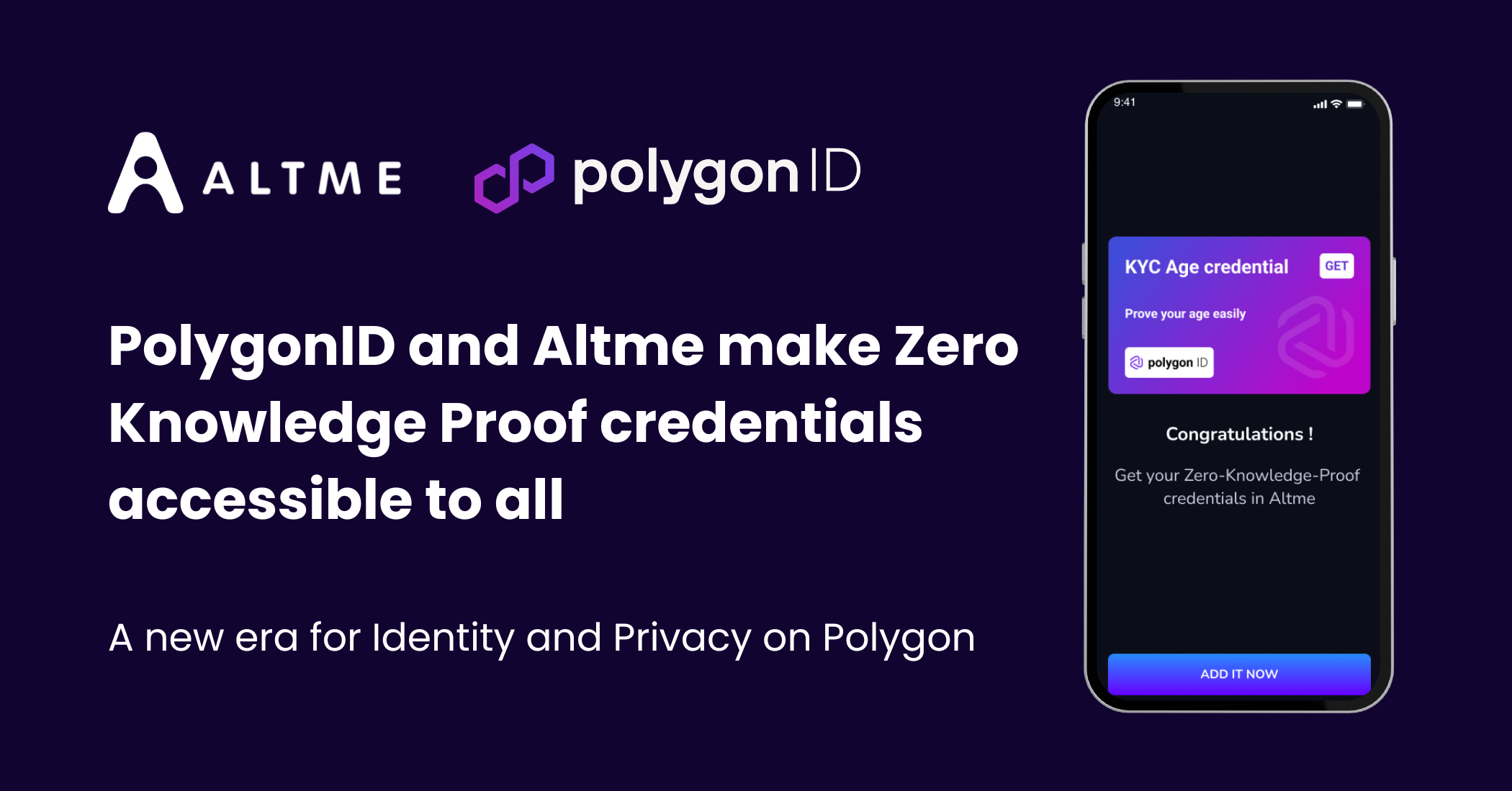
Polygon ID is currently the most robust option for users who need to interact with multiple chains. It supports the W3C Verifiable Credentials standard and integrates directly with the Polygon zkEVM. This wallet allows you to generate "correlation proofs," enabling you to prove you are a unique human without linking your identity across different dApps.
It is ideal for DeFi users who need to comply with KYC requirements for specific protocols without exposing their full portfolio. The open-source nature of the protocol means it is frequently audited and updated by the Polygon community.
Altme Wallet
Altme focuses on a user-friendly interface for managing ZK credentials. It is particularly strong in the NFT and gaming sectors, where proving ownership or age without revealing personal data is critical. Altme’s credentials are portable, meaning you can use the same ZK proof across different platforms that support the standard.
The wallet’s strength lies in its simplicity. If you are new to ZK tech, Altme provides a straightforward way to generate and store credentials. However, it may lack the deep DeFi integration features found in more specialized wallets.
Coinbase Wallet (ZK Features)
Coinbase Wallet is integrating ZK capabilities to enhance privacy for its massive user base. While not a dedicated ZK wallet, its upcoming features allow users to prove certain attributes (like account age or location) without sharing raw data. This makes it a safe entry point for mainstream users who want privacy without abandoning familiar interfaces.
The trade-off is flexibility. Coinbase’s implementation is proprietary, meaning you are locked into their ecosystem for these specific ZK features. For power users, this may feel restrictive compared to open standards.
| Wallet | Supported Protocols | Best For |
|---|---|---|
| Polygon ID | W3C VC, Polygon zkEVM | Cross-chain DeFi compliance |
| Altme | W3C VC, Altme SDK | NFTs and gaming |
| Coinbase Wallet | Proprietary ZK modules | Mainstream ease of use |
How zk cred wallets protect DeFi privacy
Zero-knowledge cred wallets let you interact with decentralized finance without exposing your entire financial history. Instead of broadcasting every transaction to a public ledger, these tools use cryptographic proofs to verify that you meet specific criteria—like being over a certain age or not being on a sanctions list—without revealing your actual identity or balance.
This approach solves a major friction point in DeFi: the tension between regulatory compliance and user privacy. Traditional KYC (Know Your Customer) processes require sharing sensitive personal documents, which creates a single point of failure for data breaches. With zk cred wallets, you prove you are a "unique human" or hold sufficient funds without handing over your passport or social security number. As noted by Chainlink, this allows protocols to verify unique humanity without requiring the user to reveal personal details.
The result is a layer of privacy that acts like a filter. You can trade, lend, or borrow on DeFi platforms while keeping your transaction history opaque to outside observers. You satisfy the protocol's requirements through zero-knowledge proofs, ensuring that only the necessary minimum of information is shared. This maintains the anonymity that crypto users value while still allowing platforms to comply with anti-money laundering (AML) regulations.
By decoupling identity verification from public transaction data, zk cred wallets reduce the risk of doxxing and targeted attacks. Your on-chain reputation and eligibility become portable credentials rather than static, exposed records. This shift is essential for mainstream adoption, as it allows users to participate in the financial system without sacrificing their right to privacy.
Frequently asked questions about ZK wallets
What is a zk proof in crypto?
A zero-knowledge proof allows a user to prove a statement is true without revealing the underlying data. In DeFi, this means verifying eligibility for a loan or airdrop without exposing your entire transaction history or balance to the public ledger.
What is zero-knowledge proof of identity?
This specific application lets you prove you are a unique human or a verified entity without sharing your name, passport, or government ID. Protocols use this to prevent sybil attacks while maintaining user anonymity, as explained by Chainlink's research on ZK identity.
How do ZK wallets protect my DeFi identity?
ZK wallets store your credentials locally and generate proofs on-device. When you interact with a protocol, you share only the cryptographic proof of your credentials, not the raw data itself. This keeps your financial identity private even when interacting with transparent smart contracts.
Helpful gear
Use these product recommendations as a starting point, then choose the size, material, and price point that fit how you actually use the gear.


![QLD 2026 Wallet for Men - RFID Blocking [Functional & Practical] Bifold Slim Minimalist Credit Card Holder Pop Up Wallet Metal Case with Cash Slot, Front Pocket with ID Window, Gift Boxed](https://m.media-amazon.com/images/I/71f19vKZSUL._AC_UL960_QL65_.jpg)
As an Amazon Associate, we may earn from qualifying purchases.
No comments yet. Be the first to share your thoughts!