
Zk cred wallet limits to account for
Zero-knowledge proofs offer a way to verify identity without revealing the underlying data, but Zk Cred Wallet implementations face specific technical and usability constraints. The core challenge lies in balancing privacy with the regulatory requirements of financial institutions that need to verify creditworthiness.
Selective Disclosure Limits
Zk Cred Wallets rely on selective disclosure, allowing users to prove they meet certain criteria (e.g., age > 18, income > $50k) without showing the actual numbers. This works well for simple checks but struggles with complex credit scoring models that require granular data points. Users cannot prove a specific credit score range without potentially leaking more information than intended.
Verification Latency
Generating zero-knowledge proofs is computationally intensive. While verification is fast, the proof generation on the user's device can take several seconds, especially on older hardware. This latency creates friction in real-time financial transactions where instant approval is expected. Users may experience delays during peak usage times or when using lightweight mobile devices.
Interoperability Gaps
Most Zk Cred Wallets are not yet compatible with traditional banking infrastructure. Financial institutions lack the standardized protocols to accept ZK proofs directly, requiring intermediaries or custom integrations. This limits the practical utility of Zk Cred Wallets for everyday credit applications, restricting their use to niche platforms or early-adopter ecosystems.
Zk cred wallet choices that change the plan
Choosing a zero-knowledge credential wallet means accepting that privacy comes with computational and usability costs. You are not just storing a key; you are managing a cryptographic proof generator. The tradeoffs fall into three concrete buckets: speed, compatibility, and recovery.
Proof generation speed
Generating a zero-knowledge proof requires significant CPU cycles. If you are verifying a credit score or age claim, the wallet must compute the proof before sending it to the verifier. On a desktop, this takes milliseconds. On a low-end mobile device, it can take seconds, creating a noticeable friction point during checkout or onboarding.
Verifier compatibility
Not all verifiers accept the same proof formats. A wallet might support the W3C Verifiable Credentials standard but fail to interoperate with a legacy KYC provider using a different cryptographic curve. Before committing to a wallet, check if your target services (banks, landlords, lenders) have published their supported proof types. If they only accept specific JWT-based claims, a pure ZK wallet may not integrate.
Recovery complexity
Traditional wallets rely on seed phrases. ZK credential wallets often use social recovery or hardware security modules to prevent loss. This adds layers of complexity. If you lose access to your recovery group, your credentials are gone. There is no central customer support to reset a password for a cryptographic identity.
| Feature | Proof Speed | Verifier Support | Recovery Method |
|---|---|---|---|
| Mobile-First ZK Wallet | Slower (device-dependent) | Limited (newer protocols) | Social or biometric |
| Desktop ZK Wallet | Fast (CPU-heavy) | Broad (standard protocols) | Seed phrase or hardware key |
| Hybrid Wallet | Variable | High (bridges legacy/ZK) | Multi-signature or MPC |
The market is shifting toward hybrid models that bridge legacy identity standards with zero-knowledge proofs. This allows you to use ZK for privacy-sensitive claims while maintaining compatibility with older systems.
Choose the next step
ZK Cred Wallet Review works best as a clear sequence: define the constraint, compare the realistic options, test the tradeoff, and choose the path with the fewest hidden costs. That order keeps the advice usable instead of decorative. After each step, pause long enough to check whether the recommendation still fits the reader's actual situation. If it depends on perfect timing, unusual access, or a best-case budget, include a simpler fallback.
Spotting the Gaps in ZK Cred Wallet Claims
Zero-knowledge proofs offer real privacy benefits, but the market is crowded with projects making promises they cannot keep. When evaluating a ZK cred wallet, look past the marketing gloss and check the underlying mechanics. A robust system must prove you meet a threshold without revealing your entire history, but many implementations fail on this basic test.
Several wallets claim "full anonymity" while relying on centralized mixers or opaque codebases. This is a critical red flag. True privacy requires open-source verification and decentralized infrastructure. If the protocol does not publish its zero-knowledge circuits or relies on a single trusted setup, your data is not as private as advertised. Always verify the source code before linking your financial identity.
Another common mistake is ignoring the trade-off between privacy and usability. Some ZK wallets require complex manual proofs that are slow and error-prone. Others sacrifice too much utility to achieve anonymity, making them useless for everyday credit scoring. The best options balance both, offering seamless verification for lenders while keeping your personal data locked away. Choose a wallet that supports standard protocols like W3C Verifiable Credentials to ensure future compatibility.
Zk cred wallet: what to check next
What is zk in crypto?
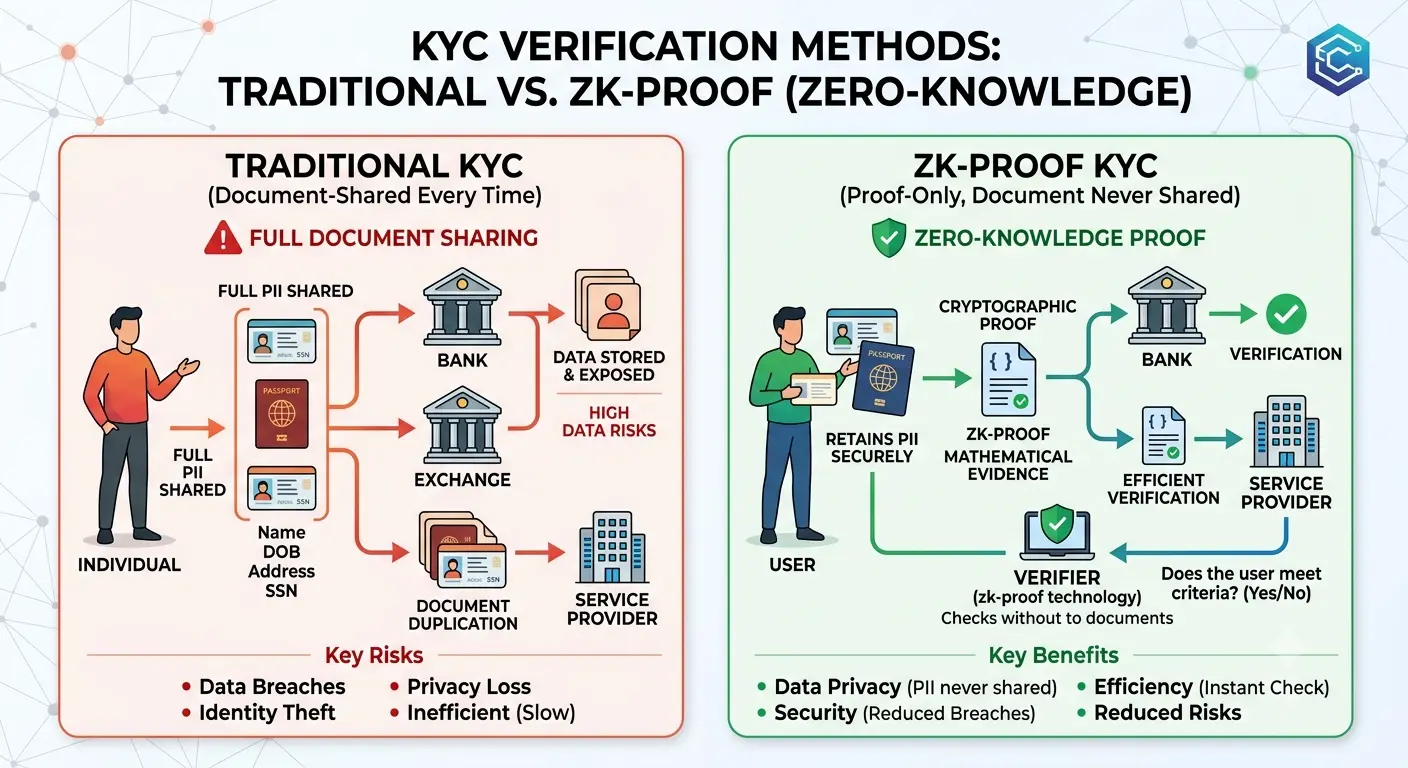
Zero-knowledge (zk) refers to a class of cryptographic protocols that allow one party to prove a statement is true without revealing any information beyond the validity of the statement itself. In the context of crypto wallets and identity, zk proofs enable users to verify attributes—such as being over a certain age or having a sufficient credit score—without exposing the underlying personal data. This shifts the paradigm from sharing raw data to sharing cryptographic proof of that data.
How does a ZK Cred Wallet protect my privacy?
Traditional credit reporting requires you to share your entire financial history with a lender or agency. A ZK Cred Wallet uses zero-knowledge proofs to generate a "proof" that you meet specific criteria (e.g., "income > $50k") without revealing your actual income, transaction history, or identity to the verifier. The verifier receives only a boolean true/false result, ensuring your sensitive data remains private on your device.
Is ZK technology used outside of crypto?
Yes. While popularized by blockchain, zero-knowledge proofs are now being integrated into mainstream digital identity systems. For example, Google Wallet has begun implementing ZK features for age verification, allowing users to prove they are over 21 without showing their full birthdate or ID. This demonstrates that the technology is maturing beyond niche crypto applications into broader Web2 infrastructure.
Are ZK Cred Wallets ready for everyday use?
The technology is functional but still in early adoption phases. Most ZK cred solutions require users to interact with specific wallets or decentralized identity providers that may not yet be integrated with all traditional financial institutions. While the cryptographic primitives are robust, the user experience and ecosystem compatibility are still evolving, making them more suitable for privacy-focused early adopters than the general public at this time.
Helpful gear
Use these product recommendations as a starting point, then choose the size, material, and price point that fit how you actually use the gear.


As an Amazon Associate, we may earn from qualifying purchases.
No comments yet. Be the first to share your thoughts!