
Zk cred wallet limits to account for
The promise of zero-knowledge (ZK) credential wallets is selective disclosure: proving you meet a criteria without revealing the underlying data. In practice, this introduces friction that standard identity solutions bypass entirely. Before committing to a ZK-based reputation layer, you need to understand where the technology currently fails and where it holds up.
The primary constraint is setup complexity. Unlike a traditional identity wallet that simply holds a digital driver’s license, a ZK cred wallet requires generating cryptographic proofs. This often demands off-chain computation or heavy on-chain gas fees depending on the implementation. For everyday users, the time and cost to generate a valid proof can outweigh the privacy benefit.
Interoperability remains another hurdle. Most ZK systems are siloed. A credential verified on one protocol may not be accepted by another without a complex bridging process. This fragmentation limits the "reputation" aspect of these wallets. If your verified trust score isn't portable across the dApps you use, its utility drops significantly.
Finally, the human factor introduces risk. If the private key or seed phrase used to generate these proofs is lost, the credentials are often unrecoverable. There is no "forgot password" flow for cryptographic secrets. This permanence is a double-edged sword: it ensures no central authority can revoke your privacy, but it also means one mistake can lock you out of your own digital identity permanently.
| Feature | ZK Cred Wallet | Traditional Identity Wallet |
|---|---|---|
| Data Revealed | Only proof of compliance | Full PII (name, DOB, etc.) |
| Setup Cost | High (compute/gas) | Low |
| Interoperability | Low (siloed) | High (standardized) |
| Recovery | None (key-based) | Account-based |
The tradeoff is clear: you gain privacy at the expense of convenience and portability. For high-stakes financial reputation, this may be worth it. For casual on-chain interactions, it often feels like over-engineering.
Zk cred wallet choices that change the plan
Choosing a zero-knowledge credential wallet involves balancing privacy guarantees against user experience and technical complexity. Unlike traditional identity solutions, ZK systems require careful evaluation of how proofs are generated and verified. The following comparison breaks down the primary factors to consider when selecting a ZK cred wallet for on-chain reputation or off-chain verification.
| Feature | On-Chain ZK Wallet | Off-Chain ZK Wallet | Hybrid Model |
|---|---|---|---|
| Privacy Level | High (proofs on-chain) | Very High (zero data on-chain) | Moderate |
| Gas Costs | High (verification fees) | Low (no chain interaction) | Medium |
| Verification Speed | Instant (smart contract) | Delayed (off-chain check) | Fast |
| User Complexity | High (wallet management) | Low (QR/Link sharing) | Medium |
On-Chain ZK Wallets
On-chain wallets store zero-knowledge proofs directly on the blockchain. This approach offers immediate, trustless verification via smart contracts. However, it comes with significant gas costs and permanent data visibility of the proof itself. It is best suited for high-stakes reputation systems where immutability is critical.
Off-Chain ZK Wallets
Off-chain wallets generate proofs locally and share them via QR codes or links. This method preserves maximum privacy by keeping no data on the blockchain. Verification requires a trusted verifier, and the user experience is smoother. It is ideal for age verification or credential presentation where chain storage is unnecessary.
Hybrid ZK Wallets
Hybrid models combine on-chain identity anchors with off-chain proof generation. Users store a minimal on-chain identifier while generating complex proofs off-chain. This balances privacy with verifiability, reducing gas costs while maintaining some level of on-chain reputation. It is the most flexible option for general-purpose use.
| Feature | On-Chain | Off-Chain | Hybrid |
|---|---|---|---|
| Privacy Level | High (proofs on-chain) | Very High (zero data on-chain) | Moderate |
| Gas Costs | High (verification fees) | Low (no chain interaction) | Medium |
| Verification Speed | Instant (smart contract) | Delayed (off-chain check) | Fast |
| User Complexity | High (wallet management) | Low (QR/Link sharing) | Medium |
How to choose a ZK credential wallet
Zero-knowledge (ZK) privacy is shifting from theoretical cryptography to everyday identity verification. A credential wallet lets you prove specific attributes—like being over 21 or holding a valid license—without revealing your underlying data. This section breaks down the practical steps for selecting a wallet that balances privacy, compatibility, and ease of use.
1. Verify ZK proof compatibility
Not all ZK wallets support the same cryptographic standards. Ensure the wallet can generate or verify proofs compatible with the dApps you intend to use. Look for support for widely adopted circuits like Longfellow-zk or standard SNARK/STARK protocols. If a wallet only supports proprietary or outdated proof systems, you may find it incompatible with major reputation protocols. Check the wallet’s documentation for its supported cryptographic primitives and whether it integrates with popular ZK stacks like Polygon ID or World ID.
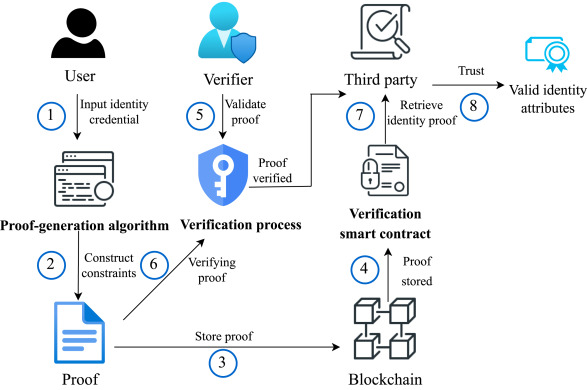
Verify that the wallet supports the specific ZK proof types required by your target dApps. Incompatible standards mean your credentials will be useless on-chain. Look for explicit mentions of SNARKs, STARKs, or Longfellow-zk in the technical docs.
2. Assess user experience and onboarding
ZK technology is complex, but the user interface should not be. The best credential wallets abstract away the cryptographic heavy lifting. Look for wallets that offer simple "selective disclosure" flows—where you choose which attributes to reveal—and clear feedback on proof generation. If a wallet requires manual circuit configuration or command-line interactions, it is likely not ready for mainstream use. Prioritize wallets with intuitive dashboards that show your issued credentials and verification status at a glance.
A good ZK wallet hides the complexity. You should be able to request a proof and receive it with a few taps. If the onboarding process feels like a developer tutorial, look for a more consumer-friendly alternative.
3. Evaluate ecosystem integrations
A credential wallet is only as valuable as the services that accept its proofs. Check which dApps, DeFi protocols, or identity platforms already support the wallet. Integration with major networks like Ethereum, Polygon, or Base is essential for long-term utility. Avoid wallets that are isolated or only support niche, low-liquidity chains. Look for wallets that are listed in the official directories of major ZK identity projects.
Ensure the wallet is recognized by the dApps you plan to use. Lack of integration renders even the strongest privacy features useless. Check the wallet’s official site for a list of supported partners.
4. Review security and audit history
Security is paramount in ZK wallets, as they hold sensitive identity data. Look for wallets that have undergone third-party security audits by reputable firms. Check if the code is open-source and if there is a bug bounty program. Avoid wallets with a history of exploits or those that do not publish their audit reports. Transparency in security practices is a strong indicator of a reliable product.
Only use wallets that have been audited by known security firms. Open-source code and active bug bounties add layers of trust. Never store credentials in a wallet with a questionable security track record.
5. Compare privacy guarantees
Different wallets offer varying levels of privacy. Some may link your identity across multiple proofs, while others provide strict unlinkability. Understand the privacy model of each wallet. Does it allow the verifier to link your proofs? Does it store any metadata on-chain? Choose a wallet that aligns with your privacy needs, whether that is maximum anonymity or selective transparency for regulated services.
Decide how much you want to hide. Some use cases require strict unlinkability, while others need traceability for compliance. Match the wallet’s privacy model to your specific use case.
Recommended ZK Credential Wallets
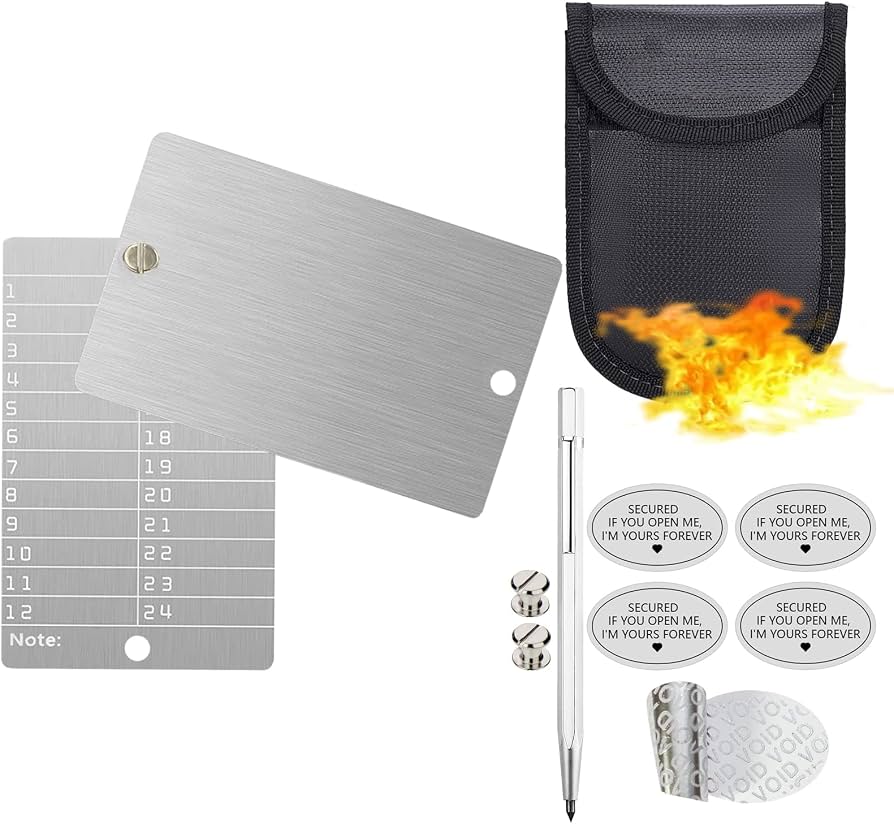
Based on current ecosystem support, security audits, and user experience, here are three top choices for ZK credential wallets in 2026.


As an Amazon Associate, we may earn from qualifying purchases.
Watch out for weak zero-knowledge claims
Not every wallet advertising "zero-knowledge" privacy actually delivers it. The term is often used loosely to describe basic encryption or pseudonymity, which are not the same as cryptographic proof. A true ZK credential wallet allows you to prove attributes—like being over 18 or a specific residency—without revealing the underlying data. If a product doesn't clearly explain the zero-knowledge proof system it uses (such as STARKs or SNARKs), treat the privacy claims with skepticism.
Many projects conflate self-sovereign identity with ZK. While you control the keys, the privacy layer is separate. Some wallets offer selective disclosure but lack the rigorous cryptographic verification that prevents forgery. Look for open-source audits and clear documentation on how the proofs are generated and verified on-chain. If the mechanism is opaque, you may be storing sensitive data in a black box rather than enjoying genuine privacy.
Also, be wary of "hybrid" solutions that require a trusted third party to issue or verify credentials. This reintroduces the very centralization ZK aims to eliminate. The strongest ZK credential wallets operate permissionlessly, allowing anyone to verify proofs without relying on a central authority. Check if the protocol allows for decentralized verification. If you have to trust a single company to validate your identity, you haven't gained privacy; you've just moved the trust model.
Finally, consider the user experience trade-offs. ZK proofs can be computationally heavy, leading to slower transaction times or higher gas fees. If a wallet promises instant, frictionless ZK verification without explaining the backend complexity, it may be using simplified, less secure methods. Balance the privacy benefits against the performance costs. A robust ZK system should be efficient enough for everyday use without compromising on security.
Zk cred wallet: what to check next
Zero-knowledge (ZK) cryptography allows a user to prove they meet a specific condition without revealing the underlying data. In crypto, this means verifying eligibility for a service or confirming identity without exposing your full transaction history or personal details on the blockchain. It shifts verification from "show me everything" to "prove only what is necessary."
A credential wallet is a digital container for verifiable credentials—digital versions of degrees, licenses, or identity proofs. Unlike traditional wallets that only hold tokens, a credential wallet holds attestations from trusted issuers. When combined with ZK technology, these wallets can generate proofs that confirm attributes (like age or residency) while keeping the actual credential data private.
No comments yet. Be the first to share your thoughts!