
Zero-Knowledge Identity Enters Mainstream Infrastructure
The market for digital identity is undergoing a structural shift. Zero-knowledge (ZK) credentials are moving from experimental cryptographic tools to foundational infrastructure for mainstream digital wallets. This transition marks a departure from niche crypto applications toward standardized, privacy-preserving identity verification used by major technology platforms.
The integration of zero-knowledge proofs into widely adopted systems, such as Google Wallet, demonstrates the viability of this technology outside the blockchain ecosystem. As reported by the Simons Institute, the modern anonymous credential leverages ZK protocols to allow users to verify attributes—such as age or residency—while keeping personal data private. This capability addresses the primary friction point in digital identity: the tension between verification and privacy.
A zero-knowledge protocol enables a prover to confirm a statement is true to a verifier without revealing any additional information. In the context of a credential wallet, this means a user can prove they are over 21 without sharing their birthdate, name, or address. This selective disclosure model is becoming the standard for high-stakes identity verification in regulated industries.
The market implication is significant. As major tech companies adopt ZK standards, the barrier to entry for identity-focused applications lowers. Developers can now build on established, secure protocols rather than creating bespoke cryptographic solutions. This consolidation drives adoption by reducing technical debt and increasing user trust in the underlying infrastructure.
This shift from niche to mainstream is not merely theoretical. It is reflected in market activity and protocol development. The technical chart above tracks the performance of a relevant zero-knowledge protocol token, illustrating the correlation between technological milestones and market valuation. As ZK infrastructure becomes embedded in everyday digital interactions, its economic significance is likely to grow.
Core ZK Cred Wallet Architectures
The ZK credential market is currently segmented by three primary technical approaches, each balancing privacy, regulatory compliance, and interoperability differently. Understanding the architectural differences between AnonCreds, Google-zk (Longfellow), and standard SSI implementations is essential for high-stakes deployment.
AnonCreds (Cheqd)
AnonCreds, implemented by networks like Cheqd, represents a legacy-proof approach to zero-knowledge identity. It relies on a credential registry model where issuers register credential schema and revocation registries on a distributed ledger. This structure allows verifiers to check credential validity without contacting the issuer directly.
The architecture is mature and widely supported by existing SSI wallets. However, it requires a trust layer for the registry itself. If the registry is compromised or censored, the entire system's integrity is at risk. It is best suited for use cases where a decentralized but auditable credential history is required.
Google-zk (Longfellow)
Longfellow-zk, often referred to as Google-zk, is designed specifically for high-compliance scenarios involving Mobile Driver’s Licenses (MDL) and the EUDI Wallet. It utilizes a specialized protocol for selective disclosure that aligns with the NIST Digital Identity Guidelines and the EU eIDAS 2.0 regulation.
This approach prioritizes strict regulatory adherence over pure decentralization. It enables zero-knowledge presentations that satisfy legal age or identity requirements without revealing personally identifiable information (PII). It is the preferred architecture for cross-border travel and government-issued credential verification where legal certainty is paramount.
Standard SSI Implementations
Standard SSI implementations, often based on W3C Verifiable Credentials, rely on decentralized identifiers (DIDs) and JSON-LD. While flexible, native SSI lacks built-in zero-knowledge capabilities. To achieve privacy, these systems often require additional layers, such as ZK-SNARKs or ZK-STARKs, applied on top of the base credential structure.
This adds complexity and potential performance overhead. However, it offers maximum interoperability with existing web standards. It is ideal for private-sector applications where regulatory pressure is lower and developer flexibility is the primary concern.
Comparison of Architectures
The table below summarizes the key differences in privacy mechanics and compliance alignment for each architecture.
| Architecture | Privacy Model | Compliance Focus | Primary Use Case |
|---|---|---|---|
| AnonCreds | Registry-based ZK | General SSI | Decentralized credential issuance |
| Google-zk | Selective Disclosure ZK | EUDI/MDL | Government ID and travel |
| Standard SSI | ZK Layer on VC | Web Standards | Private sector interoperability |
Privacy mechanics and selective disclosure
Zero-knowledge identity protocols function by allowing a user to prove a specific attribute of their identity without exposing the underlying data. This mechanism, known as selective disclosure, ensures that verification is binary: the verifier receives only a confirmation of validity, not the raw data. For instance, a user can prove they are over eighteen without revealing their exact date of birth or full name. This distinction separates modern credential wallets from traditional KYC processes, where intermediaries often collect and store excessive personal information.
The technical foundation relies on zero-knowledge proofs, where a prover demonstrates the truth of a statement without revealing the statement itself. When a government issues an ID credential to a wallet app, the cryptographic proof generated allows third parties to verify eligibility for a service. No intermediary receives any extra data beyond the necessary confirmation. This approach minimizes the attack surface for data breaches and reduces liability for service providers who no longer need to store sensitive personal records.
Security also depends on the integrity of the device hosting the credentials. Trusted Execution Environments (TEEs) provide isolated areas within the processor to store sensitive data and run code. These hardware-based safeguards ensure that even if the main operating system is compromised, the cryptographic keys and biometric data remain protected. The combination of cryptographic proofs and hardware isolation creates a robust framework for privacy-preserving identity management.
Research into zero-knowledge credentials highlights their ability to verify unique humanity or specific attributes without revealing the user's identity. This capability is critical for high-stakes environments where regulatory compliance must coexist with user privacy. By leveraging these protocols, organizations can meet legal requirements while respecting the principle of data minimization.
Regulatory compliance and EUDI integration
The European Digital Identity Wallet (EUDI) framework sets the baseline for how ZK Cred Wallets must operate in regulated markets. Unlike generic digital wallets, EUDI requires strict adherence to the eIDAS 2.0 regulation, which mandates that identity providers meet specific security and interoperability standards. For ZK implementations, this means the zero-knowledge proofs must be generated in a way that is both legally admissible and technically verifiable by trusted third parties.
A central challenge is ensuring that the selective disclosure of credentials aligns with data minimization principles while satisfying Know Your Customer (KYC) requirements. Recent research into SSI-compliant use of EUDI credentials suggests that trusted execution environments (TEEs) can bridge this gap. By employing ZK SGX attestation provers, systems can verify the integrity of the credential issuance process without exposing the underlying raw data to the wallet provider itself [src-serp-5]. This approach allows users to prove attributes, such as age or residency, without revealing the full document.
The legal landscape also extends beyond Europe. Regulations like the US Model Digital Driver’s License (MDOC) framework are increasingly adopting similar zero-knowledge standards for mobile driver’s licenses (MDL). Protocols like Longfellow-zk are designed to work with MDOC/MDL documents, enabling zero-knowledge presentation and selective disclosure of credentials across these jurisdictions [src-serp-2]. This interoperability is critical for ZK Cred Wallets aiming for global scale, as it ensures that a proof generated in one regulatory zone can be recognized in another without requiring redundant verification steps.
Compliance is not just a technical hurdle; it is a market differentiator. Wallets that can demonstrate adherence to these rigorous standards will likely dominate the enterprise and government sectors, where data privacy and legal liability are paramount. As regulations evolve, the ability to adapt ZK protocols to new legal requirements will determine the longevity and utility of these identity solutions.
1. Google Wallet: Enterprise-Grade Identity Verification
Google Wallet has integrated zero-knowledge proof capabilities to facilitate age and identity verification. This implementation allows users to prove specific attributes, such as being over 21, while keeping personal data private. The system relies on government-issued credentials stored within the wallet, ensuring that only the minimum necessary information is disclosed during transactions. This approach aligns with strict regulatory standards for data minimization.
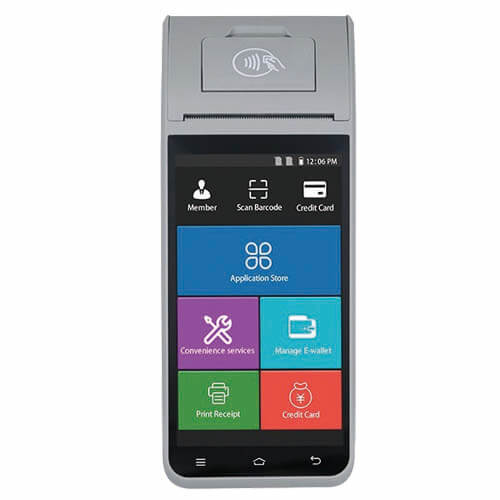
The primary advantage of this solution is its integration with existing digital ID infrastructure. Users can store official identification documents and use them for compliant verification processes across various platforms. For organizations requiring robust identity verification, this option provides a familiar interface with strong privacy protections. It is particularly suitable for businesses that need to verify user age or residency without handling sensitive personal records.
As an Amazon Associate, we may earn from qualifying purchases.
No comments yet. Be the first to share your thoughts!