
What a ZK Cred Wallet Does
A ZK Cred Wallet enables users to prove financial attributes, such as creditworthiness, without exposing raw data. It functions as a secure container for credentials, generating cryptographic proofs that satisfy lender requirements while keeping sensitive details private. This approach shifts the balance of power, allowing borrowers to verify eligibility without surrendering their entire financial history.
How ZK Cred Wallet Proves Creditworthiness
Generating a zero-knowledge proof for credit involves a specific workflow between three parties: the issuer, the holder, and the verifier. The ZK Cred Wallet acts as the holder, storing sensitive financial data locally. When applying for credit, the wallet does not send raw data to the lender. Instead, it generates a cryptographic proof that satisfies the lender's requirements without exposing the underlying details.
The process begins with the credit bureau or issuer, who has previously issued a signed attestation to the user's wallet. This attestation confirms facts like income level or credit score. When a lender requests verification, they define a predicate, such as "credit score > 700." The ZK Cred Wallet uses its local private key and the attestation to compute a proof that this predicate is true. This computation happens entirely on the user's device, ensuring the raw data never leaves the wallet.
The verifier, typically the lender's system, receives only the proof and the public parameters of the protocol. They run a verification algorithm to check the proof's validity. If the proof is valid, the lender knows the user meets the criteria without ever seeing the actual credit score or income figures. This mechanism aligns with the European Digital Identity Wallet framework, which emphasizes that a wallet unit generates a ZKP to prove a witness (like an attestation) is valid without revealing the witness itself.
This flow removes the need for issuers to hold signing keys during the verification step, as noted in Purdue University's research on zk-creds. The system relies on general-purpose zero-knowledge proofs, specifically zkSNARKs, to keep the proof size small and verification fast. The result is a privacy-first credit check where the ZK Cred Wallet ensures data minimization by design.
Major ZK Credential Implementations
The ZK Cred Wallet is moving from theoretical cryptography to actual digital infrastructure. Two distinct paths have emerged: the decentralized identity standard championed by cheqd and the massive-scale integration into Google Wallet. Both approaches solve the same problem—proving identity without exposing data—but they target different users and ecosystems.
cheqd was one of the first decentralized identity networks to enable Zero Knowledge Credentials, often referred to as AnonCreds. By embedding these credentials directly into the wallet, cheqd allows users to hold verifiable data on a public ledger while keeping the sensitive details private. This is particularly relevant for financial and professional credentials where proof of eligibility is required without revealing the underlying personal history.
Google Wallet has taken a different route by integrating anonymous credentials for ECDSA signatures. This implementation, often discussed in the context of the Longfellow-zk protocol, allows users to selectively disclose information from documents like driver's licenses. Instead of showing the entire card, the ZK Cred Wallet can prove you are over 21 or a resident of a specific state without leaking your home address or license number.
| Provider | Primary Focus | Underlying Tech |
|---|---|---|
| cheqd | Decentralized Identity Networks | AnonCreds / DID |
| Google Wallet | Mass-market mobile ID | Anonymous ECDSA Credentials |
| EU Digital Identity | Cross-border compliance | MDOC / Longfellow-zk |
The comparison above highlights the divergence in strategy. cheqd focuses on the decentralized web and self-sovereign identity, while Google leverages its existing user base to normalize ZK proofs in everyday scenarios. As these protocols mature, the ZK Cred Wallet will likely become the standard interface for managing these varied credential types.
ZK Proofs for Lending and Finance
The traditional lending model forces borrowers to choose between transparency and privacy. To secure a loan, you must surrender your entire financial history—bank statements, credit scores, and transaction logs—to the lender. This data hoarding creates a single point of failure for identity theft and data breaches. A ZK Cred Wallet flips this dynamic by using zero-knowledge proofs (ZKP) to verify eligibility without exposing the underlying data.
In this system, the ZK Cred Wallet acts as a cryptographic gatekeeper. It generates a proof that confirms specific criteria are met—such as "credit score above 700" or "income exceeds $50,000"—without revealing the actual numbers. The lender receives only a boolean "true" or "false" regarding the risk profile. This reduces underwriting risk by providing verified, tamper-proof data while ensuring the borrower’s sensitive financial details remain private.
This approach mirrors the logic used in privacy-preserving blockchain transactions. For instance, ZKPs can prove that a user has sufficient funds to complete a transaction without revealing their wallet balance or transaction history. When applied to credit, this means lenders can assess solvency and stability with greater precision, relying on cryptographic certainty rather than fragmented, potentially outdated credit reports.
The market context for this shift is visible in the broader adoption of zero-knowledge infrastructure. Projects focused on ZK technology are gaining traction as institutions seek scalable privacy solutions.
By decoupling verification from disclosure, ZK Cred Wallets enable a new standard for financial trust. Lenders get the risk mitigation they need, and borrowers retain control over their personal information, creating a more efficient and secure lending ecosystem.
Security and Implementation Risks
A ZK Cred Wallet shifts the burden of trust from a central authority to mathematics, but the underlying zero-knowledge circuits introduce unique attack surfaces. The security of the system relies entirely on the integrity of the circuit design and the trusted setup process. If these foundations are flawed, the privacy guarantees collapse, regardless of how sophisticated the cryptographic protocol appears on the surface.
Circuit Design Vulnerabilities
Zero-knowledge proofs are implemented as arithmetic circuits—complex graphs of mathematical constraints that must be satisfied for a proof to be valid. Designing these circuits requires extreme precision; a single logic error or off-by-one mistake can create a backdoor. As noted in research from Purdue University on zk-creds, the flexibility of these systems means that issuers no longer need to hold signing keys, but the burden of correct constraint formulation falls on the developer [src-serp-4].
Common vulnerabilities include side-channel attacks that exploit timing or power consumption differences during proof generation. Additionally, if the circuit does not properly handle edge cases or input validation, an attacker might craft a malformed proof that passes verification. This is why formal verification tools are essential before any ZK Cred Wallet implementation goes live.
The Trusted Setup Problem
Most efficient zero-knowledge systems, such as zkSNARKs, require a "trusted setup" ceremony to generate public parameters. This process involves creating a cryptographic keypair that must be destroyed after setup. If the randomness used to generate these keys is compromised or if one participant retains a "poisonous" fragment of the key, an attacker could forge proofs without knowing the secret witness.
To mitigate this, many modern implementations use multi-party computation (MPC) ceremonies where multiple participants contribute randomness. The system remains secure as long as at least one participant honestly destroys their portion of the key. The European Digital Identity framework highlights that wallet units must generate ZKPs that prove knowledge of an attestation without revealing the attestation itself, a process that relies heavily on the integrity of these initial setup parameters [src-serp-8].
Implementation and Key Management
Even with perfect circuits and setups, the ZK Cred Wallet is only as secure as its key management. Users must securely store their proving keys and witness data. If a device is compromised, an attacker could potentially generate valid proofs to impersonate the user or leak private data. Unlike traditional wallets where private keys sign transactions, ZK wallets require careful handling of the witness data used to generate proofs.
The complexity of ZK circuits can also lead to performance bottlenecks. Generating proofs on mobile devices or low-power hardware can be resource-intensive, potentially leading to user frustration or workarounds that compromise security. Developers must balance proof generation speed with cryptographic strength, ensuring that the ZK Cred Wallet remains usable without sacrificing privacy.
Mitigation Strategies
To address these risks, developers should adopt a defense-in-depth approach. This includes using well-audited cryptographic libraries, implementing rigorous code reviews, and conducting regular security assessments. Multi-party computation ceremonies for trusted setups are now standard practice for new ZK projects. Additionally, hardware security modules (HSMs) can be used to protect sensitive keys and witness data during proof generation.
The industry is also moving toward zkSTARKs, which do not require a trusted setup, thereby eliminating the associated risks. While zkSTARKs currently have larger proof sizes and slower verification times, they offer a more robust security model for long-term applications. As the ZK Cred Wallet ecosystem matures, we can expect a shift toward these more secure, albeit computationally heavier, solutions.
Adoption Checklist for 2026
Implementing a ZK Cred Wallet requires verifying that the underlying architecture actually protects user data while maintaining regulatory compliance. The following steps outline the essential checks for developers and users evaluating these systems.
Ensure the wallet uses proven protocols like zkSNARKs or AnonCreds. Look for implementations from established networks such as cheqd, which support flexible anonymous credentials without exposing signing keys.
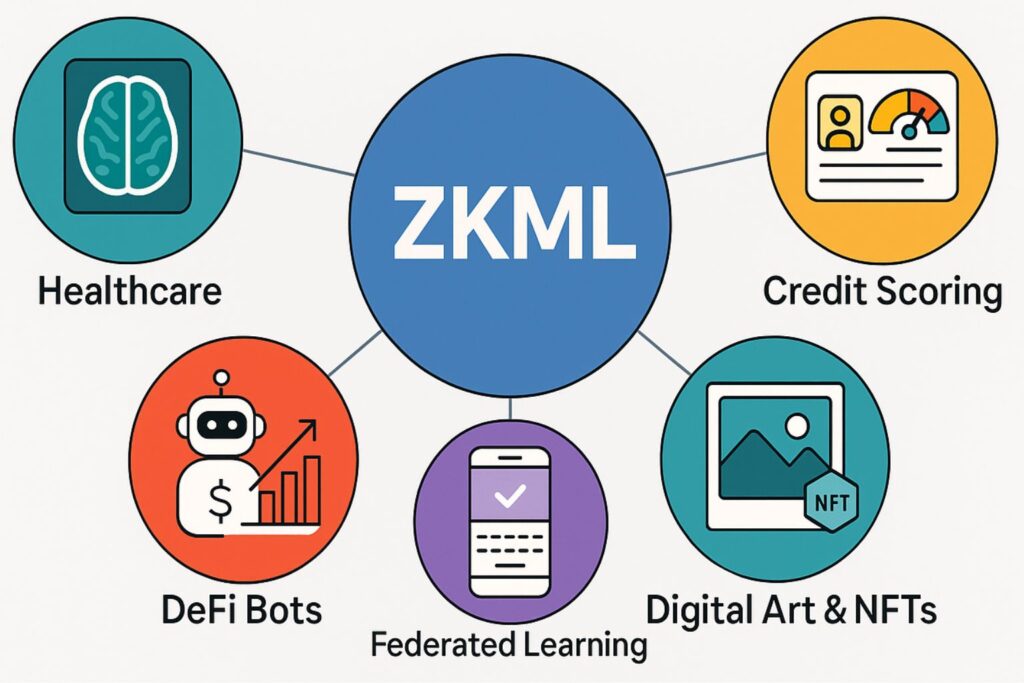
The system must allow users to prove specific attributes (e.g., age or credit score) without revealing the entire dataset. This selective disclosure is the core privacy benefit of ZK Cred Wallet technology.

Verify that the wallet supports compliance with frameworks like the EU Digital Identity Regulation. The solution should enable verification without storing sensitive personal data on centralized servers.
Technical Mechanics
Understanding the underlying proof system is critical for security. Zero-knowledge proofs allow a verifier to confirm a statement's validity without seeing the data itself. This mathematical guarantee ensures that credit history remains confidential while still being trusted by financial institutions.
Common Questions on ZK Credentials
Zero-knowledge (ZK) technology is reshaping how we think about privacy in digital finance. By allowing users to prove they meet certain criteria without exposing the underlying data, ZK Cred Wallets offer a privacy-first alternative to traditional identity verification.
No comments yet. Be the first to share your thoughts!