
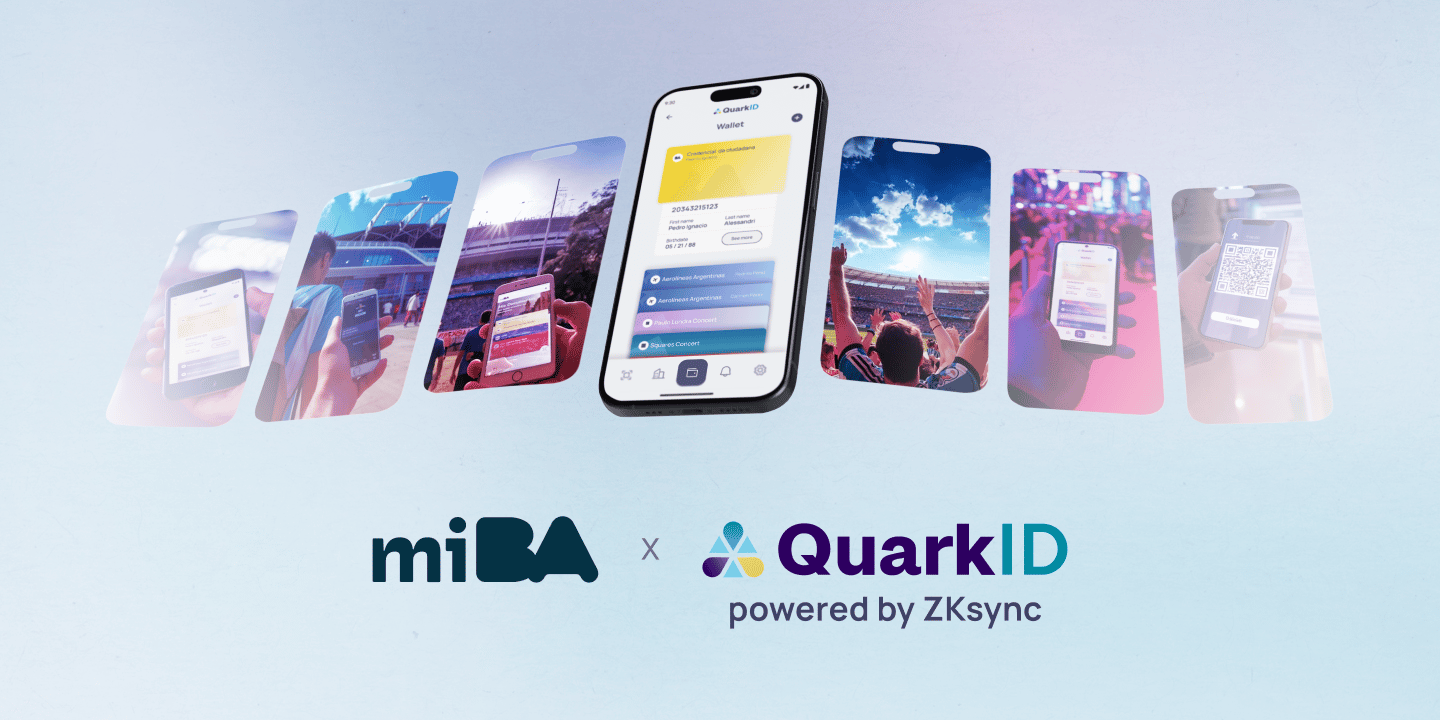
What a ZK Cred Wallet Actually Does
A ZK Cred Wallet shifts the paradigm of digital identity from data possession to cryptographic verification. Traditional digital wallets function as repositories, storing personal documents and credentials in a centralized or distributed ledger. If that data is breached, the underlying identity information is exposed. A ZK Cred Wallet, by contrast, stores zero-knowledge proofs. It does not hold the raw data; it holds the mathematical assurance that specific attributes are true.
This mechanism allows a user to prove an attribute without revealing the underlying document. For instance, a ZK Cred Wallet can generate a proof that verifies a user is over 21 without disclosing their date of birth, name, or the issuing authority's full database. As noted in the European Digital Identity Wallet architecture, a Wallet Unit generates a Zero-Knowledge Proof (ZKP) using a witness (such as an attestation) to verify conditions without exposing the witness itself [1]. This distinction is critical for risk management in identity systems.
The security model relies on the mathematical properties of ZKPs. These proofs enable the verification of information without exposing the information itself [2]. In practice, this means the ZK Cred Wallet acts as a filter. It validates the credential against the issuer's public key and then outputs only the necessary proof to the verifier. The verifier accepts the proof as valid, but learns nothing beyond the truth of the statement being verified.
This architecture reduces the attack surface for identity theft. Since the wallet never transmits the raw credential, a breach of the verifier or the communication channel yields no usable personal data. The ZK Cred Wallet essentially decouples the act of proving identity from the act of exposing identity, creating a privacy-preserving standard for digital interactions.
Google Wallet and the AnonCreds Protocol
The integration of AnonCreds into Google Wallet marks a significant inflection point for the ZK Cred Wallet ecosystem. By embedding zero-knowledge proof capabilities directly into one of the world’s most widely used digital identity wallets, Google has moved ZK technology from experimental academic research to mainstream infrastructure. This convergence validates the AnonCreds protocol—originally developed by the Hyperledger Aries project—as a robust standard for privacy-preserving identity verification.
Google’s implementation leverages the cryptographic efficiency of AnonCreds to allow users to verify attributes, such as age or residency, without disclosing the underlying data. For example, a user can prove they are over 21 without disclosing their exact birth date or full name. This capability addresses a critical friction point in digital identity: the trade-off between convenience and privacy. By handling the proof generation and verification locally on the device, Google reduces the attack surface for data breaches, ensuring that sensitive personal information remains with the user.
The partnership underscores the interoperability between major tech platforms and decentralized identity networks. Initiatives like Cheqd’s adoption of ZK Credentials demonstrate how open standards can scale across different ecosystems. This alignment suggests a future where a ZK Cred Wallet can seamlessly interact with both enterprise systems and consumer apps, driven by a common cryptographic language. The market signal is clear: privacy is no longer a niche feature but a core requirement for digital trust.
The technical implications for the ZK Cred Wallet are profound. As more platforms adopt AnonCreds, the network effects will increase the utility of any wallet that supports the standard. This creates a competitive moat for ZK Cred Wallet implementations that prioritize compliance with these emerging protocols. Investors and developers should view this integration not just as a product update, but as a structural shift toward a privacy-first identity economy.
European Digital Identity Wallet Integration
The European Digital Identity Wallet (EUDI) framework provides the regulatory backbone for ZK Cred Wallet adoption in the EU. The architecture explicitly supports zero-knowledge proofs to ensure that personal data is processed only as necessary for the specific service requested. This aligns with the GDPR principle of data minimization, allowing users to present credentials without transferring the entire dataset to the verifier.
For a ZK Cred Wallet to be viable in this context, it must support the W3C Verifiable Credentials standard while implementing selective disclosure mechanisms. The EUDI specification mandates that wallet units can generate proofs that satisfy verifier requirements without exposing extraneous attributes. This ensures that the ZK Cred Wallet remains compliant with strict privacy regulations while facilitating cross-border digital interactions.
Comparing ZK Credential Standards
The ZK Cred Wallet ecosystem relies on three primary technical implementations: AnonCreds, W3C Verifiable Credentials (VC), and BBS+ signatures. Each standard offers distinct trade-offs in privacy granularity, issuer infrastructure, and verifier complexity. Understanding these differences is essential for selecting the appropriate architecture for a ZK Cred Wallet deployment.
AnonCreds
AnonCreds, popularized by platforms like Hyperledger Aries and Cheqd, utilize a revocation registry model. This approach allows verifiers to check credential status without contacting the issuer, but it requires issuers to maintain complex revocation lists. While effective for high-security environments, the overhead can be significant for large-scale consumer applications.
W3C Verifiable Credentials
The W3C VC standard prioritizes interoperability and broad adoption. It supports various cryptographic suites, including BBS+, but often defaults to traditional signatures like Ed25519. This flexibility makes it easier to integrate with existing identity systems, though it may require additional layers to achieve the same level of selective disclosure found in specialized ZK protocols.
BBS+ Signatures
BBS+ is a cryptographic scheme designed specifically for privacy. It enables selective disclosure, allowing users to prove specific claims (e.g., "over 18") without revealing the underlying data (e.g., birth date). This reduces data exposure and minimizes the attack surface, making it a strong candidate for high-stakes identity verification where minimal data retention is required.
| Standard | Privacy Model | Issuer Overhead | Verifier Complexity |
|---|---|---|---|
| AnonCreds | Revocation Registry | High (Registry Maint.) | Medium |
| W3C VC | Flexible (Suite Dep.) | Low | Low |
| BBS+ | Selective Disclosure | Medium | High |
Security Risks and Quantum Resistance
The ZK Cred Wallet introduces a paradigm shift in identity verification, but it inherits the mathematical complexities of zero-knowledge cryptography. While ZKPs allow users to prove attributes without revealing underlying data, the security of these systems relies heavily on the integrity of the underlying arithmetic circuits. If these circuits are not rigorously constrained, they can introduce subtle vulnerabilities that compromise the entire verification process. As noted in academic literature on zk-creds, the protocol's strength depends on removing the need for issuers to hold signing keys, yet this abstraction requires flawless circuit design to prevent side-channel or logic-based exploits [[src-serp-6]].
Beyond circuit integrity, the looming threat of quantum computing presents a distinct long-term risk. Current elliptic curve cryptography, which secures many blockchain identities, is vulnerable to Shor’s algorithm. However, specialized zero-knowledge cryptography offers a pathway to quantum-proofing Web3 infrastructure. Researchers indicate that ZK technology can insulate blockchains from quantum dangers while enabling new efficiencies, suggesting that the ZK Cred Wallet’s architecture must prioritize post-quantum primitives to remain viable as computational power scales [[src-serp-3]].
To contextualize the market’s response to these security dynamics, we observe the performance of ZK-related assets, which often correlate with broader adoption of privacy-preserving identity solutions.
The ZK Cred Wallet’s security model is not static; it must evolve alongside cryptographic research. Investors and users alike should monitor developments in post-quantum ZK circuits, as these will determine the long-term trustlessness of the system. The convergence of robust arithmetic circuits and quantum-resistant algorithms will define the next standard for private digital identity.
Frequently asked: what to check next
Addressing specific technical queries clarifies how the ZK Cred Wallet integrates zero-knowledge proofs into practical identity management. These answers target common misconceptions about ZKP security, adoption, and future-proofing against quantum threats.
No comments yet. Be the first to share your thoughts!