How zero-knowledge identity wallets work
Zero-knowledge identity wallets operate on a fundamental shift from traditional data storage. Instead of keeping copies of sensitive documents like passports or driver's licenses, these wallets store cryptographic proofs. When a service requires verification, the wallet generates a zero-knowledge proof (ZKP) that confirms a specific claim while keeping the source information private. This mechanism ensures that only the minimum necessary information is shared, preserving user privacy while satisfying regulatory requirements.
The process begins with a trusted issuer, such as a government agency or a certified identity provider, signing a credential. This credential is stored in the user's wallet. When a third party—such as a financial institution or a platform enforcing age restrictions—requests verification, the wallet does not send the original document. Instead, it generates a proof that the credential is valid and meets the requested criteria. For example, a user can prove they are over 18 without disclosing their exact birth date or full name.
This selective disclosure capability distinguishes zero-knowledge identity from standard Know Your Customer (KYC) processes, which typically require uploading full identity documents. By using cryptographic techniques like zkSNARKs, users retain control over their personal data. The verification is mathematical and immediate, reducing the risk of data breaches associated with centralized databases. As regulatory frameworks evolve, this approach offers a path to compliance that respects individual privacy rights.
Leading ZK cred wallet implementations
The landscape for zero-knowledge credential storage is currently defined by a split between general-purpose mobile wallets and specialized hardware solutions. For users prioritizing regulatory compliance and broad issuer compatibility, integrated mobile wallets offer the most immediate utility. For those requiring maximum isolation from network-based attacks, hardware-backed implementations remain the standard for high-stakes identity management.
Google Wallet
Google Wallet has emerged as a primary vehicle for ZK credential adoption, particularly in the realm of government-issued identification. By integrating the W3C Verifiable Credentials standard with selective disclosure protocols, the platform allows users to prove attributes such as age or residency without exposing the original document details. This approach aligns with recent regulatory frameworks in the EU and US that emphasize minimal data exposure for third-party verifiers.
The implementation relies on the Secure Element within compatible Android devices to store the private keys associated with these credentials. This ensures that even if the device is compromised, the cryptographic proof generation remains isolated. For financial institutions and age-restricted services, this reduces liability by limiting the data shared during verification.
Wirex ZK Debit Card
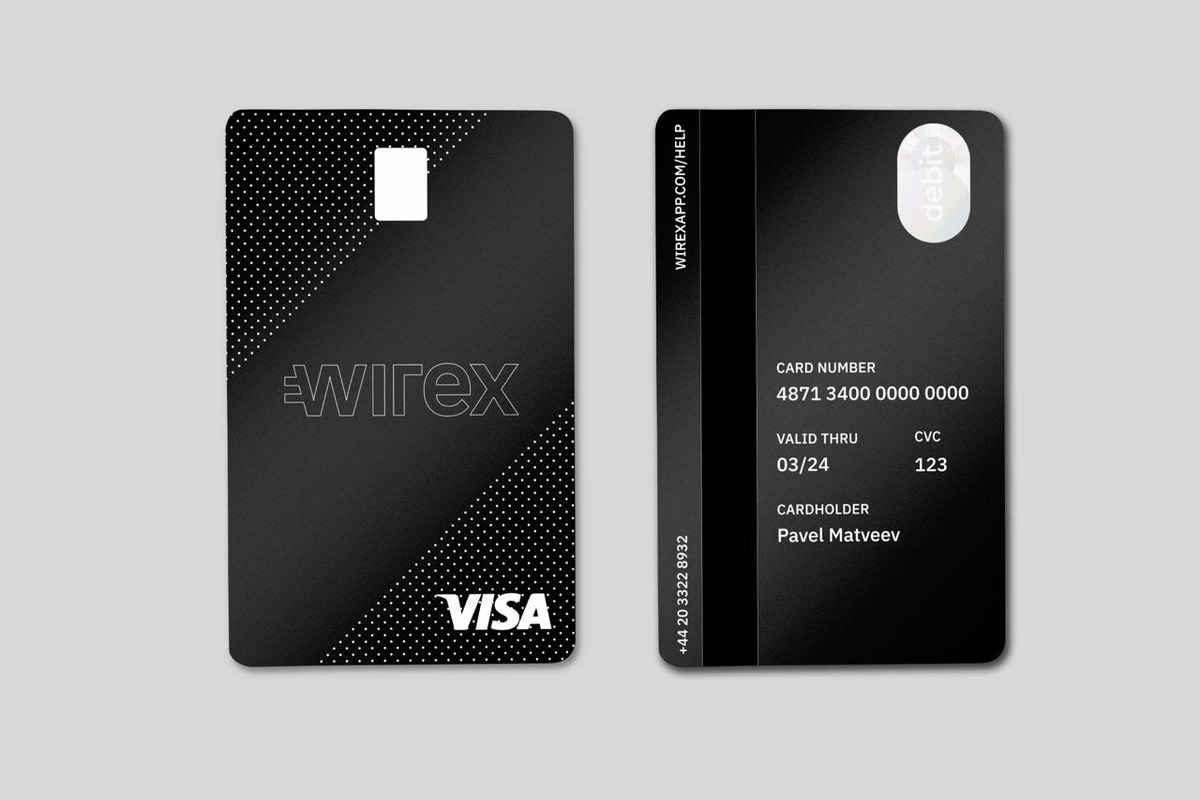
Wirex represents a distinct category of ZK implementation: the non-custodial crypto debit card. Unlike traditional prepaid cards that require full KYC data transmission for every transaction, Wirex’s ZK-enabled infrastructure allows for privacy-preserving authorization. The card leverages zero-knowledge proofs to verify sufficient funds and user identity without exposing the full account balance or personal details to the merchant’s point-of-sale system.
This model is particularly relevant for cross-border payments where data privacy laws vary significantly by jurisdiction. By keeping sensitive financial data on the user’s device and only sharing cryptographic proofs, Wirex reduces the attack surface for data breaches at the merchant level. It serves as a practical bridge between traditional fiat systems and ZK identity standards.
Hardware Wallet Integration (Ledger / Trezor)
For users managing ZK credentials that require long-term storage or offline signing, hardware wallets provide the highest level of security. While most consumer ZK wallets are software-based, leading hardware manufacturers like Ledger and Trezor are integrating support for secure element-based credential storage. This allows users to generate and store ZK keys in an air-gapped environment.
The primary use case involves storing decentralized identity (DID) keys and associated ZK proof generation keys. When a verification request is made, the transaction is signed offline, ensuring that private keys never touch an internet-connected device. This is critical for institutional investors or individuals managing high-value digital assets who cannot risk private key exposure.
Comparison of ZK Wallet Features
The following table compares the core capabilities of these leading implementations regarding ZK standard support and user experience.
| Wallet | ZK Standard | Primary Issuer | Security Model |
|---|---|---|---|
| Google Wallet | W3C VC / Selective Disclosure | Government / Enterprise | Mobile Secure Element |
| Wirex | Proprietary ZK Proofs | Self-Custodial Crypto | Non-Custodial Card Chip |
| Ledger / Trezor | DID / ZK Key Storage | Decentralized / Self-Issued | Hardware Secure Element |
Recommended Hardware Accessories
For users who have adopted software-based ZK wallets but wish to enhance their security posture, dedicated hardware security keys can provide an additional layer of protection for key management and transaction signing.


As an Amazon Associate, we may earn from qualifying purchases.
Compliance and regulatory standards
ZK credential wallets operate at the intersection of personal privacy rights and strict financial regulation. For these wallets to function in 2026, they must satisfy a complex matrix of standards, primarily the EU’s eIDAS 2.0 framework, the General Data Protection Regulation (GDPR), and the technical specifications set by the World Wide Web Consortium (W3C). Failure to align with these pillars renders a wallet legally unusable for official identification or high-value transactions.
The eIDAS 2.0 and EUDI Wallet Framework
The European Union’s Digital Identity Wallet (EUDI) initiative is the most significant regulatory driver for ZK credentials in the West. Under eIDAS 2.0, member states must issue digital wallets that are interoperable across borders. This regulation mandates "trust lists" for service providers and requires that credentials be verifiable without exposing unnecessary personal data.
ZK proofs are uniquely suited for this mandate. They allow a user to prove they meet specific criteria—such as being over 18 or residing in the EU—without revealing their exact birthdate or home address. The European Commission’s technical specifications for the EUDI Wallet explicitly acknowledge zero-knowledge proofs as a mechanism to achieve "data minimization," a core tenet of the regulation. Wallets that cannot generate these selective disclosures may fail to meet the "privacy-by-design" requirements outlined in the final eIDAS 2.0 text.
GDPR and Data Minimization
The General Data Protection Regulation (GDPR) imposes strict limits on how personal data is collected and stored. Traditional identity systems often require sharing entire datasets (e.g., a full driver’s license scan) to verify a single fact. ZK cred wallets invert this model. By cryptographically proving attributes rather than transmitting raw data, these wallets inherently support GDPR’s principle of data minimization.
However, compliance is not automatic. Wallet providers must ensure that the zero-knowledge circuits themselves do not introduce new privacy risks, such as side-channel attacks or metadata leakage. Additionally, the right to be forgotten remains a challenge; while ZK proofs can be invalidated, the underlying blockchain or ledger storing the revocation lists must be managed carefully to avoid retaining permanent records of identity interactions.
W3C Verifiable Credentials and Interoperability
The W3C Verifiable Credentials (VC) Data Model provides the technical syntax for how identity claims are structured. A ZK cred wallet must support these standards to ensure its credentials are recognized by external verifiers, such as banks or government agencies. The W3C framework is evolving to include "ZK-VC" extensions, which define how selective disclosure and proof generation should be formatted within standard VC JSON-LD structures.
Aligning with W3C standards ensures that a ZK wallet is not a closed system. It allows for interoperability between different national EUDI wallets and private sector identity systems. Without adherence to these technical norms, even a privacy-preserving wallet may face regulatory rejection because it cannot communicate with the broader digital identity infrastructure.
Market trends for self-sovereign identity
The market for zero-knowledge (ZK) identity solutions is shifting from experimental pilots to institutional adoption. This transition is driven by regulatory pressure and the need for privacy-preserving verification in high-stakes financial and legal contexts. Rather than relying on third-party aggregators, institutions are increasingly seeking architectures where identity verification occurs locally, reducing data exposure.
Adoption is accelerating as major technology providers integrate ZK proofs into existing infrastructure. Google’s recent work on integrating zero-knowledge proofs into Google Wallet signals a significant shift toward consumer-facing self-sovereign identity (SSI) models. This integration allows users to prove attributes, such as age or residency, without exposing the original document details, setting a precedent for broader enterprise adoption. The move from niche cryptographic tools to standard wallet features indicates that ZK identity is becoming a core component of digital trust architectures.
Institutional interest is reflected in the growing demand for verifiable credentials that comply with emerging regulatory frameworks. Organizations are prioritizing solutions that offer proof-of-residency and proof-of-age without storing sensitive personal information. This approach aligns with the principle of data minimization, which is central to both privacy regulations and risk management strategies in the financial sector.
The following chart illustrates the broader market trajectory for blockchain and cryptographic identity technologies, which underpin ZK identity solutions. While specific market capitalization for ZK identity alone is not publicly tracked as a distinct asset class, the growth in related cryptographic infrastructure reflects the increasing investment in privacy-preserving identity standards.
Frequently asked questions about ZK wallets
What is a zero-knowledge cred wallet?
A ZK cred wallet is a digital identity tool that uses zero-knowledge proofs to verify credentials without revealing the underlying data. Unlike traditional digital wallets that store and transmit full documents, a ZK wallet allows you to prove specific attributes—such as age or citizenship status—while keeping the rest of your identity private. This architecture ensures that service providers only receive the necessary verification result, not your personal history or full document contents.
How does selective disclosure work in practice?
Selective disclosure allows you to present only the specific data points required for a transaction. For example, when verifying age for a purchase, you can prove you are over 21 without disclosing your birth date, address, or license number. This is achieved by generating a cryptographic proof that attests to the validity of the claim against the original credential issued by a trusted authority, such as a government agency. This method significantly reduces the attack surface for identity theft and data breaches.
Is Google Wallet’s ZK implementation secure?
Google’s integration of zero-knowledge proofs into Wallet represents a significant step toward secure, privacy-preserving identity. The system relies on cryptographic standards and secure enclaves to ensure that proofs are generated and verified without exposing private keys or raw credential data. While no digital system is immune to all risks, the implementation follows rigorous security protocols designed to prevent unauthorized access and ensure that user data remains confidential during verification processes.
No comments yet. Be the first to share your thoughts!