
What the ZK Cred Wallet Actually Does
A ZK Cred Wallet functions as a private vault for your financial identity, shifting the power dynamic from centralized credit bureaus to the individual user. Traditional credit reporting requires you to surrender your entire transaction history to a third party, who then decides what a lender sees. The ZK Cred Wallet changes this by allowing you to generate a ZK Cred Wallet credential that proves specific attributes—such as a credit score above 700 or income above a certain threshold—without revealing the underlying data.
This capability relies on zero-knowledge proofs (ZKPs), a cryptographic method where one party can prove to another that a statement is true without revealing any information beyond the validity of the statement itself. As noted by Dock Labs, this technology enables verification without exposing the information itself. In the context of credit, this means a lender can verify your creditworthiness without ever seeing your bank statements, transaction logs, or personal identifiers.
The primary advantage is selective disclosure. You retain control over what data is shared and with whom. Instead of handing over a full credit report that exposes every late payment or credit inquiry, you can present a single, verifiable proof that you meet the lender's criteria. This approach minimizes the attack surface for identity theft and reduces the risk of data breaches affecting your financial profile.
Key Takeaway: ZK Cred Wallets allow users to prove creditworthiness without revealing underlying transaction data or personal identity.
By decoupling verification from data exposure, the ZK Cred Wallet offers a more secure and privacy-preserving alternative to traditional credit scoring models. It aligns with the growing demand for self-sovereign identity solutions in the decentralized finance (DeFi) space, where users prioritize control over their personal information.
How zero-knowledge proofs secure credit data
Zero-knowledge proofs (ZKPs) allow a ZK Cred Wallet to verify your creditworthiness without exposing your underlying financial records. This cryptographic protocol enables a user (the prover) to convince a lender (the verifier) that a statement is true—such as "I have a credit score above 700"—without revealing the actual score or the transaction history that produced it.
The mechanism relies on complex mathematical algorithms, often using zkSNARKs (Succinct Non-Interactive Arguments of Knowledge). Instead of uploading your raw bank statements or credit report to a central database, the wallet generates a unique cryptographic proof. This proof acts as a digital seal that confirms your eligibility criteria are met while keeping the sensitive data encrypted and hidden from the verifier.
This approach solves the privacy paradox in credit scoring. Traditional lending requires sharing extensive personal data, which creates security risks and potential for identity theft. With ZKPs, the verifier receives only a binary result: valid or invalid. The raw data never leaves your device, ensuring that your financial identity remains private while still allowing you to access credit markets.
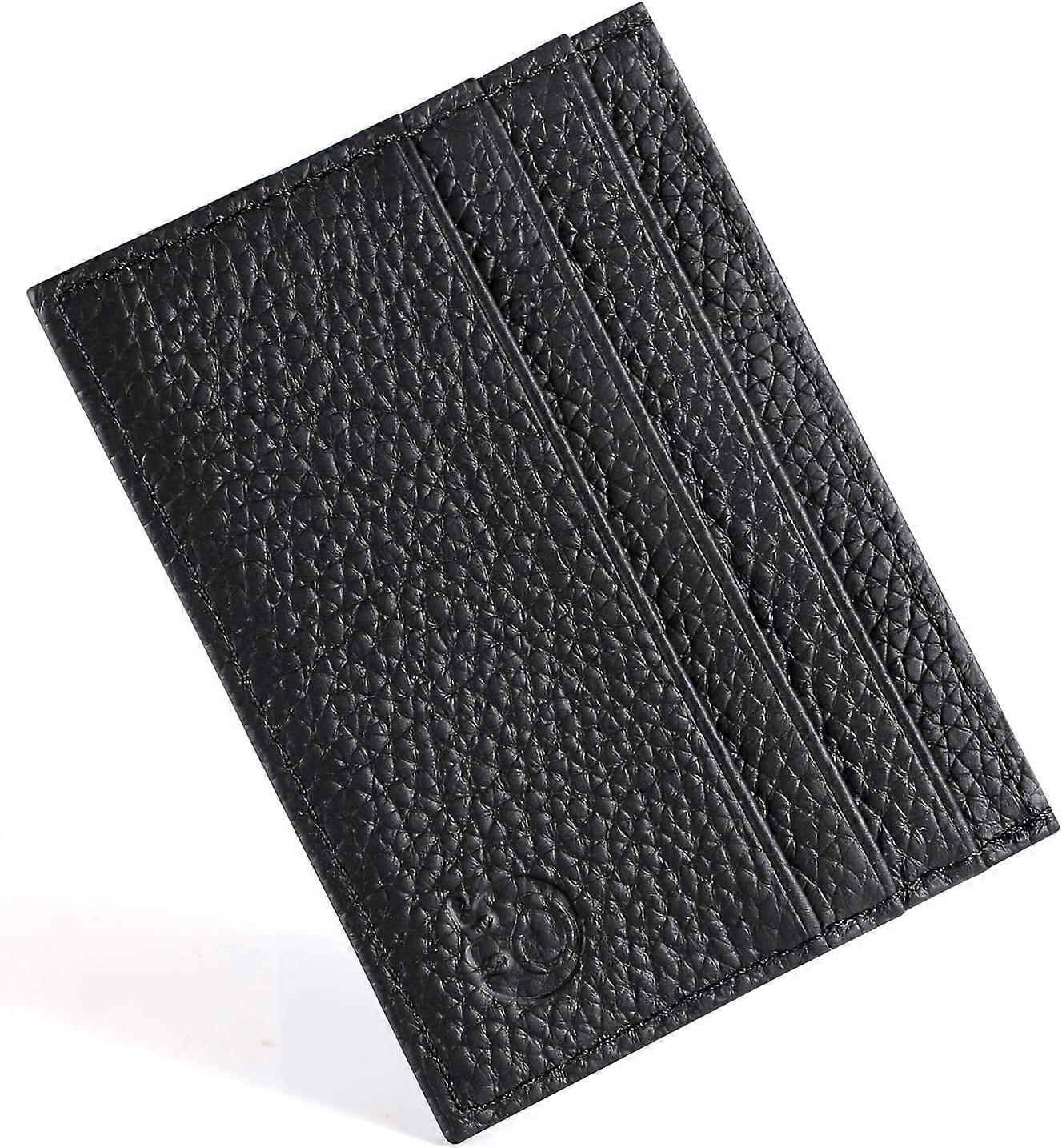
The security of this system is rooted in the same principles that secure blockchain transactions. Just as Bitcoin uses ZKPs to prove sufficient funds without revealing wallet balances, ZK Cred Wallets apply these same zero-knowledge protocols to credit data. This ensures that the integrity of the credit assessment is maintained without compromising the user's confidentiality.
ZK Cred Wallet vs Traditional Credit Bureaus
The difference between ZK Cred Wallet and traditional credit bureaus is not just technical; it is structural. Traditional bureaus operate as centralized data brokers. They collect your financial history, package it, and sell access to lenders. You are the product, and your data lives on their servers, vulnerable to breaches and misuse.
ZK Cred Wallet flips this model. Instead of sending your raw data to a third party, you hold the credentials in your own wallet. When a lender needs to verify your creditworthiness, you use zero-knowledge proofs to generate a cryptographic receipt. This receipt proves you meet the criteria—such as having a credit score above 700—without revealing the underlying transaction history or personal details.
This shift moves control from the institution back to the individual. You decide what to share, with whom, and for how long. If you stop using a service, you simply revoke the credential. There is no permanent record sitting in a bureau’s database waiting to be sold or leaked.
The table below outlines the core differences in how data is owned, protected, and accessed in each system.
| Feature | ZK Cred Wallet | Traditional Bureau |
|---|---|---|
| Data Ownership | User-owned | Bureau-owned |
| Privacy Level | High (Zero-Knowledge Proofs) | Low (Full Data Disclosure) |
| Access Control | User-granted, revocable | Lender-requested, permanent |
| Data Breach Risk | Minimal (No central database) | High (Centralized targets) |
| Credit Building | Selective sharing of history | Automatic aggregation |
Best ZK Credential Tools for Decentralized Identity
The ecosystem for zero-knowledge credentials is expanding beyond experimental research into practical tools. These platforms allow users to prove attributes—like age or citizenship—without exposing the underlying data. Below are the leading options for building or interacting with private credentials.
Cheqd: AnonCreds Implementation
Cheqd is a decentralized identity network that recently introduced support for Zero Knowledge Credentials (ZKCreds). By adopting the AnonCreds standard, Cheqd enables issuers to create verifiable credentials that maintain privacy while ensuring authenticity. This approach allows users to store credentials in their digital wallets and share only the necessary proofs with verifiers. It represents a significant step toward interoperable, private identity systems.
Google Wallet: Mobile ZK Integration
Google has begun integrating zero-knowledge proof capabilities into Google Wallet, moving ZK technology from niche crypto projects to mainstream mobile use. This implementation allows users to verify attributes like age or identity without revealing their full name or birthdate to third-party merchants. By using cryptography instead of manual redaction, Google offers a more secure and user-friendly verification process. This shift signals growing institutional adoption of ZK privacy tools.
Nym: Privacy-First Credential Networks
Nym provides a privacy network that supports anonymous credentials and private communication. Their ZK-Nym protocol ensures that user identity and transaction data remain hidden while still allowing for verifiable interactions. This tool is particularly useful for applications where privacy is paramount, such as financial transactions or sensitive data sharing. Nym’s focus on network-level privacy complements the credential-level privacy offered by other tools.
Hardware Wallets for Secure Storage
For users holding ZK credentials, secure storage is essential. Hardware wallets like Trezor and Ledger provide offline storage for private keys, ensuring that credentials cannot be compromised by online threats. These devices support various decentralized identity standards, making them a reliable choice for managing sensitive digital assets.

As an Amazon Associate, we may earn from qualifying purchases.
Books on Decentralized Identity
For those looking to deepen their understanding of ZK credentials and decentralized identity, several books offer comprehensive insights. These resources cover the technical foundations, privacy implications, and practical applications of ZK proofs in identity management.


As an Amazon Associate, we may earn from qualifying purchases.
Using ZK Proofs for Private Credit History
Generating a zero-knowledge proof for credit history turns your financial data into a verifiable credential without exposing the underlying documents. Instead of uploading raw bank statements or tax returns to a lender, you use the ZK Cred Wallet to create a mathematical proof that confirms specific criteria, such as income thresholds or credit score ranges. This process ensures that the lender can verify your eligibility without ever seeing your transaction history or personal identifiers.
The workflow relies on a trusted issuer and a cryptographic protocol. First, a recognized authority—such as a bank or credit bureau—issues a signed credential to your wallet, confirming your financial status. Next, you generate a proof that satisfies the lender’s specific conditions, such as "income > $50,000" or "credit score > 700." Finally, you share only the proof and the issuer’s signature with the lender, who verifies it instantly. This selective disclosure mechanism is the core of private credit scoring, allowing you to maintain full control over your sensitive data while still accessing financial services.
A trusted issuer, such as your bank or a credit bureau, signs a digital credential confirming your financial attributes. This credential is stored securely in your ZK Cred Wallet, establishing a trusted source of truth for your identity and creditworthiness.
Your wallet generates a cryptographic proof that validates specific claims against the credential, such as proving your income exceeds a lender’s minimum threshold. This step ensures that no raw data, such as exact salary figures or transaction details, is exposed during the calculation.
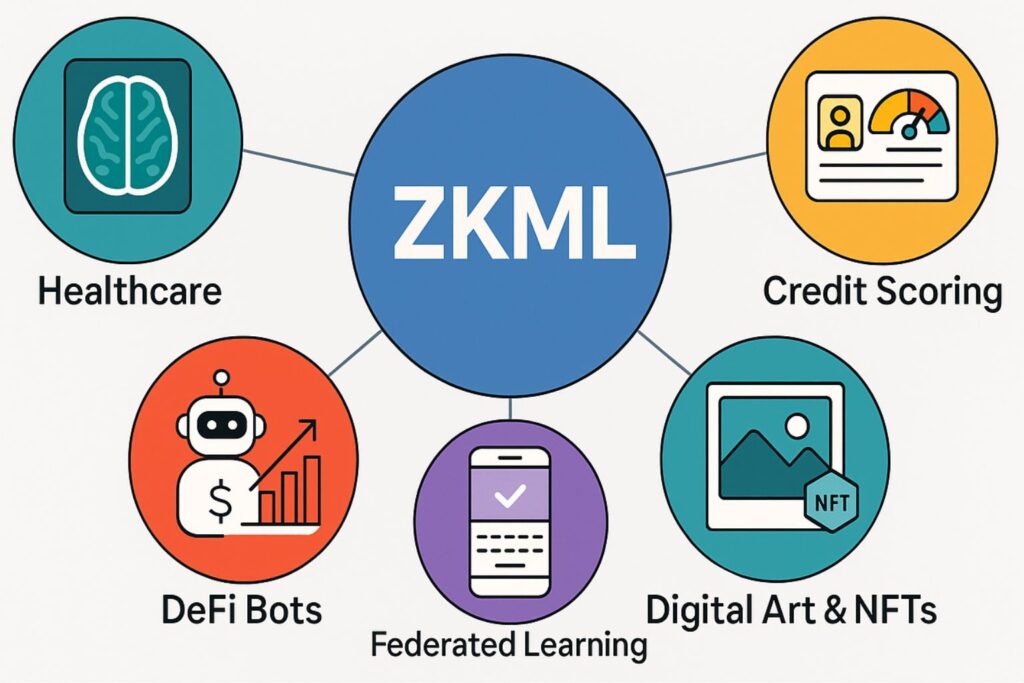
You transmit the proof and the issuer’s signature to the lender. The lender verifies the proof cryptographically to confirm your eligibility without ever accessing your underlying bank statements or personal financial records, completing the private credit check.
Frequently Asked Questions About ZK Credentials
Does Bitcoin use zero-knowledge proofs?
Yes, Bitcoin can use zero-knowledge proofs (ZKP) to enhance privacy. In a standard transaction, ZKP allows a user to prove they have sufficient funds to complete a transfer without revealing their wallet balance or full transaction history. This is achieved through advanced mathematical algorithms that ensure data integrity while maintaining confidentiality. While not native to the base protocol, Layer 2 solutions and privacy-focused implementations increasingly leverage ZKP for this purpose.
What is ZK in crypto?
In cryptography, ZK stands for zero-knowledge. A ZK proof is a protocol where one party (the prover) convinces another (the verifier) that a statement is true without revealing any underlying data. For example, in a ZK cred wallet, you can prove you meet a credit score threshold without exposing your entire financial history. This distinction is fundamental to modern privacy-preserving blockchain applications.
What is the main purpose of zero-knowledge proof?
The primary purpose of zero-knowledge proofs is to validate information without sharing the information itself. In blockchain, ZKPs enhance privacy, security, and scalability by verifying transactions without exposing sensitive details. This capability is critical for ZK cred wallets, which aim to provide credit scoring based on private on-chain activity rather than public data dumps.
No comments yet. Be the first to share your thoughts!