What a ZK Cred Wallet Actually Does
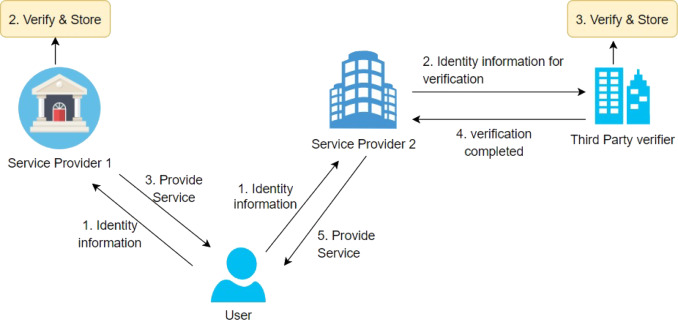
A traditional digital wallet typically functions like a physical wallet: you present the entire contents to a merchant, exposing your name, address, and full date of birth to verify you are over 18. A Zero-Knowledge (ZK) Cred Wallet changes this dynamic by enabling selective disclosure. Instead of handing over the credential itself, the wallet generates a cryptographic proof that confirms a specific claim is true while keeping the source information private.
This capability is foundational to the European Digital Identity Wallet framework, which mandates strong privacy protections for users. According to the European Commission’s reference architecture, a Wallet Unit can generate a Zero-Knowledge Proof (ZKP) that demonstrates knowledge of a witness (such as an attestation) without exposing the witness itself 1. This ensures that verifiers receive only the information necessary to make a decision, minimizing data exposure.
The technical mechanism relies on zero-knowledge protocols, such as AnonCreds, which allow for the creation of verifiable credentials that can be partially disclosed. Networks like cheqd have implemented these standards to support decentralized identity systems where users retain control over their personal information 2. By decoupling the proof of an attribute from the attribute itself, ZK Cred Wallets reduce the risk of identity theft and unauthorized data aggregation.
For legal and regulatory contexts, this distinction is critical. The technology shifts the burden of data protection from the verifier to the user’s device. Rather than storing sensitive personal data in centralized databases vulnerable to breaches, the data remains in the user’s wallet. The cryptographic proof serves as the sole point of interaction, ensuring that compliance with data minimization principles is built into the infrastructure rather than applied as an afterthought.
How zero-knowledge proofs secure identity
Zero-knowledge proofs (ZKPs) allow a user to prove they possess specific credentials without exposing the raw data. In the context of identity, this mechanism shifts the security model from document sharing to mathematical verification. Instead of submitting a copy of a passport or driver’s license, the wallet generates a cryptographic proof that confirms the document is valid and meets specific criteria, such as age or residency status.
This process relies on protocols like AnonCreds and zkSNARKs (Zero-Knowledge Succinct Non-Interactive Arguments of Knowledge). AnonCreds provides the framework for issuing and verifying credentials, while zkSNARKs ensures the proof is small and fast to verify. As detailed in research on zk-creds, this architecture removes the need for credential issuers to hold signing keys during the verification process, reducing the risk of data breaches [src-serp-4].
The practical application is straightforward. A user can prove they are over 21 without revealing their date of birth. The ZK Cred Wallet computes a proof based on the signed credential received from an issuer. The verifier checks this proof against the public parameters of the zkSNARK circuit. If the proof is valid, the verifier accepts the claim. This approach aligns with emerging standards from the W3C and the EU Commission, which prioritize data minimization and user sovereignty in digital identity systems.
Major ZK Identity Standards and Protocols
The decentralized identity ecosystem currently operates across several competing and complementary standards. For legal and regulatory contexts, understanding the technical distinctions between AnonCreds, W3C Verifiable Credentials (VC), and ISO MDOC is essential. These frameworks differ in how they handle privacy, issuer authority, and verification complexity.
AnonCreds: Privacy-First Selective Disclosure
AnonCreds, often referred to as ZKCreds, was one of the first decentralized identity networks to implement zero-knowledge capabilities. It is designed to allow a user to prove a specific claim without exposing the raw data. For example, a user can prove they are over 21 without disclosing their exact date of birth or name.
This standard is particularly relevant for jurisdictions requiring strict data minimization. By keeping the raw credential data off-chain and only sharing the cryptographic proof, AnonCreds reduces the risk of data breaches. Networks like cheqd have integrated these credentials to enable privacy-preserving interactions.
W3C Verifiable Credentials: Interoperability Standard
The W3C Verifiable Credentials data model serves as the foundational syntax for many digital identity systems. Unlike AnonCreds, which is a specific protocol, W3C VC is a standard that defines how credentials are structured and verified. It focuses on interoperability, allowing different systems to exchange and verify credentials seamlessly.
W3C VC does not mandate a specific zero-knowledge proof scheme. Instead, it provides the container for credentials, which can then be enhanced with ZK extensions. This flexibility makes it a common choice for enterprise and government applications that require broad compatibility across different platforms.
ISO MDOC: Mobile Document Standard
ISO MDOC (Mobile Document) is an international standard designed for mobile travel documents, such as electronic passports and driver's licenses. It integrates zero-knowledge proof capabilities directly into the document structure, enabling selective disclosure of personal data. The Longfellow-zk protocol, for instance, is designed to work with MDOC documents to enable ZK presentations.
This standard is heavily influenced by regulatory frameworks, including those from the European Union. The EU Digital Identity Wallet architecture references ISO MDOC for its approach to zero-knowledge proofs, ensuring that digital credentials meet strict privacy and security requirements.
Comparison of Standards
The following table compares the key technical and operational differences between these three major standards.
| Standard | Privacy Model | Issuer Type | Verification Complexity |
|---|---|---|---|
| AnonCreds | Selective Disclosure | Decentralized Networks | Medium |
| W3C VC | Extensible (ZK optional) | Any (Enterprise/Gov) | Low |
| ISO MDOC | Selective Disclosure | Government/Trusted | High |
Google Wallet and Enterprise Adoption
Google has integrated zero-knowledge proofs into Google Wallet to enable private age verification. This implementation allows users to prove they are over a specific age without revealing their date of birth or other personal details. The system uses cryptographic protocols to generate a valid proof that satisfies the verifier’s requirements while keeping the underlying identity data secure.
This approach shifts the burden of privacy from the user to the protocol. Instead of uploading sensitive documents to third-party services, the wallet generates a proof that confirms eligibility. This reduces the risk of data breaches and limits the amount of personally identifiable information (PII) shared with merchants or service providers.
The integration demonstrates how enterprise-scale platforms can adopt zero-knowledge technology for compliance and privacy. By leveraging established cryptographic standards, Google provides a scalable model for identity verification that balances regulatory requirements with user privacy. This development signals a broader industry shift toward decentralized identity solutions that prioritize data minimization.
Compliance and Regulatory Alignment
Zero-Knowledge Credential Wallets align with modern data protection frameworks by design. The technology enables data minimization, a core principle in regulations like the General Data Protection Regulation (GDPR) and the EU’s eIDAS 2.0. Instead of storing personal identifiers on centralized servers, users hold credentials locally and generate proofs for verification. This approach reduces the risk of data breaches and limits the amount of personal data processed by third parties.
A practical example involves age verification. Under traditional systems, a user might upload a driver’s license, exposing their full name, address, and date of birth. With ZK technology, the wallet generates a cryptographic proof that confirms the user is over 18 without revealing the actual birth date. This satisfies legal age requirements while preserving privacy, a capability supported by the European Digital Identity Wallet architecture specifications from the European Commission.
For organizations, this shift requires updating compliance workflows to accept cryptographic proofs rather than raw documents. The World Wide Web Consortium (W3C) has established standards for Verifiable Credentials that facilitate this interoperability. By adopting these standards, businesses can ensure their verification processes remain compliant with evolving global privacy laws.
- Data Minimization: Only the necessary claim (e.g., "over 18") is shared, not the underlying document.
- User Consent: Users explicitly approve each proof generation, maintaining control over their identity data.
- Audit Trails: Cryptographic logs provide verifiable records of access without storing sensitive personal information.
- Jurisdictional Residency: Data remains on the user’s device, simplifying compliance with local data sovereignty laws.
Timeline of ZK Identity Development
The shift toward zero-knowledge identity has moved from academic theory to regulated infrastructure over the last decade. The following milestones outline how cryptographic proofs became a standard for digital identity.
2016: Academic Foundation
Researchers at Purdue University introduced zk-creds, a protocol using zkSNARKs to allow users to prove attributes without exposing the raw data. This work established the technical baseline for proving age without disclosing a date of birth, removing the need for issuers to hold signing keys.
2021: Industry Implementation Cheqd became one of the first decentralized identity networks to support Zero Knowledge Credentials (ZKCreds), also known as AnonCreds. This launch provided a practical layer for verifiable credentials, moving beyond theoretical models to usable network infrastructure.
2024: Regulatory and Tech Integration The EU formally adopted the Digital Identity Wallet regulation, setting a legal framework for cross-border identity verification. Later that year, Google Wallet integrated age and identity verification features, leveraging cryptography to offer a superior alternative to third-party redaction services.
These developments illustrate a clear trajectory: from cryptographic research to standardized, legally recognized identity tools.
Frequently Asked Questions About ZK Wallets
How does a ZK Cred Wallet protect my data?
A ZK Cred Wallet uses zero-knowledge proofs to verify information without exposing the raw data. For example, you can prove you are over 21 without disclosing your date of birth or full name. This selective disclosure ensures that verifiers only receive the specific claim they need, minimizing data exposure.
Which major platforms support zero-knowledge credentials?
Google Wallet has integrated anonymous credentials, allowing users to verify age and identity attributes securely. This implementation leverages cryptographic methods to replace traditional third-party redaction services with more robust, privacy-preserving verification protocols.
Are ZK credentials interoperable across different systems?
Yes, standards like AnonCreds enable interoperability across decentralized identity networks. Platforms such as Cheqd have adopted these standards to allow credentials issued in one ecosystem to be verified in another, ensuring broader utility for users managing multiple digital identities.
No comments yet. Be the first to share your thoughts!