How zk cred wallet handles identity limits to account for
The ZK Cred Wallet is not a standalone app you download from an app store; it is a cryptographic protocol layer that sits on top of existing digital credentials. Its primary function is to enforce zero-knowledge proofs (ZKP) when you need to verify your identity without revealing the underlying data. This distinction matters because it shifts control from the verifier back to you, allowing selective disclosure of specific attributes rather than handing over entire documents.
Most users interact with ZK Cred Wallets through integrations like the Longfellow-zk protocol or Google’s experimental ZK features. The Longfellow-zk system, for instance, works with MDOC/mdl documents to enable selective disclosure of credentials. This means you can prove you are over 21 without showing your birthdate, name, or address. Similarly, Google’s work with Abhi Shelat and Matteo Frigo focuses on integrating these proofs directly into Google Wallet, aiming to make ZKP a standard feature for billions of users rather than a niche technical tool.
The constraint here is compatibility. These wallets do not create new identity standards from scratch; they adapt existing ones to support ZKP. This approach ensures that the technology can be adopted incrementally by current infrastructure, such as mobile driver’s licenses (MDLs) or government-issued digital IDs. However, this also means that the user experience depends heavily on the verifier’s ability to accept ZK proofs. If a service only accepts traditional QR codes or full document scans, the ZK Cred Wallet’s benefits remain untapped.
From a practical standpoint, the ZK Cred Wallet is most valuable in high-stakes scenarios where privacy is critical, such as accessing age-restricted services or verifying residency for financial accounts. The tradeoff is complexity: setting up and managing these proofs requires a higher level of technical literacy than simply snapping a photo of an ID. As the ecosystem matures, we expect tools to become more intuitive, but for now, the ZK Cred Wallet is a powerful but specialized instrument for digital identity verification.
Zk cred wallet choices that change the plan
Zero-knowledge (ZK) wallets offer a distinct privacy advantage by allowing you to prove specific attributes without revealing the underlying data. However, this benefit comes with technical complexity that affects everyday usability. Choosing the right ZK cred wallet means balancing cryptographic security against the convenience of instant verification.
Privacy vs. Complexity
Standard digital wallets often require you to share your entire identity document to prove you are over 21. A ZK wallet generates a mathematical proof that confirms the condition is met without exposing your birthdate or name. This selective disclosure is powerful for privacy but requires more computational power. You may experience slower verification times compared to traditional QR code scans, especially on older devices.
Interoperability and Standards
The ZK landscape is fragmented. Some wallets, like the Longfellow ZK implementation, are designed to work with specific document types, such as MDOC/mdl documents. Others are building toward broader standards like the European Digital Identity (EUDI) framework. Before committing to a wallet, check if it supports the specific credentials you need. A wallet that only works with one type of ID limits its utility for cross-border travel or global services.
Hardware and Device Requirements
Generating ZK proofs can be resource-intensive. High-security implementations may rely on hardware-backed secure enclaves, such as Intel SGX, to ensure the proof was generated in a trusted environment. This adds a layer of security but restricts compatibility. If your device lacks the necessary hardware attestation capabilities, you may be unable to use certain high-assurance services, even if your credentials are valid.
| Feature | Privacy Level | Device Compatibility | Verification Speed |
|---|---|---|---|
| Standard Wallet | Low (shares all data) | High | Fast |
| ZK Wallet (Software) | High | Medium | Medium |
| ZK Wallet (Hardware-Backed) | Very High | Low | Slow |
How to choose a zero-knowledge credential wallet
Selecting a ZK wallet requires balancing privacy guarantees with everyday usability. The technology is mature enough for production, but the user experience varies significantly across platforms. Google’s integration of zero-knowledge proofs into its Wallet ecosystem demonstrates how institutional adoption can simplify verification without sacrificing data minimization. However, for users who require full custody and interoperability with decentralized identity standards, specialized wallets remain the better choice.
Not all zero-knowledge implementations are created equal. Check whether the wallet supports widely accepted standards like W3C Verifiable Credentials or emerging protocols such as Longfellow-zk. Systems that rely on proprietary, closed-loop proof systems limit your ability to use credentials across different services. Prioritize wallets that allow selective disclosure of specific claims, such as age or residency, without revealing the underlying source document.

Zero-knowledge proofs do not eliminate the risk of losing access to your identity. If a wallet relies on a centralized server for proof generation, you are trusting that provider with your private keys and verification history. Look for solutions that offer decentralized recovery options or multi-signature setups. A robust recovery mechanism is essential because, unlike a password reset, a lost zero-knowledge private key can permanently lock you out of your digital identity.
The most secure wallet is useless if the services you need to access do not accept its proofs. Verify that the wallet is compatible with the verification systems you intend to use. For example, if you rely on Google Workspace for business, a wallet that integrates directly with Google’s ZK infrastructure may offer a smoother experience than a standalone app. Conversely, for decentralized finance or open-source communities, ensure the wallet supports the specific cryptographic curves and standards required by those ecosystems.
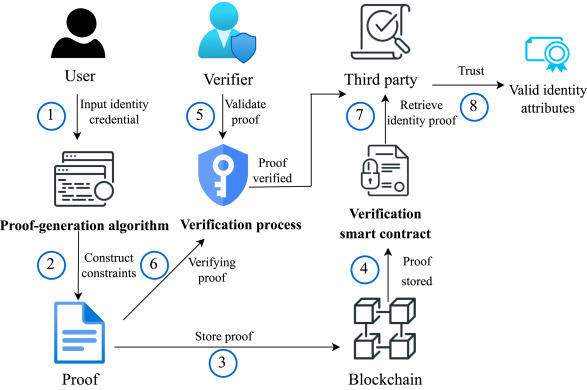
Even with zero-knowledge proofs, metadata can reveal sensitive information. Check how the wallet handles transaction logs, proof generation timestamps, and network requests. A truly private wallet should minimize metadata leakage by using mixers or decentralized proof generation networks where available. Review the wallet’s privacy policy and open-source code to ensure it does not silently collect usage data that could be linked back to your identity.


As an Amazon Associate, we may earn from qualifying purchases.
Spotting Weak Options and Misleading Claims
Not every "ZK wallet" delivers on the zero-knowledge promise. The market is crowded with projects using the buzzword without implementing actual cryptographic proofs. To separate signal from noise, check if the wallet supports standard ZK circuits like zk-SNARKs or zk-STARKs rather than relying on opaque, proprietary encryption. If the documentation avoids technical details or cites only vague "privacy features," it is likely a weak option.
Another common mistake is assuming all ZK wallets are created equal. For instance, while Google is integrating zero-knowledge proofs into its wallet ecosystem for credential verification, many third-party wallets lack this level of institutional backing or interoperability. Always verify if the wallet complies with emerging standards like the Longfellow ZK specification for selective disclosure. Without this, your credentials may not be portable or verifiable across different platforms.
Finally, beware of wallets that claim full anonymity but leak metadata. True zero-knowledge systems must prove validity without revealing underlying data. If a wallet requires excessive personal information for basic functions, it defeats the purpose. Look for transparent audits and open-source code. Only trust wallets that have undergone rigorous security reviews from reputable firms, ensuring your digital identity remains both private and secure.
Frequently Asked Questions About ZK Cred Wallets
What is zk in crypto? In the context of digital identity, "zk" refers to zero-knowledge proofs, a cryptographic method that allows a user to prove they meet specific criteria without revealing the underlying data. Instead of uploading a full government ID or birth certificate, a ZK Cred Wallet generates a mathematical proof confirming, for example, that you are over 21 or a citizen of a specific region. This keeps your sensitive personal information private while still satisfying the verifier's requirements.
Does Bitcoin use ZKP? Standard Bitcoin transactions do not use zero-knowledge proofs; they rely on standard public key cryptography where all transaction details are visible on the blockchain. However, privacy-focused layer-2 solutions and sidechains built on Bitcoin, such as Aztec Network or Tornado Cash-style implementations, utilize zk-SNARKs or zk-STARKs to obfuscate transaction amounts and addresses while maintaining the security of the base layer.
What is a zk credential? A zk credential is a digital certificate issued by a trusted authority (like a government or university) that can be selectively disclosed. Unlike a traditional PDF ID that must be shown in its entirety, a zk credential allows you to extract only the necessary claims. For instance, you can prove you have a valid driver's license without exposing your home address or license number.
Can you give me an example of a zero-knowledge proof? Imagine you want to prove you are over 18 to enter a venue. Instead of handing over your physical ID, you use a ZK Cred Wallet to generate a proof. The system verifies your birth date against the trusted issuer's signature and outputs a simple "True" or "False" result to the bouncer. The bouncer knows you are eligible, but they never see your actual date of birth, name, or ID number.
No comments yet. Be the first to share your thoughts!